
First Travel Nurse Assignment: What to Expect

Disclosure: Some links in this post are affiliate links. If you click through and make a purchase, we may earn a small commission at no extra cost to you. Learn more about how we make money.
Introduction
Your first travel nurse assignment is exciting, nerve-wracking, and unlike anything you have experienced as a staff nurse. The facility is new, the charting system might be unfamiliar, and you are expected to hit the ground running with an orientation that is a fraction of what staff nurses receive. Everyone says it gets easier after the first one — and that is true — but knowing what to expect upfront makes the difference between walking in confident and walking in overwhelmed.
This guide covers everything from the week before you arrive to the final days of your first contract. If you are still in the planning stages, start with our step-by-step guide to becoming a travel nurse and come back here when you have a signed contract in hand.
Before You Arrive: Pre-Assignment Checklist
The week before your start date is not the time for surprises. Preparation before arrival makes your first week dramatically easier.
Confirm every detail with your recruiter. Call or email to verify your start date, shift, unit, reporting time, and the exact location where you need to show up on day one. Confirm the name and contact information for your unit manager or the person conducting orientation. Travel nurses have shown up at the wrong building, on the wrong day, because details got lost between the agency and the facility. Do not let that be you.
Complete compliance documents early. Most facilities require drug screening, background checks, health screenings, and specific immunization records before you step foot on the unit. Start this process as soon as your contract is signed — compliance delays are the number one reason start dates get pushed back.
Research the facility. Look up the hospital’s size, Magnet status, patient population, and the charting system they use. If they use Epic and your last facility used Cerner, spend time reviewing Epic tutorials online. Many charting system vendors offer free training modules that can smooth your transition significantly. Knowing the basics before orientation means you can focus on facility-specific workflows instead of learning the software from scratch.
Arrange housing and learn the area. Whether you are taking the housing stipend and finding your own place or using agency-provided housing, get this locked down at least two weeks before arrival. Research your commute, parking options, nearby grocery stores, and the general safety of the neighborhood. Use the assignment checklist to make sure nothing slips through the cracks.
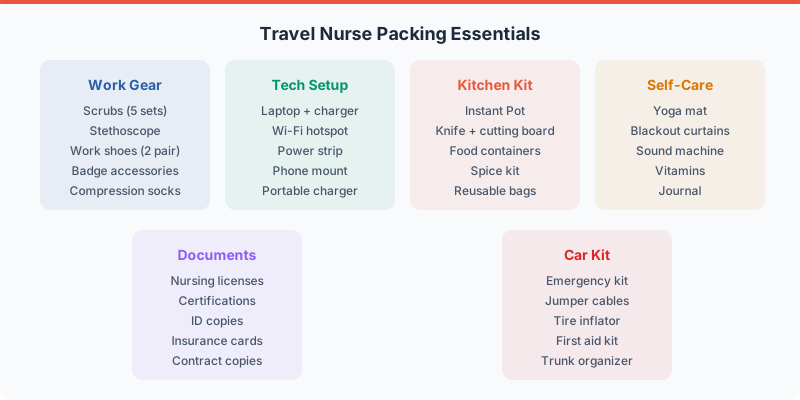
Pack your clinical essentials. Stethoscope, penlight, trauma shears, comfortable shoes, and enough scrubs for the first week. Bring your nursing license, certifications, and identification documents in both physical and digital form. Some facilities require specific scrub colors — confirm this before you pack.
Your First Day and Orientation
Travel nurse orientation is not staff nurse orientation. You will not get six weeks of gradual immersion. Most facilities give travelers one to three days of orientation, and some give you a single shift before you are counted in the staffing ratio.
Hospital orientation typically includes HR paperwork, a facility tour, fire safety and emergency code review, electronic health record access setup, and unit-specific protocols. You will likely attend with other new hires — both staff and travelers. Pay attention during the EHR training segment even if you have used the system before, because every facility customizes their build differently.
Meet your key contacts early. Introduce yourself to your charge nurse, unit manager, and the unit secretary. These are the people who will help you navigate the first weeks. Be friendly, professional, and direct. A simple “I am the new travel nurse — what do I need to know to be most helpful on this unit?” goes a long way.
Learn the geography fast. Where are the supply rooms? Where is the medication dispensing system? Where is the crash cart? Where are the nearest bathrooms and break rooms? Where is the blood bank? Take ten minutes on your first day to walk the unit and identify these locations. During a patient emergency, you do not want to be searching for the code cart.
Set realistic expectations. You will not feel comfortable on day one. You might not feel fully settled by week two. That is normal. The goal for your first week is to learn the workflow, build basic relationships, and provide safe patient care — not to be the star of the unit.
Navigating the First Two Weeks
The first two weeks are when you prove yourself to the permanent staff. How you handle this period sets the tone for the rest of your contract.
Build relationships intentionally. Introduce yourself to everyone. Learn names. Be approachable and helpful. Permanent staff have seen a lot of travel nurses come through, and they form impressions quickly. The travelers who earn respect are the ones who show up ready to work, ask smart questions, and do not act like they are above any task.
Ask questions without apologizing. You are new to this facility, and the staff knows it. Nobody expects you to know where the linen closet is on your first day. Ask questions directly and confidently: “Where do you keep the IV start kits?” is better than a lengthy preamble about being new. Write down answers so you only have to ask once.
Learn the unwritten rules. Every unit has them. Maybe the night shift nurses always take their breaks at a specific time. Maybe there is an unspoken patient assignment rotation. Maybe certain physicians prefer to be contacted by phone rather than page. Observe before you assume, and ask a friendly staff nurse or fellow traveler to fill you in on the unit culture.
Earn trust through competence and humility. You do not need to prove you are the best nurse on the unit. You need to prove you are safe, reliable, and easy to work with. Show up on time. Take your fair share of difficult assignments. Offer to help when you have a lighter load. These small actions build trust faster than any certification on your resume.
Managing the Emotional Adjustment
Nobody talks about this enough: the emotional adjustment of your first travel assignment is real and often harder than the clinical adjustment.
Homesickness and loneliness are normal. You left behind your friends, your routines, and your comfort zone. The excitement of a new city wears off quickly when you are eating dinner alone in a furnished apartment after a 12-hour shift. Acknowledge these feelings rather than suppressing them. Call your people back home. FaceTime your family. Maintain those connections.
Build a social life proactively. Do not wait for social opportunities to come to you — they rarely do. Find other travel nurses at your facility and suggest coffee or dinner after a shift. Join a local gym, yoga studio, or running group. Explore your new city on days off. Some of the best travel nursing memories come from the adventures between shifts, not the shifts themselves.
Connect with the travel nurse community. Online communities, Facebook groups, and forums are full of travelers who understand exactly what you are going through. Sometimes just venting to someone who gets it makes all the difference. If your facility has other travelers, seek them out — they are your instant peer group.
Maintain self-care routines. Sleep, nutrition, exercise, and mental health do not become optional just because you are in a new city. Establish a basic routine in your first week: where you will sleep, what you will eat, how you will stay active, and how you will decompress after work. These anchors provide stability when everything else feels unfamiliar.
Reach out to your recruiter when needed. A good recruiter is more than a job placement service. If you are struggling emotionally, having issues with the facility, or just need someone to talk to who understands the travel nursing world, pick up the phone. This is part of what they are there for. If your recruiter is not responsive, that is a signal to evaluate your agency choice before your next contract.
Common First-Assignment Surprises
Even well-prepared travelers encounter things they did not expect. Here are the most common surprises so you can handle them calmly.
Staffing ratios may differ from what was discussed. Your recruiter might have said the unit runs 1:4 ratios, but on your first night shift, you get five or six patients. This happens. If the discrepancy is consistent and significant, document it and discuss it with your recruiter. Occasional high-census situations are part of nursing; chronic understaffing that violates your contract terms is a different matter.
Floating is more common for travelers. Many facilities float travel nurses to other units before floating their permanent staff. This is frustrating but common. Ask about the floating policy during your interview so you are not blindsided. Know which units are within your competency and speak up if you are floated to a unit outside your scope of practice.
Pay timing can be confusing. Your first paycheck may not arrive when you expect it. Some agencies pay weekly, others biweekly, and the first pay cycle may be delayed due to onboarding processing. Clarify the pay schedule with your agency before you start so you can budget accordingly. This is another reason the emergency fund is critical.
The pace and culture vary dramatically. A trauma center in Atlanta feels nothing like a community hospital in rural Montana. The patient acuity, the pace, the resources, and the team dynamics can be radically different from what you are accustomed to. Approach each facility with curiosity rather than comparison.
When Things Go Wrong
Not every assignment goes smoothly. Knowing how to handle problems protects your career and your wellbeing.
Unsafe staffing is the most serious concern. If you are consistently assigned patient loads that compromise safety, document every instance with dates, times, patient counts, and acuity levels. Report concerns to your charge nurse and unit manager. Simultaneously contact your recruiter and provide the same documentation. If the situation does not improve, you have the right to escalate — your nursing license is on the line, and no contract is worth compromising patient safety.
Contract discrepancies — when the actual assignment conditions differ from what was promised — should be addressed immediately. If you were told day shifts but scheduled for nights, or promised a specific unit but placed on a different one, contact your recruiter on the first day you notice the discrepancy. The sooner you raise the issue, the more options you have for resolution.
Know your rights regarding early termination. Quitting a contract early (or being cancelled early) has consequences — it can affect your professional reputation and your relationship with the agency. However, if conditions are genuinely unsafe or the contract terms have been violated, you have grounds for early termination without penalty. Get everything in writing and communicate through your recruiter rather than directly with the facility.
Document everything. Keep a personal log of shift details, patient ratios, floating assignments, and any conversations about contract terms. Save emails and text messages with your recruiter. This documentation protects you if disputes arise later.
Making the Most of Your First Assignment
Your first contract is a learning experience. Approach it that way and you will extract maximum value from it.
Treat it as an extended interview — both for the facility and for travel nursing itself. You are evaluating whether you enjoy this lifestyle while the facility is evaluating whether you are someone they want to extend or rehire. Show up at your best every day, and you will leave with strong references and possibly an extension offer.
Explore your new city. You chose this location for a reason. On your days off, be a tourist. Find the local restaurants, hike the trails, visit the museums, check out the neighborhoods. This is one of the greatest perks of travel nursing — do not spend your free days sitting in your apartment.
Network with staff nurses. The nurses you work with today could be references on your next application, connections for future assignments, or lifelong professional contacts. Exchange contact information with the colleagues who have been most helpful and stay in touch after you leave.
Collect references before your last day. Do not wait until after your contract ends to ask for references. In your final two weeks, ask your charge nurse and unit manager if they would be willing to serve as references for future assignments. A warm reference from a recent supervisor is one of the most valuable things you can take from any assignment.
First Assignment Tips for Traveling RTs and Surgical Techs
Most of the advice in this guide applies to every travel healthcare professional, not just nurses. The emotional adjustment, the housing logistics, the importance of building relationships quickly — all of that is universal. But respiratory therapists and surgical technologists face a few unique challenges on their first assignments that are worth addressing directly.
For Traveling Respiratory Therapists
Learn the vent fleet immediately. Every hospital has its preferred ventilators, and the models vary more than you might expect. Some facilities run primarily on Puritan Bennett 840s, others on Hamilton or Draeger machines. On your first day, identify which ventilators are in use, locate the backup equipment, and familiarize yourself with any facility-specific ventilator protocols or weaning parameters. If the facility uses a model you have not touched in a while, ask a staff RT to walk you through their standard settings before you are managing a patient on one.
Understand the RT department structure. Some hospitals assign RTs by unit (you cover the ICU for the entire shift), while others use a zone or floor-based model. Some facilities have dedicated NICU RTs and separate adult teams. Know how your assignments will work before your first clinical shift so you can manage your time and patient load effectively.
Build relationships with nursing staff and physicians fast. As a travel RT, you are often the only respiratory therapist on the floor, which means you interface directly with nurses and physicians who do not know you yet. Introduce yourself to the charge nurses on every unit you cover. Make it clear that you are accessible and responsive. RTs who earn trust from the nursing staff early get smoother assignments because nurses will communicate proactively rather than escalating problems.
Expect to cover more ground. Travel RTs are frequently assigned to cover multiple units or the entire hospital, whereas staff RTs may have narrower assignments due to seniority. Be prepared for a higher volume of patient contacts and more walking than you might be used to at a staff position.
For Traveling Surgical Techs
Tour the OR suites and sterile processing before your first case. Operating rooms are laid out differently at every facility. Where are the supply rooms for each OR suite? Where is sterile processing? How does the facility handle instrument turnaround between cases? Where are the specialty trays stored? Spending 30 minutes mapping the physical environment before your first case prevents delays and stress when you are scrubbed in and need something quickly.
Review preference cards for the surgeons you will work with. Surgeon preference cards — the documents that outline each surgeon’s preferred instruments, sutures, supplies, and positioning — are your roadmap in a new OR. Ask for access to the preference card system on your first day and study the cards for the surgeons on your first week’s schedule. Every surgeon has specific preferences, and showing up to a case prepared with the right instruments and setup earns immediate respect.
Clarify your scope and expectations upfront. Surgical tech scope of practice varies by state and facility. Some ORs expect their scrub techs to assist with positioning, draping, and specimen handling. Others limit the role strictly to instrument passing and maintaining the sterile field. Ask the OR charge nurse or perioperative manager to clarify what is expected of you before your first case, especially regarding any tasks that may fall in a gray area.
Adapt to different case mixes. Your first travel assignment may expose you to surgical specialties or procedures you have less experience with. If you are primarily an orthopedic tech and get pulled into a general surgery case, be honest about your comfort level and ask for support. Most OR teams would rather help a tech who communicates than recover from a preventable error caused by someone who stayed silent.
Connect with the materials management team. Knowing who to call when you need a specific supply or implant that is not on the shelf saves valuable time in the OR. Introduce yourself to the materials management or supply chain staff early — they are among the most valuable people to know in any surgical department.
Frequently Asked Questions
How long does travel nurse orientation usually last?
Most facilities provide travel nurses with one to three days of orientation, though some give as little as a single shift. This typically includes hospital-wide orientation (HR, safety, compliance), electronic health record training, and a brief unit orientation. Compare this to staff nurse orientations that may last several weeks with a dedicated preceptor. The abbreviated timeline means you need to be proactive about learning the unit layout, supply locations, and key protocols on your own. Coming prepared by researching the facility and charting system in advance makes a significant difference.
What should I do if my housing falls through at the last minute?
Contact your recruiter immediately — they may have emergency housing options or connections with extended-stay hotels in the area. If you are managing your own housing, have a backup plan before you arrive: identify two or three extended-stay options near the facility and keep their contact information saved. Some travelers also use furnished finder services and travel nurse housing groups on social media. The most important thing is to avoid a situation where housing stress affects your first days at a new facility. Budget for a few nights at a hotel as a safety net.
Is it normal to feel like I made a mistake during my first assignment?
Extremely normal. Nearly every travel nurse describes a moment during their first assignment — usually in the first two weeks — where they wonder what they have gotten themselves into. The combination of a new facility, new city, new coworkers, and a completely different routine creates a temporary emotional low that feels worse than it actually is. By week three or four, most travelers report feeling significantly more settled. Give yourself through the first month before making any judgments about whether travel nursing is right for you. The second assignment is dramatically easier.
What if I get floated to a unit I am not comfortable working on?
You have the right — and the professional obligation — to speak up if you are floated to a unit outside your scope of practice or competency. If you are an ICU nurse floated to a labor and delivery unit, that is not safe and you should decline. If you are a med-surg nurse floated to another med-surg unit, that is generally expected. Know your contract terms regarding floating before you start, and communicate concerns to your charge nurse and recruiter. Most facilities have policies limiting floating to units of comparable acuity.
Should I extend my first contract if offered?
Consider it carefully. Extending means you stay at a facility you already know, avoiding the stress of another transition. If you are happy with the unit, the staff, and the location, extending is often a smart move — especially for your first assignment, where stability has extra value. However, compare the extension pay rate to what is available on the open market. Facilities sometimes offer lower rates for extensions because they know the convenience factor works in their favor. Run the numbers through the pay calculator before deciding.
Key Takeaways
- Preparation before arrival makes the first week dramatically easier — confirm every detail with your recruiter
- Expect a shorter orientation than staff nurses receive — study the charting system in advance if possible
- Be humble, ask questions directly, and build relationships with permanent staff early
- Homesickness is normal and temporary — give yourself grace and maintain connections back home
- Document everything and communicate with your recruiter proactively when issues arise
- Your first assignment is a learning experience — it gets significantly easier from here
Related Internal Links
- How to Become a Travel Nurse: Step-by-Step Guide
- Travel Nurse Interview Tips: Land Your Dream Assignment
- Questions to Ask Your Travel Nurse Recruiter
- Pros and Cons of Travel Nursing (Honest Review)
- Best Travel Nurse Agencies (2026 Rankings)
- Assignment Checklist
- Pay Calculator
Affiliate Placement Notes
- Housing and furnished apartment services (Furnished Finder, etc.) in the pre-assignment housing section.
- Clinical supply and equipment recommendations in the packing essentials section.
- Charting system training courses in the facility research section.
