
Best Nursing Shoes for 12-Hour Shifts (2026)

Disclosure: Some links in this post are affiliate links. If you click through and make a purchase, we may earn a small commission at no extra cost to you. Learn more about how we make money.
Your Feet Carry You Through Every Shift
Twelve hours on hard hospital floors, walking an average of four to five miles per shift, turning patients, pushing beds, and responding to rapid responses. That is what your feet endure every working day. The wrong shoes turn those shifts into an endurance test where your feet, knees, hips, and back pay the price. The right shoes do not make the work easy, but they remove a significant source of pain and fatigue that compounds over a thirteen-week assignment.
For travel nurses, the shoe decision carries additional weight. You cannot break in new shoes during orientation week at a new facility when first impressions matter and you are already navigating an unfamiliar unit. You need shoes that are already proven, already comfortable, and ready to perform from day one.
This guide covers what to look for in nursing shoes, breaks down the best options across styles and budgets, and includes the maintenance practices that extend shoe life for high-mileage nurses.
What to Look for in Nursing Shoes
Arch support is the single most important feature. Inadequate arch support leads to plantar fasciitis, a painful inflammation of the tissue connecting your heel to your toes that can sideline you from work. Good arch support distributes your weight evenly across your foot and reduces strain on the plantar fascia during long periods of standing and walking.
Slip resistance is a safety requirement, not a preference. Hospital floors get wet from spills, cleaning solutions, and bodily fluids. A slip-resistant outsole with a tread pattern designed for wet surfaces prevents falls that can injure you and your patients. Many hospitals require slip-resistant shoes as part of their safety policy.
Cushioning absorbs the impact of every step on hard floors. Look for midsole cushioning technology that provides energy return, meaning the cushioning pushes back against your foot rather than just compressing under weight. Memory foam feels soft initially but often compresses flat within weeks of daily use. Higher-density foams and proprietary cushioning compounds hold up better over time.
Weight matters more than you might expect. Heavy shoes contribute to leg fatigue over a twelve-hour shift. Every extra ounce adds up across thousands of steps. The ideal nursing shoe provides maximum support and cushioning at the lowest possible weight.
Breathability prevents the moisture buildup that causes blisters, odor, and fungal infections. Shoes with mesh uppers or moisture-wicking linings allow airflow around your feet. Completely sealed shoes like traditional clogs sacrifice breathability for easy cleaning, which is a trade-off worth understanding before you buy.
Ease of cleaning is a nursing-specific requirement. Your shoes will be exposed to bodily fluids, betadine, and other substances that stain and contaminate. Shoes with smooth, wipeable uppers are easier to clean and disinfect than those with fabric or mesh uppers. Consider which matters more to you: breathability or cleanability.
Best Maximum-Cushion Running Shoes
Maximum-cushion running shoes have become the most popular category among nurses, and for good reason. They offer the thickest midsoles, the most energy return, and a rocker-style geometry that propels you forward with each step, reducing the effort required to walk long distances.
The ideal nursing shoe in this category has a midsole height of thirty millimeters or more, a moderate rocker sole that encourages a natural rolling gait, a breathable upper with enough structure to support your foot, and a rubber outsole with slip-resistant properties.
These shoes feel dramatically different from traditional nursing shoes. The thick cushioning absorbs impact that would otherwise travel through your joints, and the rocker geometry reduces forefoot pressure during push-off. Nurses who switch to this style frequently report less foot pain, less knee pain, and less overall fatigue at the end of shifts.
The trade-off is height. These shoes add noticeable height, which changes your center of gravity slightly. Most nurses adapt within a few shifts, but if you have ankle instability, the added height may feel less secure.
Best Nursing Clogs
Clogs remain a classic nursing shoe choice for reasons that still hold up. They slip on and off easily, they have a wide toe box that gives your toes room to spread, and they are built on a rigid platform that provides strong arch support.
The ideal nursing clog has a contoured footbed that matches the natural shape of your arch, a rocker bottom that reduces strain on your heel and forefoot, a slip-resistant outsole rated for wet surfaces, and a leather or synthetic upper that wipes clean easily.
Clogs require a break-in period that most other nursing shoes do not. The rigid platform needs time to conform to your foot, and the first week can be uncomfortable. Once broken in, however, quality clogs provide excellent support for years. Their durability is one of their strongest selling points, and many nurses get two to three years of daily use from a single pair.
The downside is weight. Clogs are heavier than athletic-style nursing shoes, which adds to leg fatigue during long shifts. They also lack the breathability of mesh-upper athletic shoes, which can cause moisture buildup during warm shifts.
Best Athletic-Style Nursing Shoes
Athletic-style shoes bridge the gap between running shoes and purpose-built nursing footwear. They offer cushioning and breathability comparable to running shoes with design features tailored to nursing, including slip-resistant outsoles, fluid-resistant uppers, and removable insoles that accommodate custom orthotics.
Look for an athletic nursing shoe with a mesh upper for breathability, a cushioned midsole with good energy return, a removable insole so you can swap in orthotics or aftermarket insoles, and a rubber outsole with a tread pattern rated for wet floors.
These shoes tend to be lighter than clogs and more nursing-specific than running shoes. They require minimal break-in time, which makes them a good choice for travel nurses who want comfort from the first shift.
Best Budget Nursing Shoes
Budget nursing shoes in the fifty to eighty dollar range provide adequate support and slip resistance for nurses who are testing shoe preferences, need a backup pair, or prefer to replace shoes frequently rather than invest in premium options.
The best budget nursing shoes offer solid arch support, a slip-resistant outsole, and decent cushioning that holds up for three to six months of regular use. Where they fall short compared to premium options is in long-term cushioning retention, weight, and the quality of materials in the upper.
A budget shoe works well as a second pair in your rotation, giving your primary shoes a day to dry and recover between shifts. It also makes sense as a first purchase if you are new to travel nursing and still figuring out what shoe style works best for your feet.
Best Shoes for Plantar Fasciitis
Plantar fasciitis is one of the most common foot conditions among nurses, caused by repetitive stress on the plantar fascia from long hours on hard surfaces. If you already have plantar fasciitis or are prone to it, your shoe selection becomes a medical decision.
The ideal shoe for plantar fasciitis has a rigid heel counter that stabilizes the heel, prominent arch support that offloads stress from the plantar fascia, a cushioned heel zone that absorbs impact at the point of pain, and a structured midsole that controls pronation.
Avoid shoes with minimal support, flexible midsoles, or flat footbeds if you have plantar fasciitis. These styles allow the plantar fascia to overstretch with every step, prolonging inflammation and pain.
If over-the-counter shoes and insoles do not resolve your symptoms, see a podiatrist. Custom orthotics molded to your specific foot structure are the most effective treatment for persistent plantar fasciitis, and they fit inside most nursing shoes with removable insoles.
Insoles and Orthotics
Stock insoles in most shoes, even premium ones, are adequate at best. Upgrading to a quality aftermarket insole can significantly improve comfort and support.
Look for insoles with structured arch support rather than flat cushioning. A firm arch that matches your foot’s natural contour provides more support than a soft insole that compresses under weight. Semi-rigid insoles made from EVA foam or polyurethane hold their shape longer than memory foam.
Custom orthotics from a podiatrist are the gold standard for nurses with chronic foot pain, flat feet, high arches, or structural alignment issues. They cost more than over-the-counter insoles but are molded to your specific anatomy and address biomechanical issues that generic insoles cannot.
When using aftermarket insoles or orthotics, remove the stock insole from your shoe first. Stacking insoles reduces shoe volume, changes the fit, and can cause pressure points.
Shoe Care and Replacement Schedule
Nursing shoes wear out faster than most people expect. The constant walking, standing, and exposure to moisture and chemicals breaks down cushioning, outsoles, and uppers at an accelerated rate.
Replace your primary nursing shoes every four to six months or every five hundred miles, whichever comes first. Track your approximate mileage by multiplying your shifts per week by an average of five miles per shift. By the time a shoe’s cushioning feels flat or its outsole shows significant wear, its support properties have already degraded beyond the point of effective protection.
Rotate between two pairs to extend the life of both. Alternating shoes gives each pair time to dry completely between uses, which prevents moisture damage, reduces odor, and allows the cushioning to decompress and recover its original shape. A two-pair rotation where each pair lasts six months gives you a full year of coverage for the price of two pairs instead of three.
Clean your shoes after every shift. Wipe down uppers with a disinfectant wipe to remove contaminants. For deeper cleaning, remove the insoles and wash them separately. Allow shoes to air dry completely before wearing again. Never put nursing shoes in a clothes dryer, because the heat degrades adhesives and cushioning materials.
Pack shoes in breathable shoe bags when traveling between assignments. Sealed plastic bags trap moisture and odor. Mesh or fabric bags allow airflow while keeping shoe soles away from clean clothing.
Compression Socks: The Secret Weapon
Compression socks are the most underrated piece of nursing gear, and they deserve a place in every travel nurse’s clinical bag.
Graduated compression socks apply pressure that starts at the ankle and decreases up the calf, promoting blood flow back toward the heart. This reduces swelling, fights fatigue, and helps prevent varicose veins, all of which are occupational risks for nurses who stand for twelve hours.
A compression level of fifteen to twenty millimeters of mercury is appropriate for most nurses. Higher compression levels, twenty to thirty and above, are medical-grade and should be discussed with a healthcare provider.
Own three to five pairs and rotate them through shifts. Wash them according to the manufacturer’s instructions, because improper washing degrades the elastic that provides compression. Replace compression socks when they lose their snugness, which typically happens after three to six months of regular use.
Frequently Asked Questions
How often should travel nurses replace their nursing shoes?
Replace your primary nursing shoes every four to six months or every five hundred miles of walking, whichever comes first. Track approximate mileage by multiplying your shifts per week by an average of five miles per shift. By the time a shoe’s cushioning feels flat or the outsole shows significant wear, its support properties have already degraded beyond effective protection. Rotating between two pairs extends the life of both and gives each pair time to dry between shifts.
Are nursing clogs or athletic shoes better for 12-hour shifts?
Both styles have advantages depending on your needs. Athletic-style shoes and maximum-cushion running shoes are lighter, more breathable, and require less break-in time, making them popular among travel nurses who want immediate comfort. Clogs provide strong arch support through a rigid platform, wipe clean easily, and last longer, but they are heavier and require a break-in period. Many nurses keep one of each style and rotate based on the shift demands and their feet that day.
Do I need custom orthotics for nursing?
Custom orthotics from a podiatrist are the gold standard if you have chronic foot pain, flat feet, high arches, or structural alignment issues. They are molded to your specific anatomy and address biomechanical problems that generic insoles cannot. However, many nurses get excellent results from quality aftermarket insoles with structured arch support at a fraction of the cost. Start with over-the-counter insoles and upgrade to custom orthotics if your symptoms persist despite good shoes and insoles.
What compression level should nurses wear?
A compression level of fifteen to twenty millimeters of mercury is appropriate for most nurses and does not require a prescription. This level reduces leg swelling, fights fatigue, and helps prevent varicose veins during twelve-hour shifts on hard floors. Higher compression levels of twenty to thirty and above are medical-grade and should be discussed with a healthcare provider. Own three to five pairs and rotate them through shifts, replacing them when they lose their snugness after three to six months.
Should I break in new shoes before starting a new assignment?
Absolutely. Orientation week at a new facility is the worst time to discover that your shoes cause blisters, hot spots, or discomfort. Break in new shoes for at least one to two weeks before your start date by wearing them for progressively longer periods around your home and during errands. This is especially important for clogs, which have a rigid platform that needs time to conform to your foot shape before they become comfortable for full shifts.
Key Takeaways
- Prioritize arch support, slip resistance, and cushioning over style. Your shoes are protective equipment, not a fashion statement.
- Replace nursing shoes every four to six months. Worn cushioning and outsoles provide inadequate support and traction, increasing your risk of pain and falls.
- Rotate two pairs to extend shoe life and improve hygiene. Alternating gives each pair time to dry and recover.
- Invest in quality insoles if your shoes’ stock insoles do not provide adequate arch support. A twenty to forty dollar insole upgrade can transform a good shoe into a great one.
- Compression socks at fifteen to twenty millimeters of mercury reduce leg fatigue and swelling across twelve-hour shifts. They are inexpensive and make a noticeable difference.
- Break in new shoes before your first shift at a new assignment. Orientation week is not the time to discover that your shoes cause blisters.
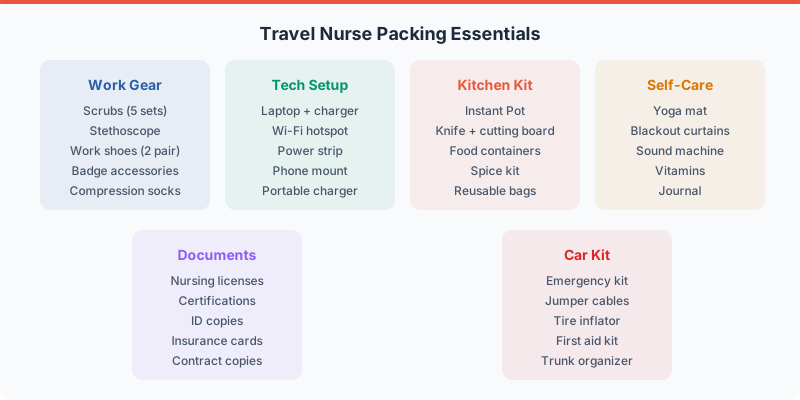
For the complete gear breakdown, see our travel nurse packing list and best scrubs guide.
Related Internal Links
- Best Scrubs for Travel Nurses
- Travel Nurse Self-Care Kit
- Travel Nurse Packing List
- Best Stethoscopes for Travel Nurses
Affiliate Placement Notes
- Maximum-cushion shoe affiliate links
- Nursing clog affiliate links
- Athletic-style nursing shoe affiliate links
- Budget shoe affiliate links
- Insole and orthotic affiliate links
- Compression sock affiliate links
