
Travel Nurse RV Setup Guide: Everything You Need Before Your First Trip

Disclosure: Some links in this post are affiliate links. If you click through and make a purchase, we may earn a small commission at no extra cost to you. Learn more about how we make money.
Introduction
You bought the RV. Or you are about to. Either way, the vehicle itself is only half the equation. The other half is everything you need to turn it from a recreational vehicle into a functional home that supports a 12-hour-shift nursing career.
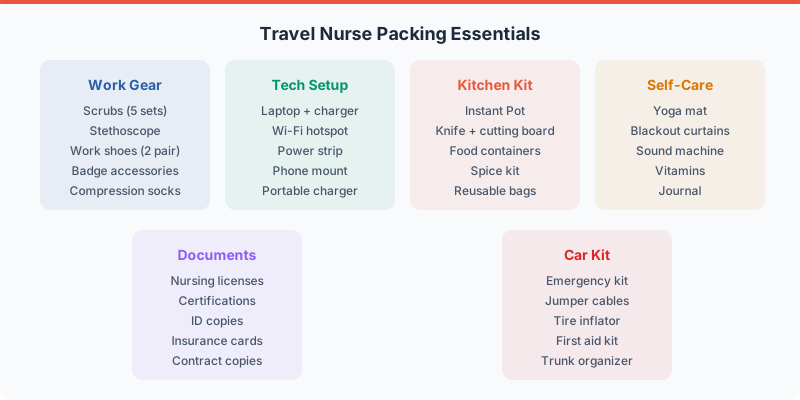
Most RV setup guides are written for retirees and weekend warriors. Travel nurses have different needs. You need reliable internet for charting and CE modules. You need a sleep setup that actually works after a night shift. You need a kitchen that produces real meals, not campfire snacks. And you need all of this to be portable, durable, and functional in a campground that may or may not have full hookups.
This guide covers every piece of equipment you need, organized by category, with specific product recommendations and realistic budget numbers. If you are still deciding whether RV life is right for you, start with our RV travel nursing overview first.
Electrical Setup
Your RV’s electrical system is the foundation of comfortable living. Hospital shifts drain your phone, and you need devices charged, lights working, and climate control running.
Shore Power Essentials
Most campgrounds provide 30-amp or 50-amp electrical hookups. Your RV will have one or the other built in, but you need adapters for flexibility:
- 30-amp to 50-amp adapter ($20 to $40). Lets you plug a 30-amp RV into a 50-amp pedestal. Essential for campgrounds with limited 30-amp availability.
- 50-amp to 30-amp adapter ($20 to $40). The reverse situation. Less common but worth having.
- Surge protector ($80 to $300). Non-negotiable. Campground power is inconsistent, and a surge can destroy your RV’s electrical system, appliances, and electronics. Progressive Industries and Hughes Autoformers are the most recommended brands. Invest in a hardwired unit if your RV does not have one built in.
- 25-foot extension cord, 30-amp rated ($40 to $80). Some campsites place the power pedestal farther than your built-in cord can reach.
Solar and Battery Backup
Solar is not required, but it is increasingly popular among travel nurses for good reason:
- 200 to 400 watts of solar panels ($300 to $800). Enough to keep batteries charged during the day and power lights, fans, and device charging overnight without shore power.
- Lithium battery bank ($800 to $2,000). Lithium iron phosphate (LiFePO4) batteries last 10 times longer than lead-acid, weigh less, and charge faster. A 200Ah lithium battery bank covers most travel nurse needs.
- Battery monitor ($100 to $200). Shows your exact battery state so you know how much power you have left. Victron BMV-712 is the standard recommendation.
Budget solar for a basic setup: $1,200 to $2,500. This is optional for campgrounds with full hookups but essential if you ever boondock (camp without hookups).
Water and Plumbing
Fresh Water
- Water pressure regulator ($15 to $30). Campground water pressure varies wildly. Without a regulator, high pressure can blow out your RV’s plumbing fittings. Set it to 40 to 50 PSI.
- Inline water filter ($20 to $40). A basic carbon filter removes chlorine taste and sediment. Replace the filter every 3 months or at each new campground.
- Drinking water hose, 25-foot ($20 to $35). Use a white or blue food-grade hose, never a garden hose. Camco and Valterra make dedicated RV water hoses.
- Water bandit ($5). A rubber fitting that connects your hose to campground spigots that are missing a threaded connection. Tiny but saves frustration.
Waste Water
- Sewer hose kit ($25 to $50). Get a 20-foot kit with bayonet fittings and a clear elbow adapter (so you can see when the tank is running clear). Camco RhinoFLEX is the standard.
- Sewer hose support ($15 to $30). Keeps your hose on a downward angle so waste flows properly. Looks unnecessary until you experience a clog.
- Tank treatment ($10 to $20 per bottle). Enzyme-based treatments break down waste and control odor. Happy Campers is the most recommended brand. One scoop per tank refill.
- Portable waste tank ($80 to $150). If your campsite does not have a sewer connection at your spot, you will need to transport waste to a dump station. A wheeled 15 to 25 gallon tank makes this manageable.
Internet and Connectivity
This is the most critical category for travel nurses. You need reliable internet for hospital EMR access, telehealth CE courses, and basic communication.
Mobile Internet
- Cellular hotspot or router ($200 to $500). A dedicated mobile router like the Pepwave MAX BR1 Mini or Netgear Nighthawk M6 gives you better performance and antenna options than a phone hotspot.
- External antenna ($100 to $300). A roof-mounted MIMO antenna dramatically improves cellular reception. WeBoost and Waveform make popular options. This single upgrade often makes the difference between usable and unusable internet at rural campgrounds.
- Cellular data plan ($50 to $150 per month). T-Mobile and AT&T offer the best RV-friendly plans as of 2026. Many travel nurses carry two carriers for redundancy. Visible (Verizon network) offers unlimited hotspot data at budget prices.
Backup Options
- Starlink ($120 per month plus $599 equipment). Satellite internet that works anywhere with a clear view of the sky. Excellent backup for remote locations where cellular is weak. The Roam plan allows you to move between locations without address changes.
- Campground Wi-Fi. Treat this as a bonus, not a primary connection. Most campground Wi-Fi is too slow and unreliable for professional use.
Budget for reliable internet: $400 to $800 upfront plus $100 to $200 per month in service costs.
Sleep Setup
Sleep quality determines everything about your work performance and mental health. Invest here more than anywhere else.
- Mattress upgrade ($200 to $800). RV stock mattresses are universally terrible. Replace it with a memory foam or hybrid mattress cut to your RV’s bed dimensions. Many companies sell RV-specific sizes. A 10-inch memory foam mattress is the sweet spot for comfort and fit.
- Blackout curtains ($30 to $100). Essential for night shift nurses. Standard RV window coverings let in too much light. Add stick-on blackout material or custom-fit curtains to every bedroom window.
- White noise machine ($20 to $50). Campgrounds are noisy. Generators, dogs, and neighbors are unavoidable. A portable white noise machine or a phone app like Brown Noise helps you sleep through daytime disturbances.
- Temperature control. Your RV’s built-in HVAC may not be sufficient. A portable 12V fan ($30 to $60) for air circulation and a small space heater ($40 to $80) for shoulder seasons extend your comfort range.
Kitchen Essentials
A functional kitchen saves money and supports better nutrition. Travel nurses who cook at home spend $200 to $400 less per month on food compared to those who eat out regularly.
- Instant Pot or multi-cooker ($60 to $100). The single most useful RV kitchen appliance. Pressure cook, slow cook, saute, and steam all in one device. Meal prep a week of lunches in under an hour.
- Induction cooktop ($60 to $100). If your RV does not have a built-in stove or you prefer not to use propane indoors, a single-burner induction cooktop is efficient, safe, and easy to clean.
- Compact cookware set ($40 to $80). Nesting pots and pans that stack inside each other save cabinet space. Look for sets designed for RVs or boats.
- Collapsible kitchen items ($20 to $40 total). Collapsible colander, cutting board over the sink, magnetic spice rack. Every square inch matters in an RV kitchen.
See our meal prep guide for recipes and strategies designed for small kitchens and busy nurse schedules.
Leveling and Setup
- Leveling blocks ($40 to $80). Lynx Levelers or comparable interlocking blocks. You stack them under your wheels to level the RV. An unlevel RV means your fridge does not work properly and you roll around in bed.
- Wheel chocks ($15 to $30). Prevent the RV from rolling when parked. Use them every time, even on flat ground.
- Stabilizer jacks or jack pads ($20 to $40 per set). Go under your stabilizer jacks to prevent sinking into soft ground.
- Outdoor mat ($30 to $60). A breathable mat for your campsite provides a clean area for shoes, chairs, and pet access. Keeps dirt out of the RV.
- Folding chairs and small table ($50 to $100). An outdoor sitting area makes your campsite feel like a home rather than a parking spot.
Safety Equipment
- Carbon monoxide and propane detector ($30 to $60). Many RVs have one built in, but verify it works and has not expired. Replace batteries every 6 months.
- Fire extinguisher ($20 to $40). Keep one in the kitchen and one accessible from the bedroom. Check the gauge monthly.
- First aid kit ($20 to $40). You are a nurse, so you probably already have strong opinions about what belongs in this kit.
- Roadside emergency kit ($40 to $80). Jumper cables, reflective triangles, flashlight, basic tools, tire pressure gauge. Store in an accessible exterior compartment.
Complete Budget Breakdown
Here is the total setup cost range for a travel nurse RV:
| Category | Budget | Mid-Range | Premium |
|---|---|---|---|
| Electrical | $120 | $500 | $3,000 |
| Water/Plumbing | $95 | $150 | $250 |
| Internet | $400 | $700 | $1,200 |
| Sleep | $280 | $500 | $1,000 |
| Kitchen | $180 | $300 | $500 |
| Leveling/Setup | $155 | $250 | $400 |
| Safety | $110 | $160 | $220 |
| Total | $1,340 | $2,560 | $6,570 |
Most travel nurses land in the mid-range column. The premium column includes solar, lithium batteries, Starlink, and a high-end mattress. The budget column covers the bare essentials for comfortable living with full hookups.
First-Trip Checklist
Before your first assignment in the RV, complete these steps:
- Test all systems (electrical, plumbing, propane, HVAC) at home before traveling
- Practice driving and backing up in an empty parking lot
- Make your campground reservation at least 4 weeks before your start date
- Confirm the campground has full hookups (water, electric, sewer) and cell service
- Pack a “go bag” with essentials for the first night in case setup takes longer than expected
- Drive to your campground a day early to allow time for setup without the pressure of a first shift the next morning
- Test your internet connection at the campsite and have a backup plan ready
For a broader look at RV travel nursing costs and whether the lifestyle makes financial sense, see our RV travel nursing guide.
Frequently Asked Questions
How long does initial RV setup take at a campground?
Your first setup will take 1 to 2 hours as you learn the process. After a few moves, you will have it down to 30 to 45 minutes. This includes leveling, connecting utilities, and setting up your outdoor space.
Can I use my RV’s equipment list as a tax deduction?
Potentially. If your RV is your primary housing while on assignment, setup costs may be deductible as unreimbursed work expenses. Consult a tax professional familiar with travel nurse deductions. See our tax guides for more on travel nurse tax strategies.
What if my campground does not have full hookups?
You can manage with partial hookups (water and electric only) by using your portable waste tank for dump runs. Without electric hookups (boondocking), you need solar and batteries. Most travel nurses prefer full-hookup sites for the convenience factor during work weeks.
Should I buy new or used equipment?
Buy your surge protector, water filter, and safety equipment new. Everything else can be purchased used through RV forums, Facebook Marketplace, or Camping World clearance sales. Used equipment typically costs 30 to 50 percent less.
