
Finding RV Parks Near Hospitals: A Travel Nurse Strategy Guide
Disclosure: Some links in this post are affiliate links. If you click through and make a purchase, we may earn a small commission at no extra cost to you. Learn more about how we make money.
Introduction
You have the RV. You have the assignment. Now you need a place to park. Finding RV parks near hospitals sounds simple until you start looking. The park closest to your facility has a 6-month waitlist. The one with availability is 45 minutes away. The affordable option has reviews mentioning “questionable neighbors” and “unreliable electric.”
Location matters more for RV travel nurses than for any other type of traveler. You are not on vacation. You are commuting to 12-hour shifts, sometimes at 5 AM, sometimes driving home at 8 PM after a day that went sideways. The distance between your campsite and your hospital directly affects your sleep, your safety, and your quality of life.
This guide gives you a systematic approach to finding, evaluating, and securing the right RV park for every assignment.
Search Strategy: Where to Look
Primary Search Tools
Start with these platforms in this order:
-
Campendium (campendium.com). The best overall search tool for travel nurses. Filter by hookup type, price, cell service quality, and user ratings. Reviews are detailed and include photos. Free to search.
-
Harvest Hosts and Boondockers Welcome. Membership programs ($99 to $120 per year) that offer free or low-cost overnight stays at farms, wineries, and private properties. Not ideal for 13-week stays, but useful for short-term stops while scouting long-term sites.
-
Google Maps. Search “RV parks near [hospital name]” to see options within your commute radius. Switch to satellite view to evaluate the actual park condition.
-
Facebook groups. Search for “RV travel nurses” or “[state/city] RV camping.” Other RV nurses will share specific park recommendations near hospitals they have worked at.
-
AllStays and RV Trip Wizard. Apps that show campgrounds along routes and near specific addresses. Useful for trip planning, less useful for detailed reviews.
The Hospital Radius Method
Use this systematic approach:
- Enter your hospital’s address in Google Maps
- Draw a 30-minute drive-time circle (mentally or using a tool like FreeMapTools)
- Identify all RV parks within that radius
- Rank them by a combination of distance, price, reviews, and hookup type
- Contact your top 3 choices to check availability for your contract dates
A 15 to 20 minute commute is the sweet spot for most travel nurses. Under 10 minutes is ideal but rare. Over 30 minutes adds fatigue and fuel costs that undercut the financial benefits of RV living.
What to Evaluate Before Booking
Must-Have Features
These are non-negotiable for a travel nurse staying 13 weeks:
- Full hookups (water, electric, sewer). Partial hookups are manageable short-term but inconvenient for a full contract. Emptying your black tank at a dump station every few days gets old fast.
- 30-amp or 50-amp electric matching your RV. Confirm the amperage. A 50-amp RV on a 30-amp site limits your ability to run AC, a heater, and appliances simultaneously.
- Cell service. Check coverage maps for your carrier at the park’s address. Better yet, ask in online forums whether other nurses have had usable signal. Poor cell service means poor internet, and that affects your ability to work.
- Monthly rate available. Daily rates add up fast. Most parks offer monthly rates that are 30 to 50 percent cheaper than the daily rate multiplied by 30. Ask specifically about long-term or monthly pricing.
Important Quality Indicators
These are not dealbreakers but significantly affect your quality of life:
- Site size and spacing. Can you fully extend your slides? Is there space for an outdoor area? Are you parked 10 feet from your neighbor’s generator?
- Quiet hours policy. Enforced quiet hours matter when you work night shift and sleep during the day.
- Laundry facilities. On-site laundry saves time and trips.
- Road condition. Gravel, paved, or dirt? Your tow vehicle and RV will thank you for paved roads.
- Security. Gated entry, on-site management, and well-lit common areas indicate a park that takes safety seriously.
- Pet policy. If you travel with pets, confirm breed restrictions, weight limits, and leash requirements. See our pet-friendly housing guide for more.
Red Flags
Walk away if you find:
- No reviews or all negative reviews within the last year
- No monthly rate offered (they rely on transient customers and may not want long-term residents)
- Park management is unreachable by phone or email
- Visible code violations in photos or satellite view (trash, abandoned vehicles, overgrown lots)
- Reports of crime or theft in online reviews
- No clear hookup specifications on their website
Pricing Guide
RV park pricing varies dramatically by location, season, and amenities. Here is what to expect:
| Location Type | Monthly Rate Range |
|---|---|
| Rural / small town | $400 - $700 |
| Suburban / mid-size city | $600 - $1,000 |
| Urban / near major hospital | $800 - $1,400 |
| Resort / high-amenity park | $1,000 - $2,000 |
| Premium location (coast, mountains) | $1,200 - $2,500 |
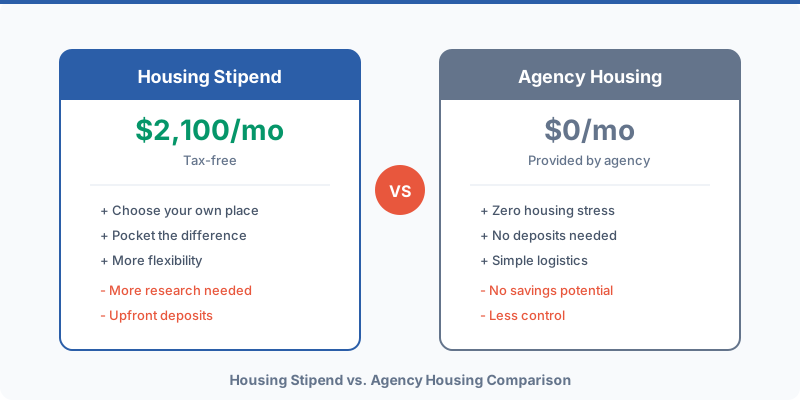
Remember: your housing stipend is based on GSA per diem rates for the assignment location. In most markets, even a $1,000 per month campground leaves you pocketing $1,000 to $2,000 of your stipend tax-free.
Saving Money on RV Parks
- Book monthly. Always ask for the monthly rate. It is almost always significantly lower than daily rates.
- Stay slightly outside the city. Parks 10 to 15 minutes farther from downtown can be $200 to $400 cheaper per month.
- Consider county and state parks. Many offer long-term sites with full hookups at below-market rates. Availability is limited, so book early.
- Negotiate. Especially at smaller, privately owned parks. Offering to pay the full 3 months upfront gives you leverage to negotiate a discount.
- Check military and government parks. If you are a veteran or have a military affiliation, DoD and Corps of Engineers campgrounds offer excellent sites at subsidized rates.
Booking Timeline
RV parks near hospitals in popular metro areas fill up fast. Here is your ideal timeline:
| When | Action |
|---|---|
| Contract confirmed | Start searching immediately |
| 4-6 weeks before start | Contact top 3 parks, ask about availability |
| 3-4 weeks before start | Reserve your site and confirm deposit requirements |
| 2 weeks before start | Confirm your reservation and ask about check-in procedures |
| 1-2 days before start | Arrive and set up before your first shift |
For high-demand areas (California coast, Florida, Colorado resort towns), you may need to book 6 to 8 weeks out or accept a less ideal park for the first month while waiting for your preferred site to open.
Alternatives When Parks Are Full
If traditional RV parks near your hospital are booked:
- Walmart and Cracker Barrel overnight parking. Free, but only for overnight stops, not extended stays. Useful as a temporary solution while you wait for a campground spot.
- Private landowner arrangements. Hipcamp and some Facebook groups connect RV owners with property owners who rent space. Less infrastructure but often more affordable and quieter.
- Hospital parking lots. Some hospitals allow RV parking in their lots during assignments. This is rare but worth asking your recruiter about, especially at rural facilities with large lots.
- Extended-stay RV parks farther out. Expanding your search radius by 10 to 15 minutes opens up significantly more options in most markets.
- Boondocking on BLM land. Bureau of Land Management land allows free camping for up to 14 days in most areas. Only viable if you have solar, battery storage, and do not mind the lack of hookups. Not recommended for full-time work schedules.
Making Your Site Feel Like Home
You will spend 13 weeks here. A few small investments make a big difference:
- Set up an outdoor area with a mat, chairs, and string lights
- Learn your neighbors’ names in the first week
- Find the nearest grocery store, laundromat, and urgent care on day one
- Establish a morning or evening routine that takes advantage of your outdoor space
- If you have a pet, identify the best walking paths around the park
The difference between a campsite that feels temporary and one that feels like home is usually about $50 in outdoor gear and 30 minutes of intentional setup.
Frequently Asked Questions
How far is too far for a commute from an RV park to the hospital?
Most RV travel nurses aim for 15 to 25 minutes. Over 30 minutes adds meaningful fatigue, especially after a 12-hour shift. Over 45 minutes is generally not worth the cost savings unless the campground is significantly cheaper and the driving conditions are easy.
Can I park my RV at the hospital between shifts?
Some hospitals allow this, particularly rural facilities with large parking areas. Ask your recruiter or the facility’s HR department before assuming it is allowed. Even if permitted, sleeping in a hospital parking lot is not a substitute for a proper campground setup.
What happens if the RV park is terrible after I arrive?
Most parks charge a 1-month deposit but allow you to leave with 30 days notice. If the park is genuinely unsafe or misrepresented, document the issues, notify the park management in writing, and contact your credit card company if you paid with a card that offers purchase protection. Then find a better park and move.
Should I book the cheapest option available?
Not necessarily. The cheapest park often saves you $200 per month while costing you sleep quality, commute time, internet reliability, and mental health. Spending an extra $200 to $300 for a well-maintained park closer to your hospital is almost always worth it.
