
Ultimate Travel Nurse Packing List (Printable Checklist)
Disclosure: Some links in this post are affiliate links. If you click through and make a purchase, we may earn a small commission at no extra cost to you. Learn more about how we make money.
Pack Smart, Start Strong
Showing up to a new assignment without a critical item is a uniquely frustrating experience. Maybe it is your stethoscope left in the trunk of a friend’s car three states away, or the nursing license copy your new facility needs on day one sitting in a folder at your tax home. Whatever the item, the scramble to replace or retrieve it can derail your entire first week.
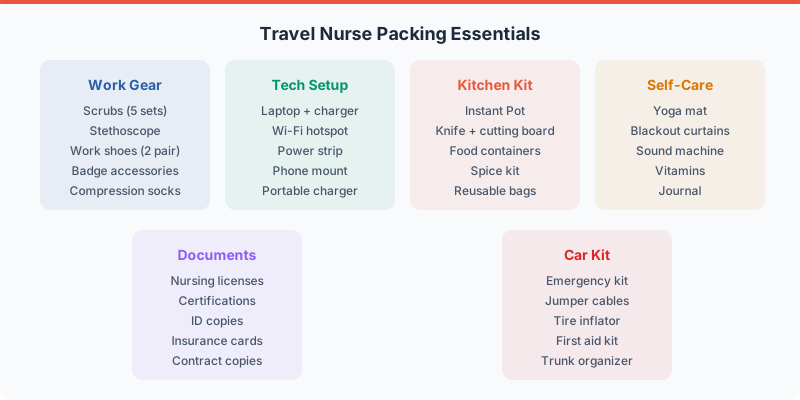
This packing list exists to prevent that. It was built from the collective experience of travel nurses who have made every forgetting-something mistake so you do not have to. The list is organized by category, designed to be customized to your specialty and travel style, and structured so you can print it out and check items off before every move.
One philosophy underpins everything here: less is more. You are not moving your entire life every thirteen weeks. You are packing a curated set of essentials that lets you live comfortably, work effectively, and feel at home anywhere. The goal is to fit everything into one car load or, if you fly, two checked bags and a carry-on. Everything beyond that threshold deserves a hard look before it earns a spot.
Clinical Essentials
Your clinical gear is the reason you are traveling in the first place, so it gets top priority in packing. Start with your stethoscope and a good penlight. These are personal tools that no facility will provide, and you want instruments you trust when walking onto an unfamiliar unit.
Pack a badge reel and a set of badge accessories including reference cards for your specialty. A dry-erase badge backer is invaluable for jotting room numbers and access codes during orientation.
Compression socks deserve a spot in your clinical bag. Bring three to five pairs and rotate them through shifts. Your feet and legs will thank you after week six of twelve-hour days on hard hospital floors.
For scrubs, aim for five to seven sets in neutral, universally accepted colors like navy, black, ceil blue, or gray. Confirm the facility dress code before arrival so you do not pack five sets of a color they do not allow. Pair those with two sets of nursing shoes so you can rotate pairs and let each one dry and recover between shifts.
Round out your clinical kit with a watch that has a second hand or digital timer, bandage scissors or hemostats if your specialty requires them, and a small bottle of quality hand lotion. Hospital-grade hand sanitizer is brutal on skin, and cracked hands are both painful and an infection risk.
Important Documents
Documents are the single most stressful category to forget. Create a dedicated folder, physical and digital, and keep it packed and ready at all times.
You need copies of every active nursing license, all current certifications including BLS, ACLS, PALS, or NRP as applicable, and your government-issued identification. Some facilities require a passport or Social Security card during onboarding, so bring those as well.
Pack your insurance cards for health, auto, and renter’s coverage, a copy of your assignment contract, and a tax documents folder containing your W-4 and any tax home documentation. Immunization records, drug screening documentation, and background check paperwork should also be in this folder.
The digital backup matters just as much as the physical copies. Scan every document and store them in a secure cloud folder. If the physical copies vanish, the digital versions will get you through onboarding.
Tech and Electronics
Technology keeps you connected, entertained, and sane across assignments. At minimum, pack your laptop with its charger, your phone with multiple charging cables, and a portable battery pack rated at ten thousand milliamp hours or higher.
A portable WiFi hotspot or a solid tethering plan is essential if your housing has unreliable internet. Noise-canceling headphones are critical for day sleepers and anyone who needs to decompress after a shift. A compact streaming device lets you plug into any television and immediately have access to your accounts and watch lists.
Bring a power strip with surge protection and at least one extension cord. Furnished apartments rarely have outlets where you need them, and you will be charging multiple devices every day. For a deeper dive on building your portable tech kit, check out our full travel nurse tech setup guide.
Clothing and Layers
Beyond scrubs, you need enough casual clothing for seven to ten days before doing laundry. Plan your laundry strategy before you pack. If you know your housing has in-unit laundry, you can pack lighter. Shared or off-site laundry means packing a few extra days of clothing as a buffer.
Include two to three sets of workout clothes, weather-appropriate layers researched for your specific assignment location, and a pair of comfortable shoes for your days off. Pack undergarments and socks for one to two weeks, and throw in a swimsuit regardless of your destination. Assignment locations surprise you, and you do not want to miss an opportunity because you left your swimsuit behind.
The key to packing clothing efficiently is building a capsule wardrobe of items that mix and match. Neutral colors, versatile layers, and fabrics that resist wrinkles will serve you far better than packing your entire closet.
Toiletries and Personal Care
Pack a travel-size set of toiletries for day one and night one, because you may arrive too late or too tired to shop. Full-size bottles of shampoo, conditioner, and body wash can go in your main luggage or be purchased on arrival if you are trying to save space.
Your skincare routine essentials, prescription medications with at least a thirty-day supply, and a selection of over-the-counter basics belong in this category. Include pain relievers, allergy medication, cold medicine, and a small first aid kit. Hair care tools, sunscreen, and dental care supplies round out the personal care section.
If you take prescription medications, make sure your pharmacy can transfer prescriptions to a location near your assignment, or switch to a mail-order pharmacy that delivers anywhere.
Kitchen and Food Prep
A few key kitchen items can save you hundreds of dollars per assignment by making home cooking easy. Start with an insulated reusable water bottle and a travel coffee mug. Both pay for themselves within the first week.
Meal prep containers, a good chef’s knife with a blade guard, and a compact cutting board form the backbone of your travel kitchen. Bring your favorite spices in small containers, because furnished apartment spice racks range from nonexistent to questionable. A multi-function pressure cooker or portable slow cooker is the single best kitchen appliance for a travel nurse, and a compact coffee maker or French press ensures you are never dependent on hospital coffee.
Two or three dish towels and basic cleaning supplies complete the kitchen kit. For a full breakdown, see our compact kitchen gear guide.
Bedroom Comfort
Sleep quality directly affects your clinical performance, your mood, and your health. Treat bedroom comfort items as essentials, not luxuries.
Bring your own pillow. This is non-negotiable for the majority of travel nurses. Furnished apartment pillows are universally terrible, and your pillow is one of the few things that feels like home from night one.
A fitted sheet set in queen size, which is the most common furnished apartment bed size, gives you clean bedding you trust on arrival. Pack a lightweight blanket or comforter, a white noise machine, and a blackout solution. Portable blackout curtain panels or tension-rod blackout curtains are critical for day sleepers and light-sensitive sleepers alike. A sleep mask serves as a backup. Keep a phone charger with an extra-long cable for your bedside.
Living Space Essentials
Small items make temporary housing feel like home. A throw blanket for the couch, a portable Bluetooth speaker for background music, and a few photos or small decor items go a long way toward fighting the sterile furnished-apartment feeling.
Practical items matter here too. Pack a small toolkit with a screwdriver, pliers, tape, and picture hooks. Command hooks and removable adhesive strips let you hang towels, organize gear, and personalize your space without losing your security deposit. A second power strip or extension cord for the living area ensures you have charging access everywhere you need it.
For more guidance on setting up temporary housing, read our guide on what to bring to a furnished rental.
Car and Road Trip Gear
If you drive to your assignments, your car is an extension of your home. Pack an emergency roadside kit with a portable jump starter, flashlight, and reflective triangles. A tire pressure gauge and a portable air compressor can save you from a roadside assistance call.
Mount your phone on the dashboard with a sturdy mount, and keep a multi-port car charger plugged in at all times. A cooler for road trip meals and healthy snacks will save you money and keep you eating well during transit days. Reusable grocery bags are useful both on the road and at your destination.
For a complete guide to preparing your vehicle, check out our road trip essentials guide and car essentials guide.
Organization and Storage
Good organization systems are the difference between a smooth transition and a chaotic one. Packing cubes in a set of four to six are the single best investment for keeping your luggage organized. Use different colors for different categories: clinical gear, casual clothing, toiletries, and electronics.
Over-the-door organizers give you instant storage in any apartment. Collapsible storage bins pack flat but expand to hold gear at your assignment. A laundry bag or collapsible hamper, a hanging toiletry bag, a cord and cable organizer, and a document organizer complete your organization toolkit.
Seasonal Add-Ons
Summer Assignments
Add extra sunscreen, insect repellent, a portable fan for apartments with weak air conditioning, lighter bedding, and any beach or outdoor gear you want for your days off.
Winter Assignments
Pack a heavy coat, insulated boots with warm socks, an ice scraper, a heated blanket or mattress pad, and hand warmers for the walk from the parking lot to the unit on frigid mornings.
Research your assignment location’s climate before you pack. A winter assignment in Tucson is very different from a winter assignment in Minneapolis.
The “Do Not Forget” Short List
These are the ten most commonly forgotten items based on travel nurse community feedback. Tape this list to your door and check it last.
- Nursing license copies (all active states)
- Chargers for every device you own
- Your pillow
- Blackout solution for the bedroom
- Shower curtain liner (apartments rarely have a clean one)
- Dish soap and a sponge
- Toilet paper for day one (do not count on your apartment having it)
- Trash bags
- Prescription medications
- Spare car key
Packing Tips for Efficiency
Use packing cubes religiously. They compress clothing, keep categories separated, and make unpacking at your new assignment take minutes instead of hours.
Keep a “go bag” packed between assignments with items that never change: documents, chargers, toiletries, and clinical gear. This bag should be ready to walk out the door at all times.
Follow the one-car-load rule. If it does not fit in one trip from your apartment to your car, you are packing too much. For nurses who fly, this translates to two checked bags, one carry-on, and one personal item.
Know what to ship versus pack versus buy on arrival. Heavy, bulky items like kitchen appliances and bedding can be shipped ahead via ground shipping for less than you might expect. Consumables like cleaning supplies, paper products, and pantry staples are better purchased on arrival and donated when you leave.
Frequently Asked Questions
How much should I pack for a 13-week assignment?
Enough to live comfortably for two weeks without shopping, plus your clinical and comfort essentials. Plan to buy consumables on arrival and pack only the durable, personal items you will use across multiple assignments. Most experienced travel nurses can fit everything into one car load or two checked bags and a carry-on if flying.
What should I buy on arrival instead of packing?
Cleaning supplies, paper products, basic pantry staples, and anything bulky that you can donate or pass to the next travel nurse when you leave. Many travel nurse communities have local buy-nothing groups where you can find and leave household items. This “buy on arrival, donate on departure” strategy is the most efficient way to handle consumables.
How do I pack if I am flying to my assignment?
Prioritize clinical gear, documents, electronics, and comfort items in your checked bags and carry-on. Ship bulky items like kitchen gear and bedding ahead via ground shipping to your new housing address. Buy toiletries and consumables on arrival. Some nurses ship a box a week before their start date to ensure it arrives on time.
What is the most forgotten item?
Based on community feedback, chargers and nursing license copies top the list. Blackout solutions and toilet paper for the first night are close behind. Creating a “do not forget” short list and checking it last before you leave is the most reliable way to avoid these common oversights.
Should I bring my own pots and pans?
Only if you cook frequently and have the space. A multi-function pressure cooker replaces most pots and pans and is the single most recommended kitchen appliance in the travel nurse community. If you drive, a compact nesting cookware set is worth the trunk space. If you fly, buy a cheap set on arrival and donate it when you leave.
Key Takeaways
- Clinical essentials and documents come first in your packing priority. Everything else can be replaced, but showing up without your license copies or stethoscope will cost you time and stress.
- Comfort items like your pillow, blackout curtains, and a white noise machine are not luxuries. They protect your sleep, which protects your clinical performance.
- Use the “buy on arrival, donate on departure” strategy for bulky consumables. This keeps your packing load manageable.
- Keep a digital copy of this list and customize it after each assignment. Your list will get sharper and more personal with every move.
- Invest in quality organization tools. Packing cubes, collapsible bins, and over-the-door organizers pay for themselves in time and sanity across multiple assignments.
Related Internal Links
- Best Scrubs for Travel Nurses
- Travel Nurse Road Trip Essentials
- Best Stethoscopes for Travel Nurses
- Travel Nurse Tech Setup
- What to Bring to a Furnished Rental
- Best Nursing Shoes for 12-Hour Shifts
Affiliate Placement Notes
- Packing cube affiliate links in organization section
- Luggage affiliate links in packing tips
- Specific product affiliate links for each category (stethoscope, scrubs, shoes, etc.)
- Printable checklist download as email capture opportunity
