
Travel Nurse Meal Prep: Complete Beginner Guide
Disclosure: Some links in this post are affiliate links. If you click through and make a purchase, we may earn a small commission at no extra cost to you. Learn more about how we make money.
Introduction
You just got to your new assignment city. The apartment is unfamiliar, the kitchen is small, and you have three 12-hour shifts stacked up starting tomorrow. The last thing you want to think about is what to eat — but if you don’t, you already know what happens. You end up spending $15 on a mediocre hospital cafeteria salad, grabbing gas station snacks on the way home, and ordering DoorDash at midnight because you’re too exhausted to cook.
Meal prep changes all of that. When you open the fridge and see five containers of ready-made meals, you save money, eat better, and reclaim the mental energy you’d otherwise burn deciding what to eat. This guide will build your meal prep system from scratch, even if you’ve never batch-cooked a single thing in your life.
Why Meal Prep Matters for Travel Nurses
Travel nursing adds a layer of complexity to cooking that staff nurses don’t deal with. You’re working in an unfamiliar kitchen with whatever equipment the apartment provides, you don’t know the local grocery stores yet, and your schedule is demanding enough without adding daily cooking to the mix.
Here’s what meal prep solves:
Cost savings. The average travel nurse who eats out regularly spends $400 to $600 per month on food. Meal prepping drops that to $200 to $300, depending on your city. Over a 13-week assignment, that’s $1,300 to $3,900 back in your pocket. That’s real money that could go toward paying off loans, travel between assignments, or padding your savings. For a deeper dive on managing food costs, check out the grocery budget guide for travel nurses.
Health and energy. When you control what goes into your meals, you control your energy on shift. No more 2 PM crashes from a carb-heavy cafeteria lunch. No more bloating from fast food eaten in the car. You choose the proteins, the vegetables, the portions.
Time savings. Two to three hours on your day off replaces five to seven hours of daily cooking, ordering, and cleanup across the week. That’s time you get back for sleep, exploring your new city, or just lying on the couch recovering from a stretch of shifts.
Decision fatigue reduction. After making clinical decisions for twelve hours, your brain doesn’t want to figure out dinner. Meal prep removes the question entirely. You grab a container, heat it up, and eat.
Choosing Your Meal Prep Day
Your prep day depends on your shift pattern. Here’s how to think about it:
Three 12-hour shifts (the most common pattern): Prep on your first day off. If you work Monday through Wednesday, prep on Thursday. This gives you fresh meals for the rest of the week and into your next stretch of shifts.
Four 10-hour shifts: Prep on day one of your three-day weekend. You’ll have enough meals to cover the full work week.
Five 8-hour shifts: Split your prep across two shorter sessions. Do your main protein and grain cook on your day off, then chop vegetables and assemble containers on a weeknight.
Morning vs. evening prep: Most nurses find morning prep works better. You’re rested, the kitchen is clean, and you can let things cook while you do laundry or run errands. Evening prep works too, but fatigue makes it harder to stay motivated.
The key is consistency. Pick a day and protect it. Treat meal prep like an appointment with yourself.
Essential Meal Prep Equipment
You don’t need a fully stocked kitchen. Travel nurses live out of furnished apartments with limited counter space, and you need gear that’s portable enough to move every 13 weeks.
Here’s what actually matters:
- Meal prep containers (a matching set of 10 to 15). Glass for home storage, lightweight plastic for carrying to the hospital. Get ones that are microwave-safe, leak-proof, and stackable. See the full breakdown in our meal prep containers review.
- An Instant Pot or slow cooker. One appliance that replaces a stove, oven, and rice cooker. The 6-quart Instant Pot is the standard for travel nurses. If you prefer hands-off cooking, a slow cooker lets you dump ingredients and walk away.
- A sheet pan. For roasting vegetables and proteins in bulk. One large rimmed sheet pan handles an entire week of vegetables in two batches.
- A good chef’s knife. A single quality 8-inch knife beats a block of cheap knives. It makes prep faster and safer.
- Mixing bowls and a cutting board. Your apartment may have these. If not, one large bowl and one sturdy cutting board are enough.
That’s it. Everything else is nice to have but not necessary. For a complete rundown of portable kitchen tools, see our compact kitchen gear guide.
The Batch Cooking Method
Batch cooking is the backbone of meal prep. Instead of cooking individual meals, you cook components in bulk and mix them throughout the week.
Here’s the system:
Cook two proteins. Pick two different proteins for the week — say, chicken thighs and ground turkey. Cook them in bulk with different seasonings so you have variety. Five pounds of chicken thighs in the Instant Pot takes 15 minutes of active work.
Prepare two grain bases. Rice and quinoa are the classics. Cook a big pot of each. You can also prep sweet potatoes, pasta, or roasted potatoes as your starch base.
Roast three vegetables. Spread broccoli, bell peppers, and sweet potatoes across sheet pans. Toss with olive oil, salt, and pepper. Roast at 400 degrees for 20 to 25 minutes. Rotate the pans halfway through.
Portion into containers. Assembly line style: protein in every container, grain base in every container, vegetables in every container. Add different sauces or seasonings to create variety — teriyaki on some, salsa on others, lemon herb on the rest.
Prep your snacks. While the oven is running, portion out trail mix, wash fruit, slice vegetables for dipping, and hard-boil a batch of eggs.
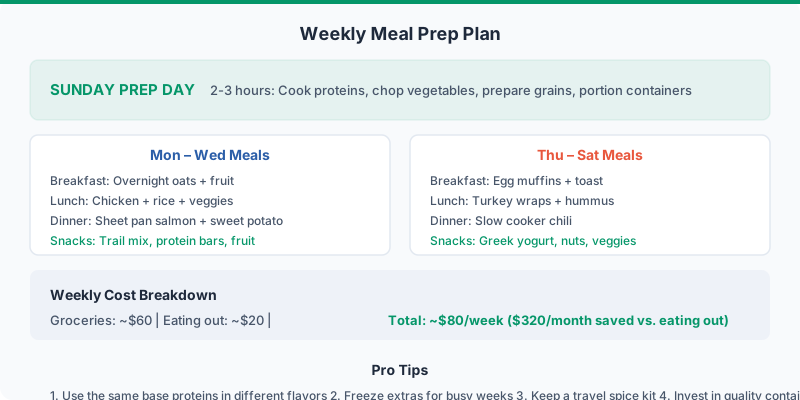
This method gives you 10 to 12 meals with only two to three hours of active work.
A Sample Weekly Meal Prep Plan
Here’s a concrete prep session you can follow this Sunday:
Proteins (cook simultaneously):
- 3 lbs chicken thighs in the Instant Pot with chicken broth and garlic (12 minutes pressure cook)
- 2 lbs ground turkey browned on the stovetop with taco seasoning (15 minutes)
Grains:
- 3 cups dry rice in the Instant Pot after the chicken (12 minutes pressure cook)
- 4 large sweet potatoes in the oven while vegetables roast (45 minutes at 400 degrees)
Vegetables (roast on sheet pans):
- Broccoli with olive oil and garlic
- Bell peppers and onions
- Zucchini and cherry tomatoes
Snacks:
- 10 hard-boiled eggs (Instant Pot, 5 minutes)
- Washed grapes and berries
- Portioned almonds and trail mix in small containers
- Hummus in individual containers with carrot sticks
Assembly: Build 10 to 12 containers mixing the components above. Label with the date. Refrigerate five days’ worth, freeze the rest.
Total time: About 2.5 hours, including cleanup.
Grocery Shopping Strategy
Shopping efficiently starts before you enter the store.
Make a list based on your prep plan. Write down exactly what you need: proteins, grains, vegetables, snacks, and pantry staples. Check what’s already in your apartment first.
Find the right store in your new city. Aldi is the budget king if there’s one nearby. Walmart is available almost everywhere and has solid prices. Costco is worth the membership if you’re buying proteins and grains in bulk. Trader Joe’s has excellent pre-marinated proteins and frozen meals for backup nights. For a full strategy on getting the most from your grocery budget, read the grocery budget guide.
Shop on prep day. Buy your groceries in the morning, then come home and start prepping. This keeps your ingredients fresh and prevents the “I’ll prep tomorrow” delay that never actually happens.
Keep a running list on your phone. When you run out of something mid-week, add it to the list immediately. Apps like AnyList or the Notes app work fine.
Storing and Reheating Meals
Fridge life: Most prepped meals last 3 to 5 days in the refrigerator. Cooked chicken, rice, and roasted vegetables all fall in this range.
Freeze the second half: If you prep on Sunday, refrigerate meals for Monday through Wednesday and freeze meals for Thursday through Saturday. Move frozen containers to the fridge the night before you need them.
Reheating tips: Microwave meals with the lid cracked open (not sealed) to vent steam. Add a splash of water to rice before reheating to prevent dryness. Soups and stews reheat best on medium power for longer rather than high power for a short blast.
Label everything. A strip of masking tape with the date and contents keeps you from playing the “mystery container” game at 6 AM before a shift.
Meal Prep for Different Dietary Needs
High-protein (for active nurses and gym-goers): Focus on lean proteins like chicken breast, turkey, and fish. Add Greek yogurt, eggs, and cottage cheese as snacks. Aim for 30 to 40 grams of protein per meal.
Vegetarian and vegan: Swap proteins for chickpeas, lentils, black beans, tofu, and tempeh. These are actually cheaper than meat and prep just as easily. An Instant Pot makes lentils and beans in a fraction of the time. Check out our Instant Pot recipes for plant-based options.
Low-carb and keto: Replace grains with cauliflower rice, extra vegetables, and higher-fat protein sources. Prep cheese and nut snack packs instead of fruit.
Dairy-free: Use coconut milk in curries, nutritional yeast in place of cheese, and olive oil-based dressings. Most batch-cooked proteins are naturally dairy-free.
Common Meal Prep Mistakes
Prepping too much variety your first week. Start with three or four recipes, not ten. Complexity kills consistency. You can add variety once the habit is locked in.
Not seasoning enough. Bland meal prep is the number one reason people quit. Use salt, pepper, garlic powder, onion powder, paprika, and cumin as your base. Add hot sauce, salsa, or soy sauce to individual containers for variety.
Ignoring snacks. Your meals might be dialed in, but if you don’t prep snacks, you’ll hit the vending machine at 2 AM. Prep snacks alongside your meals every single week.
Skipping sauces and dressings. A drizzle of teriyaki, a scoop of salsa, or a squeeze of sriracha turns a boring container into something you actually look forward to eating.
Not planning for shift meals vs. home meals. Your shift meals need to be portable and easy to reheat. Your home meals can be more elaborate. Pack shift meals in leak-proof containers with a fork already in your bag.
Scaling Up: Advanced Meal Prep Tips
Once you’ve got the basics down, you can level up:
Freezer meal prep for a full month. Spend one longer session (four to five hours) cooking and freezing enough meals for an entire month. This is great for your first week on a new assignment when you’re busy with orientation and don’t have time to shop.
Theme nights. Taco Tuesday, stir-fry Thursday, soup Sunday. Themes simplify your shopping list and give your week structure without requiring a detailed plan every time.
Slow cooker pairing. Use the slow cooker on shift days for a hot meal when you get home. Dump the ingredients before you leave, and dinner is ready when you walk in. See our slow cooker meals guide for dump-and-go recipes.
Subscription meal kits as a supplement. Services like EveryPlate or HelloFresh can fill in one or two dinners per week when you want something different without the planning effort. They’re not budget-friendly for every meal, but they’re a nice break from routine.
Frequently Asked Questions
How long does meal prep take for a travel nurse?
A complete weekly meal prep session takes about two to three hours, including grocery shopping, cooking, portioning, and cleanup. This investment replaces five to seven hours of daily cooking, ordering, and cleanup across the rest of the week. Most nurses find that morning prep on their first day off works best because they are rested and can let things cook while doing laundry or other errands. The time savings become even more significant as you develop a routine and master your favorite recipes.
How many meals should I prep per week?
Aim for ten to twelve meals per week, which covers your shift meals and most dinners. Cook two different proteins and two grain bases, roast three vegetables, and assemble containers in an assembly-line fashion. Prep five to six snack portions alongside your meals. Refrigerate three to five days’ worth and freeze the rest, moving frozen containers to the fridge the night before you need them.
What equipment do I need to start meal prepping?
You need a matching set of ten to fifteen meal prep containers in microwave-safe leak-proof material, an Instant Pot or slow cooker for batch cooking, a sheet pan for roasting vegetables, and one good eight-inch chef’s knife. Everything else is nice to have but not necessary. A furnished apartment kitchen typically provides the basics like pots, pans, and mixing bowls. This minimal equipment list is intentionally portable so you can move it between assignments every thirteen weeks.
How do I keep meal prep interesting and avoid food fatigue?
The key is cooking versatile base components and varying the sauces, seasonings, and combinations throughout the week. Cook plain chicken and rice, then add teriyaki sauce to some containers, salsa to others, and lemon herb seasoning to the rest. Rotating between two different proteins each week also adds variety. Once you have the basic habit established, gradually expand your recipe rotation and try one new recipe per prep session.
Can I meal prep if I have dietary restrictions?
Absolutely. The batch cooking method works for any dietary approach. Vegetarians and vegans can swap proteins for chickpeas, lentils, black beans, tofu, and tempeh, which are actually cheaper than meat. Low-carb and keto followers can replace grains with cauliflower rice and extra vegetables. Dairy-free eaters can use coconut milk in curries and olive oil-based dressings. The structure of the system stays the same regardless of what specific foods you include.
Key Takeaways
- Pick one consistent prep day each week and protect it
- Master the batch cooking method: 2 proteins, 2 grains, 3 vegetables
- Start with 3 to 4 simple recipes before adding variety
- Invest in a matching set of good containers and an Instant Pot or slow cooker
- Shop with a list and buy only what your plan requires
- Prep snacks alongside meals — they’re just as important
- Refrigerate 3 to 5 days’ worth of meals; freeze the rest
- Season generously and vary your sauces to avoid meal fatigue
- Two to three hours of prep saves five to seven hours of cooking during the week
Related Resources
- 10 Instant Pot Recipes for Travel Nurses
- Healthy Shift Meals: What to Eat During 12-Hour Shifts
- Grocery Budget Guide for Travel Nurses
- Best Meal Prep Containers for Travel Nurses
- Compact Kitchen Gear for Travel Nurses
- Slow Cooker Meals for Travel Nurses
- How to Save Money as a Travel Nurse
