
Travel Nurse Housing in San Francisco, California: Complete Guide

Disclosure: Some links in this post are affiliate links. If you click through and make a purchase, we may earn a small commission at no extra cost to you. Learn more about how we make money.
San Francisco is one of the most iconic cities in the world, known for the Golden Gate Bridge, its diverse neighborhoods, and a thriving tech economy. For travel nurses, SF offers prestigious hospitals, a compact and walkable city layout, and an extraordinary cultural experience, though the very high cost of living requires careful financial planning.
San Francisco’s healthcare market includes world-class institutions like UCSF Medical Center, Zuckerberg San Francisco General Hospital, Kaiser Permanente San Francisco, and Sutter Health’s California Pacific Medical Center. Travel nurse demand is strong, driven in part by the difficulty of recruiting permanent staff in one of the most expensive cities in the country.
Whether you are heading to San Francisco for your first travel nursing assignment or returning for another contract, this guide will help you navigate the housing market, understand what to expect from local costs, and find a neighborhood that fits your needs. SF has a lot to offer travel nurses, and a little planning goes a long way toward making your assignment a success.
Major Hospitals and Health Systems
San Francisco is home to several major hospitals and health systems that consistently hire travel nurses across a wide range of specialties. Knowing which facilities are in the area helps you plan your housing search around commute times and gives you a sense of where demand is concentrated.
UCSF Medical Center — One of the top-ranked hospitals in the country, located at the new Mission Bay campus and the Parnassus campus. UCSF is a premier academic medical center with leading programs in cancer, neuroscience, and transplant surgery.
Zuckerberg San Francisco General Hospital — The city’s safety-net hospital and only Level I trauma center. ZSFG serves a diverse patient population and offers travel nurses high-acuity, high-volume experience in a public hospital setting.
Kaiser Permanente San Francisco Medical Center — Located in the Geary corridor, this Kaiser facility serves a large patient population. Kaiser contracts in SF are popular with travel nurses for their organized workflows.
California Pacific Medical Center (CPMC) — Part of the Sutter Health system, CPMC operates the Van Ness campus and is a major provider of medical and surgical services in the city.
Travel nurse demand in San Francisco is generally strong, with ICU, ED, med-surg, and telemetry being among the most frequently requested specialties. Contract availability tends to be strong year-round, though demand typically peaks during winter flu season and convention season which drives up short-term housing. If you are flexible on specialty or shift, you will have even more options to choose from in this market.
Best Neighborhoods for Travel Nurses
Choosing the right neighborhood is one of the most important decisions you will make during your San Francisco assignment. Where you live affects your commute, your safety, your access to amenities, and ultimately your quality of life for the duration of your contract. Here are the top neighborhoods that travel nurses should consider when searching for housing in SF.
Inner Sunset
A residential neighborhood near UCSF Parnassus with a walkable commercial strip on Irving Street, diverse restaurants, and proximity to Golden Gate Park. It has a quieter, more neighborhood feel than other parts of the city.
Pros: Walking distance to UCSF Parnassus, quiet residential character, great restaurants on Irving, proximity to Golden Gate Park
Cons: Foggy and cool, limited nightlife, higher rents near UCSF, parking is difficult
Mission District
One of SF’s most vibrant neighborhoods with an incredible food scene, colorful murals, bustling nightlife, and a strong Latino cultural identity. It is well-connected by BART and Muni transit.
Pros: Incredible food and nightlife, BART access, sunnier weather than western neighborhoods, vibrant cultural scene
Cons: Can be noisy, higher rents in the core area, street conditions vary by block, parking is very limited
Richmond District
A diverse residential neighborhood stretching from Golden Gate Park to the ocean. The Richmond offers some of the most affordable rents in San Francisco and excellent Asian food along Clement Street.
Pros: More affordable than central SF, excellent Asian dining on Clement Street, close to Golden Gate Park and Ocean Beach, residential calm
Cons: Foggy weather, limited nightlife, bus commute to hospitals outside the Richmond, farther from BART
Hayes Valley
A trendy neighborhood near Civic Center with boutique shops, upscale dining, and proximity to CPMC and downtown hospitals. It has a chic, walkable feel.
Pros: Walkable and trendy, close to downtown hospitals, excellent shops and restaurants, Muni access
Cons: Expensive rents, small neighborhood footprint, some adjacent blocks have different safety profiles
When choosing where to live, prioritize keeping your commute under 30 minutes whenever possible. San Francisco is compact, only about 7 miles by 7 miles, and has an extensive public transit system including Muni buses, light rail, cable cars, and BART. Many travel nurses get by without a car, which is a significant cost savings given parking costs of $200 to $400 per month. If you are unfamiliar with the area, connect with other travel nurses who have worked in San Francisco through Facebook groups or online forums to get firsthand recommendations on neighborhoods.
Average Housing Costs
Housing costs in San Francisco are well above the national average. Here is a general overview of what you can expect to pay for rental housing in the area. Keep in mind that prices vary by neighborhood, season, and the specific amenities included with the unit.
- Studio apartment: $2,000 to $3,000 per month
- One-bedroom apartment: $2,500 to $3,800 per month
- Furnished apartment (travel nurse friendly): $3,000 to $4,500 per month
San Francisco is one of the most expensive housing markets in the country. Your stipend may not fully cover rent in a solo furnished apartment. Many travel nurses find rooms in shared houses or apartments, which can run $1,500 to $2,500 per month. Start searching early and be prepared to act fast when you find a good option.
Many travel nurses in San Francisco find their housing through Furnished Finder , which connects healthcare travelers with landlords who specifically offer furnished, short-term rentals designed for assignment-length stays. It is one of the most widely used housing platforms in the travel nursing industry and an excellent starting point for your search. You can also explore local Facebook groups, Craigslist, and extended-stay hotels to compare your options and find the best fit for your budget and preferences.
GSA Stipend Rate
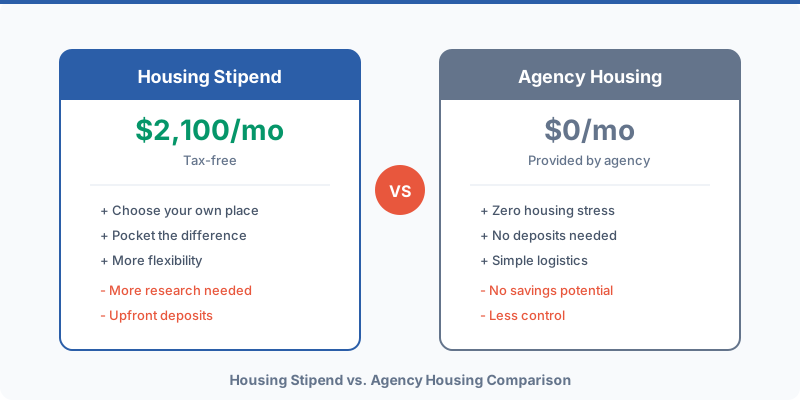
The General Services Administration publishes per diem rates that many travel nursing agencies use as a baseline for calculating housing and meals and incidentals stipends. The GSA rate for the San Francisco, CA area varies by time of year, with higher rates typically applying during peak travel seasons and lower rates during off-peak months.
It is essential to check the current GSA per diem rate for your specific assignment dates and location, as rates are updated annually each October and can change significantly from year to year. You can look up the exact rate on the GSA website or ask your recruiter for the figures they are using to calculate your pay package. Keep in mind that your actual stipend may differ from the published GSA rate depending on your agency’s internal pay structure and policies.
Understanding how your stipend fits into your total compensation is key to evaluating any travel nursing contract. For help breaking down the numbers, use our pay calculator to compare packages side by side and see your estimated take-home pay after taxes, stipends, and deductions.
Housing Tips for San Francisco
Every city has its own quirks and considerations when it comes to finding and securing travel nurse housing. Here are tips specific to San Francisco that will help you avoid common pitfalls, stretch your housing stipend further, and settle in more quickly.
-
Skip the car — San Francisco’s compact size and excellent public transit mean most travel nurses do not need a car. Muni, BART, and rideshare will get you everywhere. If you do bring a car, parking costs $200 to $400 per month for a garage spot.
-
Shared housing is the norm — Given the extreme cost of housing, most travel nurses in SF share an apartment or house. Renting a furnished room in a shared house is the most practical way to keep costs below your stipend.
-
California taxes are the highest in the nation — California’s state income tax will take a significant bite out of your paycheck. Make sure your pay package accounts for this, and verify that the total compensation makes financial sense.
-
Layer your clothing — San Francisco weather is famously unpredictable. Morning fog can give way to afternoon sunshine, and different neighborhoods have different microclimates. Dress in layers and always carry a jacket.
For a comprehensive overview of the housing search process from start to finish, including how to spot scams and negotiate lease terms, check out our complete travel nurse housing guide. It covers everything you need to know regardless of which city you are heading to.
Cost of Living Overview
San Francisco has one of the highest costs of living in the United States. Groceries are about 20 to 30 percent above the national average. Gas is among the most expensive in the country. Dining out ranges from $15 burritos in the Mission to $100-plus tasting menus. The combination of high housing costs and California state income tax means travel nurses must carefully evaluate pay packages.
When budgeting for your San Francisco assignment, factor in all of your regular expenses beyond rent. The Mission District and Richmond neighborhoods have some of the best affordable food in the city. Trader Joe’s is the go-to grocery chain for value, and Chinatown has incredibly cheap produce. Cook at home when possible and take advantage of the city’s many free outdoor attractions. Tracking your spending during the first two weeks of your assignment will give you a realistic picture of your monthly costs and help you adjust your budget accordingly.
Things to Do on Days Off
One of the greatest perks of travel nursing is the opportunity to explore a new city on your days off. San Francisco has plenty to offer whether you prefer outdoor adventures, cultural experiences, or simply relaxing and recharging between shifts.
- Golden Gate Bridge and Park — Walk or bike across the iconic bridge and explore the 1,017 acres of Golden Gate Park, including the California Academy of Sciences, the de Young Museum, and the Japanese Tea Garden.
- Alcatraz Island — Take the ferry to Alcatraz for a fascinating tour of the infamous former prison. Book tickets well in advance as tours sell out quickly.
- Explore the Neighborhoods — From the Italian cafes of North Beach to the murals of the Mission and the shops of Haight-Ashbury, SF is a city of neighborhoods each with its own character and charm.
- Wine Country Day Trip — Napa Valley and Sonoma are just an hour north. Spend a day off tasting world-class wines and enjoying wine country cuisine.
- Baker Beach and Lands End — Hike the Lands End coastal trail for stunning views of the Golden Gate Bridge, or relax at Baker Beach with the bridge as your backdrop.
Take full advantage of your time in SF. Exploring the local culture, trying restaurants you have never heard of, and visiting nearby attractions are what make travel nursing more than just a paycheck. Many travel nurses find that their days off are when they truly fall in love with a new city.
Final Thoughts
San Francisco, California offers travel nurses world-class hospitals, an unmatched cultural experience, a compact and transit-friendly layout, and the chance to live in one of the most beautiful cities in the world. With UCSF Medical Center, Zuckerberg San Francisco General, Kaiser Permanente, and CPMC and a very high cost of living, it is a market well worth considering whether you are a first-time traveler or a seasoned veteran looking for your next destination.
Start your housing search as early as possible, ideally four to six weeks before your assignment start date. The best furnished rentals tend to go quickly, especially in popular neighborhoods near major hospitals. Furnished Finder is an excellent resource for finding travel nurse housing in San Francisco, and joining local travel nurse social media groups can give you insider tips and real-time availability updates.
For more resources on finding and securing great travel nurse housing anywhere in the country, explore our complete housing guide. And when you are comparing pay packages for San Francisco assignments, our pay calculator can help you break down the numbers and understand your true compensation.
We wish you the best on your San Francisco assignment. It is a great place to be a travel nurse.
