
Travel Nurse Housing in New York City, New York: Complete Guide

Disclosure: Some links in this post are affiliate links. If you click through and make a purchase, we may earn a small commission at no extra cost to you. Learn more about how we make money.
New York City is the largest city in the United States and one of the most dynamic healthcare markets in the world. With over 70 hospitals spread across five boroughs, travel nurses will find an extraordinary range of assignment opportunities in virtually every specialty imaginable. The city’s unmatched public transit system, world-class dining, and endless cultural offerings make it an exciting, if expensive, place to live and work.
NYC’s healthcare landscape is dominated by massive academic medical centers and public hospital systems. The NYC Health + Hospitals system alone operates 11 acute care hospitals, and prestigious private institutions like NYU Langone, Mount Sinai, and NewYork-Presbyterian are constantly recruiting travel nurses to manage patient volumes in this densely populated metro area.
Whether you are heading to New York City for your first travel nursing assignment or returning for another contract, this guide will help you navigate the housing market, understand what to expect from local costs, and find a neighborhood that fits your needs. NYC has a lot to offer travel nurses, and a little planning goes a long way toward making your assignment a success.
Major Hospitals and Health Systems
New York City is home to several major hospitals and health systems that consistently hire travel nurses across a wide range of specialties. Knowing which facilities are in the area helps you plan your housing search around commute times and gives you a sense of where demand is concentrated.
NYU Langone Health — A world-class academic medical center in Manhattan consistently ranked among the top hospitals in the nation. NYU Langone is known for its advanced research programs, state-of-the-art facilities, and high patient acuity that provides travel nurses with exceptional clinical experience.
Mount Sinai Hospital — Located on the Upper East Side, Mount Sinai is a prestigious teaching hospital renowned for its cardiology, geriatrics, oncology, and neurosurgery programs. Travel nurses here work alongside leading specialists in a fast-paced academic environment.
NewYork-Presbyterian Hospital — Affiliated with both Columbia University and Weill Cornell Medicine, NewYork-Presbyterian operates multiple campuses across the city and is one of the largest and most comprehensive hospital systems in the country.
Bellevue Hospital Center — The oldest public hospital in the United States, Bellevue is a Level I trauma center in Midtown East serving an incredibly diverse patient population. It is part of the NYC Health + Hospitals system and offers travel nurses high-volume, high-acuity experience.
Memorial Sloan Kettering Cancer Center — One of the world’s premier cancer treatment and research institutions, MSK offers travel nurses the opportunity to work in cutting-edge oncology care alongside globally recognized specialists.
Travel nurse demand in New York City is generally consistently high, with ICU, ED, med-surg, labor and delivery, and telemetry being among the most frequently requested specialties. Contract availability tends to be strong year-round, though demand typically peaks during winter flu season, summer vacation months, and during public health surges. If you are flexible on specialty or shift, you will have even more options to choose from in this market.
Best Neighborhoods for Travel Nurses
Choosing the right neighborhood is one of the most important decisions you will make during your New York City assignment. Where you live affects your commute, your safety, your access to amenities, and ultimately your quality of life for the duration of your contract. Here are the top neighborhoods that travel nurses should consider when searching for housing in NYC.
Upper West Side
The Upper West Side is a classic residential Manhattan neighborhood located near several major hospitals including Mount Sinai St. Luke’s. Tree-lined streets, brownstones, and easy access to Central Park make it a favorite among healthcare workers who want a livable, walkable neighborhood. Subway lines along Broadway and Central Park West connect you to hospitals across the city.
Pros: Safe residential streets, proximity to Central Park, excellent subway access on the 1/2/3 and B/C lines, abundant grocery stores including Trader Joe’s and Whole Foods
Cons: Higher rents than outer boroughs, competitive housing market especially for furnished units, street parking is nearly impossible
Astoria, Queens
Astoria is one of the most popular neighborhoods for travel nurses in NYC thanks to its relatively affordable rents and easy commute to Manhattan via the N and W trains. The neighborhood has a vibrant dining scene with cuisines from around the world, a strong community feel, and a growing number of furnished rental options catering to short-term tenants.
Pros: Lower rents than Manhattan, incredible diversity of restaurants and grocery stores, 20 to 30 minute subway commute to Midtown, community atmosphere
Cons: Can be crowded, limited late-night subway frequency, fewer luxury apartment options compared to Manhattan
Washington Heights
Located in upper Manhattan, Washington Heights is one of the most affordable neighborhoods on the island. It is particularly popular with nurses working at NewYork-Presbyterian Columbia campus, which is within walking distance. The neighborhood has a vibrant Dominican cultural scene with excellent affordable dining options.
Pros: Walking distance to NewYork-Presbyterian Columbia, very affordable for Manhattan, vibrant food scene, strong community feel, A express train to Midtown
Cons: Farther from Midtown and downtown hospitals, hilly terrain, some blocks feel less polished than other Manhattan neighborhoods
Jersey City, New Jersey
Just across the Hudson River, Jersey City offers significantly lower rents than Manhattan with convenient PATH train access to downtown and Midtown. Modern waterfront apartment buildings in areas like Newport and Exchange Place provide amenities that would cost double in Manhattan.
Pros: Significantly lower rent, modern apartment buildings with amenities, waterfront parks, PATH train to Manhattan in 15 to 20 minutes
Cons: Requires PATH train commute which can be crowded at peak hours, you will pay New Jersey state taxes, limited late-night transit options
Long Island City, Queens
LIC has transformed into a popular residential neighborhood with sleek high-rise apartments, waterfront parks, and quick subway access to Midtown Manhattan. It is a favorite among young professionals and travel nurses who want a modern living experience at a lower price point than Manhattan.
Pros: Quick commute to Midtown via the 7 train or E/M/G lines, modern apartments with great views, waterfront parks and restaurants, lower rents than Manhattan
Cons: Can feel less neighborhood-like than other areas, construction is ongoing in many blocks, limited parking
When choosing where to live, prioritize keeping your commute under 30 minutes whenever possible. In NYC, most travel nurses rely on the subway rather than driving. Plan your housing search around subway lines that connect directly to your hospital, and factor in a 30 to 45 minute door-to-door commute as typical. If you are unfamiliar with the area, connect with other travel nurses who have worked in New York City through Facebook groups or online forums to get firsthand recommendations on neighborhoods.
Average Housing Costs
Housing costs in New York City are well above the national average. Here is a general overview of what you can expect to pay for rental housing in the area. Keep in mind that prices vary by neighborhood, season, and the specific amenities included with the unit.
- Studio apartment: $1,800 to $2,800 per month
- One-bedroom apartment: $2,200 to $3,500 per month
- Furnished apartment (travel nurse friendly): $2,800 to $4,500 per month
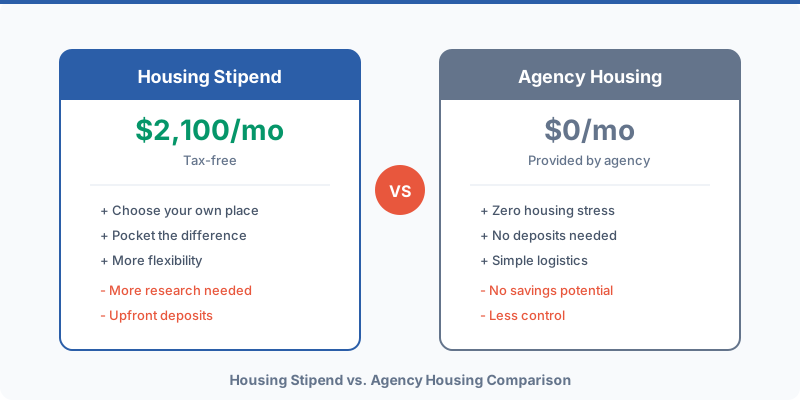
The NYC rental market moves fast. Furnished apartments in desirable neighborhoods can be listed and rented within days, so start searching as soon as you have your assignment confirmed. Expect to pay first month’s rent and a security deposit upfront. Agency housing is worth considering for first-time NYC travelers who are unfamiliar with the market.
Many travel nurses in New York City find their housing through Furnished Finder , which connects healthcare travelers with landlords who specifically offer furnished, short-term rentals designed for assignment-length stays. It is one of the most widely used housing platforms in the travel nursing industry and an excellent starting point for your search. You can also explore local Facebook groups, Craigslist, and extended-stay hotels to compare your options and find the best fit for your budget and preferences.
GSA Stipend Rate
The General Services Administration publishes per diem rates that many travel nursing agencies use as a baseline for calculating housing and meals and incidentals stipends. The GSA rate for the New York City, NY area varies by time of year, with higher rates typically applying during peak travel seasons and lower rates during off-peak months.
It is essential to check the current GSA per diem rate for your specific assignment dates and location, as rates are updated annually each October and can change significantly from year to year. You can look up the exact rate on the GSA website or ask your recruiter for the figures they are using to calculate your pay package. Keep in mind that your actual stipend may differ from the published GSA rate depending on your agency’s internal pay structure and policies.
Understanding how your stipend fits into your total compensation is key to evaluating any travel nursing contract. For help breaking down the numbers, use our pay calculator to compare packages side by side and see your estimated take-home pay after taxes, stipends, and deductions.
Housing Tips for New York City
Every city has its own quirks and considerations when it comes to finding and securing travel nurse housing. Here are tips specific to New York City that will help you avoid common pitfalls, stretch your housing stipend further, and settle in more quickly.
-
Skip the car — Most travel nurses in NYC do not need a car. The subway, buses, and rideshare apps will get you everywhere you need to go. If you do bring a car, budget an extra $300 to $500 per month for garage parking, and be prepared for the stress of alternate-side parking rules.
-
Consider outer boroughs — Manhattan rents are the highest in the country, but neighborhoods in Queens, Brooklyn, and even Jersey City offer significantly lower rents with reasonable commute times. A furnished one-bedroom in Astoria might save you $1,000 per month compared to a similar unit on the Upper East Side.
-
Get a MetroCard or OMNY pass — An unlimited monthly MetroCard costs around $132 and covers all subway and local bus rides. This is far cheaper than any other transportation option and gives you the freedom to explore the entire city on your days off.
-
Watch for housing scams — NYC’s competitive rental market attracts scammers. Never send money without seeing a unit in person or doing a live video walkthrough. Be wary of listings that seem too good to be true, and verify the landlord’s identity before signing anything.
-
Layer up for winter — If your assignment falls between November and March, invest in a quality winter coat, waterproof boots, and layers. Waiting for the subway on an outdoor platform in January is no joke, and you will be walking more than you expect.
For a comprehensive overview of the housing search process from start to finish, including how to spot scams and negotiate lease terms, check out our complete travel nurse housing guide. It covers everything you need to know regardless of which city you are heading to.
Cost of Living Overview
New York City has one of the highest costs of living in the United States. Groceries run roughly 20 to 30 percent above the national average, with a gallon of milk costing around $5 and a dozen eggs around $4 to $5. Dining out is expensive, with a typical sit-down meal for one running $20 to $35 before tip. Gas prices are among the highest in the country, though most travel nurses will not need a car. Utilities can add $100 to $200 per month on top of rent depending on the season and whether they are included in your lease.
When budgeting for your New York City assignment, factor in all of your regular expenses beyond rent. Cook at home as much as possible to stretch your stipend. NYC has incredible grocery diversity including affordable options like Aldi, local produce markets, and ethnic grocery stores that offer much better prices than mainstream chains. Many travel nurses in NYC find that meal prepping saves them hundreds of dollars per month compared to eating out regularly. Tracking your spending during the first two weeks of your assignment will give you a realistic picture of your monthly costs and help you adjust your budget accordingly.
Things to Do on Days Off
One of the greatest perks of travel nursing is the opportunity to explore a new city on your days off. New York City has plenty to offer whether you prefer outdoor adventures, cultural experiences, or simply relaxing and recharging between shifts.
- Central Park — Over 800 acres of green space in the heart of Manhattan, perfect for running, biking, paddleboarding on the lake, or simply relaxing on a bench after a long shift. Free concerts and events happen throughout the warmer months.
- Broadway and Off-Broadway Shows — Catch a world-class theater performance. Same-day discount tickets are available through the TKTS booths in Times Square and Lincoln Center, often at 20 to 50 percent off face value.
- Brooklyn Bridge and DUMBO — Walk across one of the most iconic bridges in the world and explore the cobblestone streets of DUMBO with stunning Manhattan skyline views, artisan shops, and excellent pizza.
- The Metropolitan Museum of Art — One of the largest and most prestigious art museums in the world. Admission is pay-what-you-wish for New York state residents, and the collection spans 5,000 years of art from every corner of the globe.
- Explore Diverse Neighborhoods — From the Italian bakeries of Arthur Avenue in the Bronx to the vibrant streets of Chinatown and Flushing, NYC offers endless neighborhood exploration with world-class food at every price point.
Take full advantage of your time in NYC. Exploring the local culture, trying restaurants you have never heard of, and visiting nearby attractions are what make travel nursing more than just a paycheck. Many travel nurses find that their days off are when they truly fall in love with a new city.
Final Thoughts
New York City, New York offers travel nurses an unparalleled range of clinical opportunities, an unmatched cultural experience, and the chance to work in some of the most prestigious hospitals in the world. With dozens of major hospital systems and academic medical centers and a very high cost of living, it is a market well worth considering whether you are a first-time traveler or a seasoned veteran looking for your next destination.
Start your housing search as early as possible, ideally four to six weeks before your assignment start date. The best furnished rentals tend to go quickly, especially in popular neighborhoods near major hospitals. Furnished Finder is an excellent resource for finding travel nurse housing in New York City, and joining local travel nurse social media groups can give you insider tips and real-time availability updates.
For more resources on finding and securing great travel nurse housing anywhere in the country, explore our complete housing guide. And when you are comparing pay packages for New York City assignments, our pay calculator can help you break down the numbers and understand your true compensation.
We wish you the best on your New York City assignment. It is a great place to be a travel nurse.
