
Travel Nurse Housing in Los Angeles, California: Complete Guide

Disclosure: Some links in this post are affiliate links. If you click through and make a purchase, we may earn a small commission at no extra cost to you. Learn more about how we make money.
Los Angeles is the second-largest city in the United States and a sprawling metropolis known for its sunshine, diversity, and entertainment industry. For travel nurses, LA offers an enormous healthcare market with world-renowned hospitals, cutting-edge research facilities, and a constant demand for nursing talent across virtually every specialty.
The greater Los Angeles area is home to over 100 hospitals ranging from elite academic medical centers to busy community hospitals and safety-net facilities. Major systems like Cedars-Sinai, UCLA Health, Kaiser Permanente, and Providence operate multiple campuses throughout the metro area, creating a steady pipeline of travel nursing contracts.
Whether you are heading to Los Angeles for your first travel nursing assignment or returning for another contract, this guide will help you navigate the housing market, understand what to expect from local costs, and find a neighborhood that fits your needs. LA has a lot to offer travel nurses, and a little planning goes a long way toward making your assignment a success.
Major Hospitals and Health Systems
Los Angeles is home to several major hospitals and health systems that consistently hire travel nurses across a wide range of specialties. Knowing which facilities are in the area helps you plan your housing search around commute times and gives you a sense of where demand is concentrated.
Cedars-Sinai Medical Center — One of the most prestigious hospitals in the western United States, Cedars-Sinai is a world-renowned teaching hospital in West Hollywood known for its cardiac care, neuroscience, and oncology programs. Travel nurses here work in a high-acuity, fast-paced environment alongside top specialists.
UCLA Medical Center — Part of the UCLA Health system, this Westwood hospital is consistently ranked among the best in California. It is a major academic medical center with strong programs in transplant surgery, cardiology, and neurology, and it regularly hires travel nurses across multiple units.
Keck Hospital of USC — Located near downtown LA, Keck is the primary teaching hospital of the University of Southern California. Known for its transplant programs, cancer care, and research initiatives, it draws travel nurses seeking a challenging academic environment.
Kaiser Permanente Los Angeles Medical Center — One of the largest Kaiser facilities on the West Coast, this Sunset Boulevard hospital serves a massive patient population. Kaiser contracts are popular with travel nurses for their organized workflows and well-staffed support teams.
Providence Saint John’s Health Center — Located in Santa Monica, this community hospital offers travel nurses a slightly slower pace than the major academic centers while still providing high-quality patient care in a desirable beachside location.
Travel nurse demand in Los Angeles is generally consistently strong, with ICU, ED, med-surg, telemetry, and OR being among the most frequently requested specialties. Contract availability tends to be strong year-round, though demand typically peaks during summer months and winter holiday season when permanent staff take vacations. If you are flexible on specialty or shift, you will have even more options to choose from in this market.
Best Neighborhoods for Travel Nurses
Choosing the right neighborhood is one of the most important decisions you will make during your Los Angeles assignment. Where you live affects your commute, your safety, your access to amenities, and ultimately your quality of life for the duration of your contract. Here are the top neighborhoods that travel nurses should consider when searching for housing in LA.
Koreatown
Koreatown, or K-Town, is centrally located and one of the most affordable neighborhoods in central LA. It is close to several major hospitals and offers incredible Korean, Mexican, and other international dining options. The neighborhood has a lively nightlife scene and good access to public transit via the Metro Purple and Red lines.
Pros: Central location close to multiple hospitals, affordable rents for central LA, excellent and diverse dining, good Metro access
Cons: Street parking can be difficult, noise levels are higher than residential areas, some blocks can feel congested
Culver City
Culver City has become one of the most desirable neighborhoods in LA, with a revitalized downtown, great restaurants, and a growing arts scene. It offers a more walkable experience than most LA neighborhoods and has good access to the Expo Line for commuting to hospitals in West LA and downtown.
Pros: Walkable downtown area, good restaurants and nightlife, Expo Line access, safer and quieter than many central LA neighborhoods
Cons: Rents have risen significantly in recent years, parking can still be a challenge near downtown Culver City, not as close to hospitals on the east side of town
Silver Lake and Echo Park
These trendy eastside neighborhoods offer a hip, community-oriented vibe with independent coffee shops, boutiques, and restaurants. They are well-positioned for commutes to downtown hospitals and Hollywood-area facilities. Rents are moderate by LA standards and the neighborhoods have a loyal following among young professionals.
Pros: Trendy and walkable main streets, moderate rents for the quality of the area, close to downtown hospitals, strong community feel
Cons: Hilly terrain, street parking is competitive, public transit options are limited compared to central LA neighborhoods
Santa Monica
If you want to live near the beach, Santa Monica offers beautiful oceanfront living with a walkable downtown, great dining, and the famous Santa Monica Pier. It is close to hospitals like Providence Saint John’s and UCLA Medical Center. The Expo Line connects to downtown LA for those with assignments further east.
Pros: Beach access, walkable downtown, Expo Line to downtown, relatively safe and clean
Cons: Expensive rents, traffic congestion on the 10 Freeway during rush hour, farther from hospitals in central and east LA
Glendale
Glendale is a safe, family-friendly city adjacent to LA with a thriving Armenian community, excellent dining, and the Americana at Brand shopping center. It offers more affordable rents than Westside neighborhoods and reasonable commute times to hospitals in central LA, Burbank, and Pasadena.
Pros: Safe neighborhoods, affordable rents relative to LA, excellent Armenian and Middle Eastern food, close to hospitals in Burbank and Pasadena
Cons: Requires a car for most errands, freeway traffic can add significant commute time, farther from the beach
When choosing where to live, prioritize keeping your commute under 30 minutes whenever possible. Los Angeles is a car-dependent city and traffic can be brutal during rush hours. If possible, choose housing that keeps your commute under 30 minutes during off-peak hours, and consider neighborhoods along Metro rail lines if your hospital is near a station. If you are unfamiliar with the area, connect with other travel nurses who have worked in Los Angeles through Facebook groups or online forums to get firsthand recommendations on neighborhoods.
Average Housing Costs
Housing costs in Los Angeles are above the national average. Here is a general overview of what you can expect to pay for rental housing in the area. Keep in mind that prices vary by neighborhood, season, and the specific amenities included with the unit.
- Studio apartment: $1,500 to $2,200 per month
- One-bedroom apartment: $1,800 to $2,800 per month
- Furnished apartment (travel nurse friendly): $2,200 to $3,500 per month
Start your housing search four to six weeks before your start date. LA has a large rental market but furnished short-term options go quickly, especially near popular hospitals. Many travel nurses in LA find that renting a furnished room in a shared house is the most cost-effective option, as solo apartments in desirable areas can eat deeply into your stipend.
Many travel nurses in Los Angeles find their housing through Furnished Finder , which connects healthcare travelers with landlords who specifically offer furnished, short-term rentals designed for assignment-length stays. It is one of the most widely used housing platforms in the travel nursing industry and an excellent starting point for your search. You can also explore local Facebook groups, Craigslist, and extended-stay hotels to compare your options and find the best fit for your budget and preferences.
GSA Stipend Rate
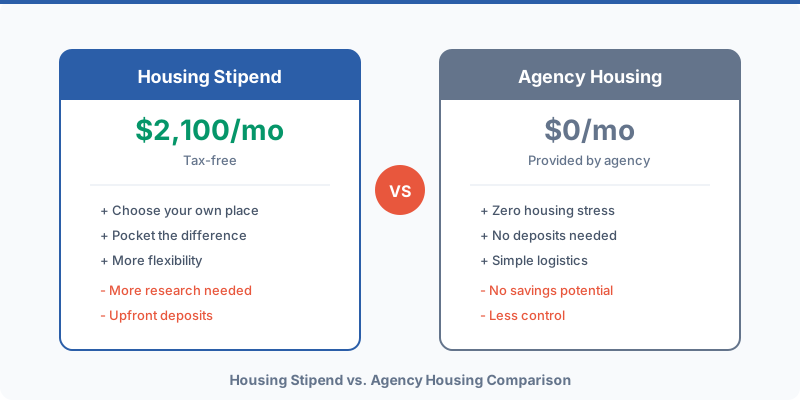
The General Services Administration publishes per diem rates that many travel nursing agencies use as a baseline for calculating housing and meals and incidentals stipends. The GSA rate for the Los Angeles, CA area varies by time of year, with higher rates typically applying during peak travel seasons and lower rates during off-peak months.
It is essential to check the current GSA per diem rate for your specific assignment dates and location, as rates are updated annually each October and can change significantly from year to year. You can look up the exact rate on the GSA website or ask your recruiter for the figures they are using to calculate your pay package. Keep in mind that your actual stipend may differ from the published GSA rate depending on your agency’s internal pay structure and policies.
Understanding how your stipend fits into your total compensation is key to evaluating any travel nursing contract. For help breaking down the numbers, use our pay calculator to compare packages side by side and see your estimated take-home pay after taxes, stipends, and deductions.
Housing Tips for Los Angeles
Every city has its own quirks and considerations when it comes to finding and securing travel nurse housing. Here are tips specific to Los Angeles that will help you avoid common pitfalls, stretch your housing stipend further, and settle in more quickly.
-
You will need a car — Unlike New York City, Los Angeles is extremely car-dependent. Public transit is expanding but still limited for most commutes. Budget for gas, car insurance, and potentially a parking spot if your apartment does not include one.
-
Time your commute carefully — LA traffic is legendary for good reason. A drive that takes 15 minutes at 6 AM can take 45 minutes at 8 AM. If possible, choose housing close to your hospital or along a route that avoids the worst freeway bottlenecks like the 405 and 101 during rush hour.
-
Explore shared housing — Furnished rooms in shared houses are popular among LA travel nurses and can cost $1,000 to $1,500 per month including utilities. This is often the best way to keep your housing costs well below your stipend in an expensive market.
-
Watch out for hidden costs — Some LA apartments charge extra for parking, which can run $100 to $200 per month. Read your lease carefully and ask about utility costs, as electricity bills can spike during hot summer months when you are running air conditioning.
-
Get renter’s insurance — LA landlords often require renter’s insurance, and it is a smart idea regardless. A basic policy costs $15 to $30 per month and covers your belongings in case of theft, fire, or the occasional earthquake.
For a comprehensive overview of the housing search process from start to finish, including how to spot scams and negotiate lease terms, check out our complete travel nurse housing guide. It covers everything you need to know regardless of which city you are heading to.
Cost of Living Overview
Los Angeles has a high cost of living, though it is somewhat more manageable than San Francisco or New York City. Groceries are about 10 to 15 percent above the national average. Gas prices are consistently among the highest in the country, typically $1 to $1.50 more per gallon than the national average due to California taxes and refinery costs. Dining out ranges from very affordable at the city’s legendary taco trucks and hole-in-the-wall restaurants to expensive at trendy Westside establishments.
When budgeting for your Los Angeles assignment, factor in all of your regular expenses beyond rent. Take advantage of LA’s incredible ethnic food scene for affordable meals. Taco stands, Thai Town restaurants, and Korean BBQ spots in K-Town offer outstanding food at a fraction of what you would pay at mainstream restaurants. Grocery-wise, stores like Aldi, Grocery Outlet, and ethnic markets offer significantly better prices than Whole Foods or Erewhon. Tracking your spending during the first two weeks of your assignment will give you a realistic picture of your monthly costs and help you adjust your budget accordingly.
Things to Do on Days Off
One of the greatest perks of travel nursing is the opportunity to explore a new city on your days off. Los Angeles has plenty to offer whether you prefer outdoor adventures, cultural experiences, or simply relaxing and recharging between shifts.
- Beach Days — LA has miles of beautiful coastline. Venice Beach, Santa Monica, Manhattan Beach, and Malibu are all within reach for a day of surfing, swimming, or simply relaxing in the sun after a tough shift.
- Griffith Observatory and Griffith Park — Hike to the iconic Griffith Observatory for free admission and stunning views of the Hollywood sign and the LA skyline. The surrounding park offers miles of trails for running and mountain biking.
- The Getty Center — This stunning hilltop museum offers free admission, world-class art collections, beautiful gardens, and panoramic views of the city. It is one of LA’s best free attractions.
- Explore Diverse Neighborhoods — From the arts district downtown to the beach towns of the South Bay, LA is a collection of distinct neighborhoods each with its own personality, food scene, and vibe.
- Day Trips — Use your days off to explore beyond the city. Joshua Tree National Park, Big Bear Lake, Santa Barbara wine country, and San Diego are all within a two to three hour drive.
Take full advantage of your time in LA. Exploring the local culture, trying restaurants you have never heard of, and visiting nearby attractions are what make travel nursing more than just a paycheck. Many travel nurses find that their days off are when they truly fall in love with a new city.
Final Thoughts
Los Angeles, California offers travel nurses a massive healthcare market with abundant assignment options, year-round sunshine, and an incredible diversity of neighborhoods and experiences. With dozens of major hospital systems including world-renowned academic medical centers and a high cost of living, it is a market well worth considering whether you are a first-time traveler or a seasoned veteran looking for your next destination.
Start your housing search as early as possible, ideally four to six weeks before your assignment start date. The best furnished rentals tend to go quickly, especially in popular neighborhoods near major hospitals. Furnished Finder is an excellent resource for finding travel nurse housing in Los Angeles, and joining local travel nurse social media groups can give you insider tips and real-time availability updates.
For more resources on finding and securing great travel nurse housing anywhere in the country, explore our complete housing guide. And when you are comparing pay packages for Los Angeles assignments, our pay calculator can help you break down the numbers and understand your true compensation.
We wish you the best on your Los Angeles assignment. It is a great place to be a travel nurse.
