
Travel Nurse Housing in Chicago, Illinois: Complete Guide

Disclosure: Some links in this post are affiliate links. If you click through and make a purchase, we may earn a small commission at no extra cost to you. Learn more about how we make money.
Chicago is the third-largest city in the United States and a major healthcare hub in the Midwest. Known for its stunning architecture, deep-dish pizza, world-class museums, and vibrant neighborhoods, the Windy City offers travel nurses an exciting urban experience with a cost of living that is more manageable than coastal metros like New York and Los Angeles.
Chicago’s healthcare market is anchored by several prestigious academic medical centers and large hospital systems. Northwestern Memorial, Rush University Medical Center, and the University of Chicago Medicine are nationally ranked institutions that consistently recruit travel nurses. The city’s diverse patient population and high volume of facilities ensure a steady supply of contracts across all major specialties.
Whether you are heading to Chicago for your first travel nursing assignment or returning for another contract, this guide will help you navigate the housing market, understand what to expect from local costs, and find a neighborhood that fits your needs. Chicago has a lot to offer travel nurses, and a little planning goes a long way toward making your assignment a success.
Major Hospitals and Health Systems
Chicago is home to several major hospitals and health systems that consistently hire travel nurses across a wide range of specialties. Knowing which facilities are in the area helps you plan your housing search around commute times and gives you a sense of where demand is concentrated.
Northwestern Memorial Hospital — Located in the Streeterville neighborhood along the Magnificent Mile, Northwestern Memorial is one of the top-ranked hospitals in Illinois and a leading academic medical center. Travel nurses here work in a high-acuity environment with access to cutting-edge technology and interdisciplinary care teams.
Rush University Medical Center — Situated in the Illinois Medical District on the Near West Side, Rush is known for its innovative patient care model, strong nursing culture, and nationally ranked programs in orthopedics, neurology, and pulmonology. It is a popular destination for travel nurses seeking a supportive work environment.
University of Chicago Medical Center — Located in the Hyde Park neighborhood on the South Side, UChicago Medicine is a world-renowned academic institution with a Level I trauma center. Travel nurses here gain exposure to complex cases and a diverse patient population.
Advocate Christ Medical Center — This large hospital in Oak Lawn, just south of the city, is one of the busiest Level I trauma centers in the state. It is a major employer of travel nurses, particularly in emergency, critical care, and surgical specialties.
Loyola University Medical Center — Located in the western suburb of Maywood, Loyola is a teaching hospital affiliated with Loyola University Chicago. It offers strong programs in transplant surgery, oncology, and burn care, and regularly hires travel nurses for its specialized units.
Travel nurse demand in Chicago is generally consistently strong, with ICU, ED, med-surg, telemetry, and OR being among the most frequently requested specialties. Contract availability tends to be strong year-round, though demand typically peaks during winter months when flu season and cold weather combine, and during summer when permanent staff take vacations. If you are flexible on specialty or shift, you will have even more options to choose from in this market.
Best Neighborhoods for Travel Nurses
Choosing the right neighborhood is one of the most important decisions you will make during your Chicago assignment. Where you live affects your commute, your safety, your access to amenities, and ultimately your quality of life for the duration of your contract. Here are the top neighborhoods that travel nurses should consider when searching for housing in Chicago.
Lincoln Park
Lincoln Park is one of Chicago’s most desirable neighborhoods, located along the lakefront on the North Side. It offers tree-lined streets, excellent restaurants, a free zoo, and easy access to the CTA Red and Brown lines. It is popular with young professionals and provides a reasonable commute to hospitals in the Loop and Near North Side.
Pros: Beautiful lakefront parks, walkable streets with great dining and shopping, strong public transit connections, safe and well-maintained neighborhood
Cons: Higher rents than many Chicago neighborhoods, parking can be expensive, crowded during summer weekends around the zoo and beach
Wicker Park and Bucktown
These adjacent neighborhoods on the Northwest Side offer a trendy, artsy atmosphere with independent boutiques, coffee shops, and some of the best restaurants in the city. The CTA Blue Line provides quick access to the Loop and the Illinois Medical District where Rush is located.
Pros: Vibrant nightlife and dining scene, Blue Line access to Rush and the Medical District, strong community feel, walkable main streets on Milwaukee and Division
Cons: Parking is competitive especially on weekends, noise levels can be high near the main bar strips, rents have increased as the area has gentrified
Hyde Park
Located on the South Side near the University of Chicago campus, Hyde Park is an intellectual and culturally rich neighborhood. It is the obvious choice for travel nurses working at UChicago Medical Center. The neighborhood has a more relaxed pace than the North Side and offers lower rents.
Pros: Walking distance to UChicago Medical Center, affordable rents, access to the Museum of Science and Industry and lakefront, strong sense of community
Cons: Somewhat isolated from the rest of the city, public transit options to other parts of Chicago are limited, fewer dining and nightlife options than North Side neighborhoods
Lakeview and Wrigleyville
Lakeview is a lively North Side neighborhood centered around Wrigley Field and the surrounding bars and restaurants. It offers a mix of housing options from vintage apartments to modern condos and is well-connected by the CTA Red Line.
Pros: Excellent public transit, abundant dining and entertainment options, proximity to the lakefront, relatively affordable for the North Side
Cons: Very noisy on game days and summer weekends, parking is limited, can feel crowded during Cubs season
Logan Square
Logan Square is a diverse neighborhood on the Northwest Side that has experienced significant revitalization in recent years. It offers a blend of historic greystones, hip restaurants, and a strong arts community. The CTA Blue Line connects it to downtown and the Medical District.
Pros: Increasingly popular dining and bar scene, Blue Line access, more affordable than Lincoln Park or Wicker Park, diverse and welcoming community
Cons: Gentrification has pushed rents up, some areas feel transitional, limited parking on main streets
When choosing where to live, prioritize keeping your commute under 30 minutes whenever possible. Chicago has an excellent public transit system. The CTA trains and buses run frequently and cover most of the city. Many travel nurses rely on the L train rather than driving, which saves money on parking and avoids the frustration of winter driving conditions. If you are unfamiliar with the area, connect with other travel nurses who have worked in Chicago through Facebook groups or online forums to get firsthand recommendations on neighborhoods.
Average Housing Costs
Housing costs in Chicago are slightly above the national average. Here is a general overview of what you can expect to pay for rental housing in the area. Keep in mind that prices vary by neighborhood, season, and the specific amenities included with the unit.
- Studio apartment: $1,100 to $1,700 per month
- One-bedroom apartment: $1,300 to $2,100 per month
- Furnished apartment (travel nurse friendly): $1,600 to $2,600 per month
Chicago’s rental market is generally more affordable and less competitive than coastal cities, giving you more time and options to find the right place. Furnished apartments and rooms in shared houses are widely available, particularly near major hospital complexes. Start your search three to four weeks before your start date for the best selection.
Many travel nurses in Chicago find their housing through Furnished Finder , which connects healthcare travelers with landlords who specifically offer furnished, short-term rentals designed for assignment-length stays. It is one of the most widely used housing platforms in the travel nursing industry and an excellent starting point for your search. You can also explore local Facebook groups, Craigslist, and extended-stay hotels to compare your options and find the best fit for your budget and preferences.
GSA Stipend Rate
The General Services Administration publishes per diem rates that many travel nursing agencies use as a baseline for calculating housing and meals and incidentals stipends. The GSA rate for the Chicago, IL area varies by time of year, with higher rates typically applying during peak travel seasons and lower rates during off-peak months.
It is essential to check the current GSA per diem rate for your specific assignment dates and location, as rates are updated annually each October and can change significantly from year to year. You can look up the exact rate on the GSA website or ask your recruiter for the figures they are using to calculate your pay package. Keep in mind that your actual stipend may differ from the published GSA rate depending on your agency’s internal pay structure and policies.
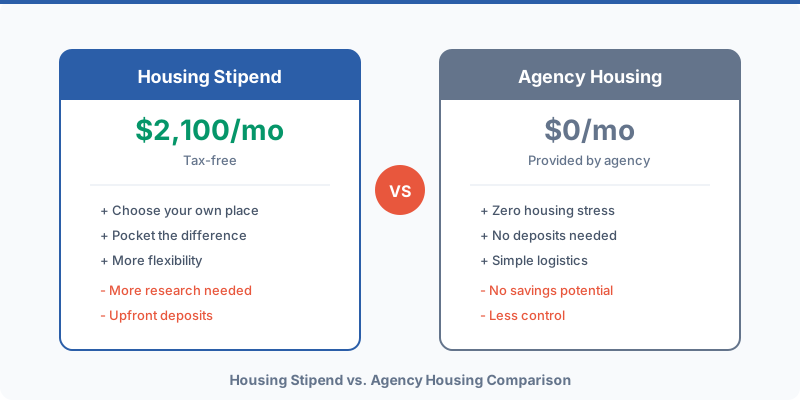
Understanding how your stipend fits into your total compensation is key to evaluating any travel nursing contract. For help breaking down the numbers, use our pay calculator to compare packages side by side and see your estimated take-home pay after taxes, stipends, and deductions.
Housing Tips for Chicago
Every city has its own quirks and considerations when it comes to finding and securing travel nurse housing. Here are tips specific to Chicago that will help you avoid common pitfalls, stretch your housing stipend further, and settle in more quickly.
-
Budget for winter gear — Chicago winters are serious. Temperatures regularly drop below zero from December through February, and wind chill off Lake Michigan makes it feel even colder. Invest in a high-quality winter coat, insulated boots, and thermal layers before your assignment starts.
-
Use the CTA — Chicago’s L train system is one of the best public transit networks in the country. A monthly CTA pass costs around $75 and covers unlimited rides on trains and buses. If your hospital is near an L station, you may be able to skip bringing a car entirely.
-
Neighborhood matters more than in most cities — Chicago neighborhoods have distinct personalities, safety profiles, and price points. Research your specific hospital’s location and the neighborhoods around it before committing to housing. What works for a nurse at Northwestern will not necessarily work for one at UChicago.
-
Look for heat-included apartments — Many older Chicago apartment buildings include heat in the rent, which can save you significantly during the long winter months. Ask about this before signing a lease, as heating costs for a unit with older windows can be substantial.
-
Take advantage of free summer events — If your assignment overlaps with summer, Chicago comes alive with free festivals, outdoor concerts, and beach days along Lake Michigan. It is one of the best summer cities in America and a huge perk of traveling here during warm months.
For a comprehensive overview of the housing search process from start to finish, including how to spot scams and negotiate lease terms, check out our complete travel nurse housing guide. It covers everything you need to know regardless of which city you are heading to.
Cost of Living Overview
Chicago’s cost of living is above the national average but significantly lower than New York or San Francisco. Groceries are about 5 to 10 percent above the national average. Gas prices are on the higher side due to Illinois taxes. Dining out is excellent and ranges from affordable neighborhood spots to world-class restaurants. City and state income taxes are a consideration, as Illinois has a flat income tax rate of around 4.95 percent.
When budgeting for your Chicago assignment, factor in all of your regular expenses beyond rent. Explore Chicago’s diverse food scene for affordable meals. Neighborhoods like Pilsen, Chinatown, and Devon Avenue offer incredible food at very reasonable prices. For groceries, Aldi has a strong presence throughout the city and offers excellent prices compared to mainstream chains. Tracking your spending during the first two weeks of your assignment will give you a realistic picture of your monthly costs and help you adjust your budget accordingly.
Things to Do on Days Off
One of the greatest perks of travel nursing is the opportunity to explore a new city on your days off. Chicago has plenty to offer whether you prefer outdoor adventures, cultural experiences, or simply relaxing and recharging between shifts.
- Lakefront Trail — Run, bike, or walk along 18 miles of paved trail stretching along the Lake Michigan shoreline. It is one of the best urban running paths in the country and a perfect way to decompress after a shift.
- Art Institute of Chicago — One of the oldest and most comprehensive art museums in the United States, featuring an incredible collection from ancient to contemporary art. Illinois residents get discounted admission on certain days.
- Deep Dish Pizza Tour — Experience Chicago’s most famous culinary contribution. Lou Malnati’s, Giordano’s, and Pequod’s are local favorites, and debating which is best is a city-wide pastime.
- Millennium Park and Cloud Gate — Visit the iconic Bean sculpture, stroll through Lurie Garden, and enjoy free concerts at the Jay Pritzker Pavilion during summer months.
- Neighborhood Exploration — Chicago is a city of neighborhoods, each with its own character. Spend your days off exploring Chinatown, Pilsen’s murals, the shops of Andersonville, or the blues clubs of the South Side.
Take full advantage of your time in Chicago. Exploring the local culture, trying restaurants you have never heard of, and visiting nearby attractions are what make travel nursing more than just a paycheck. Many travel nurses find that their days off are when they truly fall in love with a new city.
Final Thoughts
Chicago, Illinois offers travel nurses a world-class urban experience with excellent hospitals, diverse neighborhoods, and a cost of living that allows travel nurses to enjoy the city without breaking the bank. With multiple nationally ranked academic medical centers and large hospital systems and a above average cost of living, it is a market well worth considering whether you are a first-time traveler or a seasoned veteran looking for your next destination.
Start your housing search as early as possible, ideally four to six weeks before your assignment start date. The best furnished rentals tend to go quickly, especially in popular neighborhoods near major hospitals. Furnished Finder is an excellent resource for finding travel nurse housing in Chicago, and joining local travel nurse social media groups can give you insider tips and real-time availability updates.
For more resources on finding and securing great travel nurse housing anywhere in the country, explore our complete housing guide. And when you are comparing pay packages for Chicago assignments, our pay calculator can help you break down the numbers and understand your true compensation.
We wish you the best on your Chicago assignment. It is a great place to be a travel nurse.
