
Travel Nurse Car Essentials: Road Trip Must-Haves
Disclosure: Some links in this post are affiliate links. If you click through and make a purchase, we may earn a small commission at no extra cost to you. Learn more about how we make money.
Your Car Is Your Mobile Home Base
Most travel nurses drive to their assignments. Some drive a few hundred miles between neighboring states. Others cross the country multiple times a year. Regardless of the distance, your car becomes more than transportation. It is your moving truck, your road trip vehicle, your daily commuter, and your emergency shelter if something goes wrong on the highway at two in the morning.
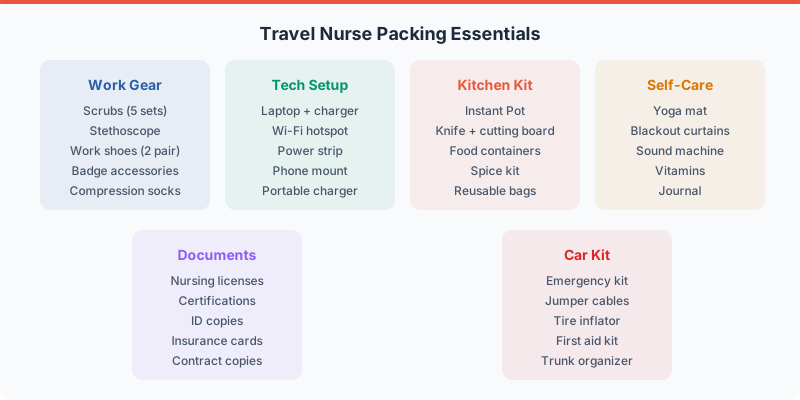
A car that is poorly maintained, disorganized, or missing basic safety gear creates problems that range from inconvenient to dangerous. A car that is well-prepared, logically organized, and stocked with the right essentials makes every aspect of the travel nurse lifestyle smoother, from the drive between assignments to the daily commute to the hospital.
This guide covers everything that should live in your car permanently, the organizational systems that keep your mobile base functional, and the maintenance practices that prevent breakdowns when you are far from home.
Safety and Emergency Gear
Your safety kit is non-negotiable. It stays in your car at all times, checked and refreshed before every assignment change.
A portable jump starter is superior to traditional jumper cables because it does not require a second vehicle. Compact lithium-ion models fit in a glove box and can start most passenger vehicles multiple times on a single charge. Some models include built-in USB ports for device charging and an LED flashlight, which adds utility beyond jump-starting.
A tire pressure gauge and portable air compressor address the most common roadside issue. A twelve-volt compressor that plugs into your car’s power outlet can reinflate a low tire in minutes, avoiding the wait for roadside assistance over a slow leak. Check your tire pressure monthly and before every long drive.
A first aid kit stocked with basics: adhesive bandages, gauze, medical tape, antiseptic wipes, over-the-counter pain relievers, and any personal medications. As a nurse, you know what belongs in a first aid kit better than most. Customize yours for your own medical history and the conditions you are most likely to encounter.
Emergency visibility items including reflective triangles or road flares, a working flashlight with extra batteries, and a reflective safety vest. If you break down on a highway shoulder at night, being visible to passing traffic is a safety priority.
An emergency blanket and a gallon of water cover basic survival needs if you are stranded in extreme heat or cold while waiting for assistance. A small car-rated fire extinguisher rounds out the emergency kit.
A roadside assistance membership provides professional help when self-rescue is not possible. Towing, lockout service, flat tire assistance, and fuel delivery are covered by most memberships. The annual cost is a fraction of a single tow bill.
Car Organization Systems
An organized car reduces stress during moves and makes your daily commute more functional.
A trunk organizer keeps smaller items from sliding around during driving. Collapsible models fold flat when not in use and expand to hold groceries, supplies, and gear. Look for one with compartments or dividers that let you categorize items: emergency gear in one section, grocery bags in another, work supplies in a third.
A backseat organizer that hangs from the headrest provides pockets for items you want accessible during drives: snacks, water bottles, charging cables, tissues, and hand sanitizer. This keeps the passenger seat clear and puts essentials within arm’s reach without requiring you to dig through bags.
A console organizer tames the junk drawer effect that naturally occurs in a center console. Small bins or dividers keep change, pens, lip balm, and other small items from becoming a jumbled mess.
A cargo net stretched across the trunk prevents items from shifting during braking and turns. This is both an organizational tool and a safety measure, because loose heavy items that slide forward during a sudden stop can cause injury.
Collapsible bins are the travel nurse’s secret for car organization. They fold flat when empty and expand to hold a full load of groceries, laundry, or gear. Keep two or three in your trunk. They serve double duty as apartment storage bins between car loads.
Tech and Navigation
Your car’s tech setup should be functional, safe, and ready before you start driving.
A phone mount keeps your navigation visible without requiring you to hold your phone. Dashboard mounts and vent mounts are the two main styles. Dashboard mounts offer a more stable viewing angle but may obstruct your view in some vehicles. Vent mounts are less obtrusive but can block airflow and may not hold heavy phones securely on rough roads. Choose based on your vehicle layout and phone size.
A multi-port car charger with USB-A and USB-C ports charges your phone and a passenger’s device simultaneously. Look for a charger that supports fast charging on at least one port. USB-C Power Delivery capability is a bonus that can charge laptops and tablets at useful speeds during long drives.
A Bluetooth FM transmitter bridges the technology gap in older vehicles without built-in Bluetooth. It plugs into your car’s power outlet, connects to your phone via Bluetooth, and broadcasts audio through an unused FM frequency. This gives you hands-free calling and streaming audio without replacing your car’s stereo system.
A dash cam is recommended for travel nurses who log significant highway miles. A forward-facing camera with loop recording captures continuous footage that overwrites itself, keeping only the most recent hours plus any automatically saved incident clips. In the event of an accident, dash cam footage provides objective evidence that can protect you during insurance claims and legal proceedings.
Download offline maps for your regular routes and your assignment-change drives. Cell coverage gaps are common on rural highways, and losing navigation at a complex interchange is stressful and dangerous.
Comfort for Long Drives
Travel nurses spend more time in their cars than most people, and comfort items make a meaningful difference.
A lumbar support cushion maintains your lower back posture during long drives. Memory foam or gel cushions conform to your spine and reduce the fatigue and pain that come from hours in a car seat that was not designed for extended use. If you have a long daily commute to your facility, this cushion pays for itself in comfort within the first week.
A car sunshade for your windshield protects your dashboard from UV damage and keeps the interior cooler when parked. During summer assignments, the temperature difference between a shaded and unshaded car interior can be thirty degrees or more.
A small car trash can that hooks onto the center console or passenger seat headrest prevents the gradual accumulation of wrappers, receipts, and tissues that makes a car feel messy. Empty it weekly.
A reusable water bottle that fits your car’s cup holder keeps you hydrated during commutes and long drives. An insulated bottle keeps water cold all day, even in a hot car.
Comfortable driving shoes separate from your nursing shoes make long drives more pleasant and keep your work shoes cleaner. Lightweight sneakers or slip-on shoes with a thin, flexible sole provide better pedal feel than the thick-soled nursing shoes you wear on the unit.
Road Trip Food and Hydration
For drive days between assignments, food preparation makes the difference between arriving energized and arriving sluggish.
An insulated cooler keeps food and drinks cold throughout a full drive day. Electric twelve-volt coolers that plug into your car’s power outlet maintain a consistent temperature without ice, eliminating the mess and weight of melting ice. Standard insulated coolers with ice packs work well for single-day drives and cost less.
Pack meals and snacks before you leave. Sandwiches, wraps, cut vegetables, fruit, nuts, trail mix, protein bars, and cheese all travel well and provide sustained energy. Avoiding fast food stops saves money and time while keeping your energy more consistent throughout the drive.
An insulated water bottle in your cup holder encourages steady hydration. Dehydration causes headaches, fatigue, and reduced alertness, all of which make driving less safe.
Entertainment and Podcasts
Long solo drives demand mental engagement to maintain alertness and enjoyment.
Download podcasts and audiobooks before you leave. Streaming over cellular data is unreliable in rural areas and drains both data and battery. Having eight to twelve hours of downloaded content ensures uninterrupted entertainment regardless of coverage.
Nursing podcasts, true crime, comedy, long-form journalism, and fiction audiobooks are the most popular categories among travel nurses. Library lending apps provide free audiobook access that is worth setting up before your first long drive.
Pre-download several music playlists as well. Variety helps: a high-energy playlist for the morning start, a mellow playlist for the afternoon stretch, and a focus-oriented playlist for when you need to stay sharp.
Set up hands-free calling so you can talk with family, friends, or other travel nurses during the drive. Social calls break up long stretches and make the miles feel shorter.
Vehicle Maintenance Before Each Assignment
High-mileage vehicles need more frequent maintenance than the average car, and travel nurse cars are definitionally high-mileage.
Before every assignment change, check your oil level and condition, all fluid levels, tire pressure and tread depth, all lights and signals, and wiper blade condition. This pre-trip inspection takes twenty minutes and catches problems before they become roadside emergencies.
Follow an accelerated maintenance schedule. If your vehicle manufacturer recommends oil changes every seven thousand five hundred miles, consider shortening that interval to five thousand miles given the demands of frequent long-distance driving. The same principle applies to tire rotations, brake inspections, and transmission service.
Find a reliable mechanic early in each assignment. Ask coworkers at the hospital for recommendations. Having a trusted shop identified before you need one avoids the stress of finding emergency repairs in an unfamiliar city.
Track your maintenance in a simple log. Record the date, mileage, and service performed each time your car is serviced. This helps you stay on schedule and provides documentation if warranty claims arise.
Keep your registration, insurance, and roadside assistance information in the car at all times. Store copies of these documents in a small envelope in your glove box, and keep digital copies on your phone and in cloud storage.
Driving in Unfamiliar Areas
Every new assignment means navigating an unfamiliar city, and a few preparation steps smooth the transition.
Scout your commute route before your first shift. Drive it during the time of day you will normally commute so you experience the actual traffic conditions. Identify parking locations, alternate routes, and any construction or detours.
Prepare for tolls. If your assignment is in a region with toll roads, research the toll system before you arrive. Many regions have transitioned to electronic-only tolling, which means you need a transponder or to register your license plate for billing. Unexpected toll violations result in fees that are avoidable with five minutes of research.
Adapt to local driving conditions. Driving culture varies significantly by region. Urban assignments may involve aggressive traffic and limited parking. Rural assignments may mean long commutes on two-lane roads with limited lighting. Winter assignments in northern states require comfort with snow and ice driving, snow tires or chains, and extra time for commutes.
Know the hospital parking situation. Some hospitals have dedicated employee lots. Others require a parking pass, a shuttle from a remote lot, or paid parking. Find out during orientation so you are not scrambling on your first shift.
Frequently Asked Questions
What emergency gear should always be in a travel nurse’s car?
Every travel nurse’s car should permanently carry a portable jump starter, a tire pressure gauge with a portable air compressor, a first aid kit, reflective triangles or road flares, a working flashlight with extra batteries, an emergency blanket, and a gallon of water. A small car-rated fire extinguisher and a roadside assistance membership round out the safety essentials. Check and refresh this kit before every assignment change.
How often should travel nurses service their cars?
Travel nurse cars accumulate miles faster than average, so follow an accelerated maintenance schedule. If your manufacturer recommends oil changes every seven thousand five hundred miles, consider shortening that to five thousand miles. The same applies to tire rotations, brake inspections, and transmission service. Run a pre-trip inspection before every assignment change that covers oil, fluids, tire pressure, tread depth, lights, and wiper blades.
Do I need a dash cam as a travel nurse?
A dash cam is strongly recommended for travel nurses who log significant highway miles between assignments. A forward-facing camera with loop recording captures continuous footage that provides objective evidence in the event of an accident, protecting you during insurance claims and legal proceedings. Basic models with automatic incident detection are affordable and easy to install, and the footage can be invaluable when driving in unfamiliar areas.
How should I organize my car for travel nursing?
Use a collapsible trunk organizer to categorize items by type: emergency gear, groceries, and work supplies. A backseat organizer hanging from the headrest keeps snacks, water, chargers, and hand sanitizer within reach during drives. Collapsible bins fold flat when empty and expand for grocery runs or gear storage. A cargo net prevents items from shifting during braking and turns, which is both an organizational tool and a safety measure.
How do I prepare for tolls in a new assignment state?
Research the toll system in your assignment region before you arrive. Many regions have transitioned to electronic-only tolling, which means you need a transponder or must register your license plate for billing. Unexpected toll violations result in fees that are easily avoidable with a few minutes of research. Some national transponder programs work across multiple states, which is especially convenient for travel nurses who cross state lines frequently.
Key Takeaways
- Safety gear is non-negotiable and should live permanently in your car. A portable jump starter, tire tools, first aid kit, and emergency visibility items protect you on every drive.
- Organize your car with a trunk organizer, collapsible bins, and a backseat organizer. A well-organized car is less stressful to load, drive, and unload at every assignment.
- Maintain your vehicle on an accelerated schedule. Travel nurse cars accumulate miles faster than average, and preventive maintenance is dramatically cheaper than roadside repairs.
- Pack food and water for drive days. A cooler with prepared meals and snacks saves money and helps you arrive feeling better than a fast-food-fueled drive.
- Scout your commute and parking situation before your first shift. Five minutes of preparation prevents first-day stress that is entirely avoidable.
For the complete breakdown of everything to pack, see our ultimate travel nurse packing list and road trip essentials guide.
Related Internal Links
- Travel Nurse Packing List
- Travel Nurse Road Trip Essentials
- Best Luggage for Travel Nurses
- Travel Nurse Tech Setup
Affiliate Placement Notes
- Portable jump starter affiliate link
- Trunk organizer affiliate link
- Phone mount and car charger affiliate links
- Dash cam affiliate link
- Lumbar support cushion affiliate link
- Electric cooler affiliate link
