
Must-Have Badge Accessories for Travel Nurses

Disclosure: Some links in this post are affiliate links. If you click through and make a purchase, we may earn a small commission at no extra cost to you. Learn more about how we make money.
Turn Your Badge Into a Mobile Toolkit
Your badge is the one item you always have on you during a shift. It is clipped to your scrubs from the moment you walk through the hospital doors until you walk out. For staff nurses, the badge is just identification. For travel nurses, it can be a mobile toolkit that carries the small essentials you need to work confidently on an unfamiliar unit.
The first few shifts at any new facility are a blur of access codes, room numbers, unfamiliar medication formularies, and names you are trying to remember. The right badge accessories put critical reference information within arm’s reach, keep your essential tools attached to your body, and help you look organized and prepared when you are still figuring out where the supply room is.
These accessories are inexpensive individually, but together they create a setup that saves time, reduces stress, and signals to your new coworkers that you came ready to work.
Badge Reels That Actually Last
A retractable badge reel is the foundation of your badge setup. It lets you scan your badge at doors, time clocks, and medication dispensing stations without unclipping it from your scrubs, which saves a few seconds every time and prevents the lost-badge panic that happens when you set it down and forget where.
The difference between a badge reel that lasts and one that breaks within weeks comes down to a few features. Look for a reel with a heavy-duty retractable cord rated for at least twenty-four inches of extension. Cheaper reels use thin cords that snap after a few weeks of daily use. The clip mechanism matters too: an alligator clip grips scrub fabric securely without damaging it, while a slide clip works better on thicker fabric or pockets.
A carabiner-style reel adds extra security. It clips to a belt loop, pocket edge, or lanyard rather than relying solely on a spring-loaded clip. This is worth considering if you work in high-activity environments where a standard clip might come loose during patient care.
For durability, look for badge reels with a metal retraction mechanism rather than plastic. Plastic mechanisms are lighter but wear out faster under daily use. Metal mechanisms add minimal weight and last significantly longer.
Many nurses express personality through their badge reel design, from specialty-themed reels to humorous or colorful options. As a travel nurse, your badge reel is one of the few pieces of personal expression you carry from assignment to assignment. Choose something that represents you and serves as a conversation starter with new coworkers.
Essential Reference Cards
Reference cards are the most practically useful badge accessory for travel nurses. Laminated or plastic cards that attach to your badge lanyard put critical clinical information at your fingertips during those first weeks on a new unit when you are still learning the facility’s protocols.
An EKG interpretation card is useful across nearly every nursing specialty. A pocket-sized card with normal sinus rhythm, common arrhythmias, and basic interpretation criteria saves you from pulling out your phone mid-assessment.
A lab values quick reference with normal ranges for common labs (CBC, BMP, CMP, coagulation studies, cardiac enzymes) is invaluable when you are working with a new facility’s lab system and unfamiliar reference ranges.
A medication calculation card with common drip calculations, weight-based dosing formulas, and conversion factors provides a safety net during your first shifts when you are still learning the facility’s medication administration systems.
Specialty-specific cards add targeted value. Pediatric nurses benefit from a vital signs by age card. ICU nurses benefit from an ACLS algorithm card. Labor and delivery nurses benefit from fetal heart rate interpretation guides. Choose cards that match your primary specialty.
Buy laminated cards or rigid plastic cards rather than paper. They survive the sweat, hand sanitizer, and occasional fluid exposure that are unavoidable during clinical shifts. A badge card holder that fans out like a small booklet keeps multiple cards organized and accessible without creating bulk.
Badge Lights and Penlights
A clip-on badge light or penlight is an essential clinical tool that many travel nurses keep attached to their badge at all times.
Pupil checks, oral assessments, skin inspections in dim rooms, and general visibility during nighttime assessments all require a focused light source. Having one clipped to your badge means you are never without it, never searching your pockets for it, and never borrowing one from a coworker.
Rechargeable badge lights are more practical than disposable ones for travel nurses. They eliminate the recurring cost of batteries and are always ready when you need them. Look for a light with multiple brightness levels, because a full-brightness pupil check light is too harsh for general use, and a dim general-use light is inadequate for clinical assessments.
A dual-purpose model that combines a pupil gauge printed on the light body with the light itself gives you two tools in one. Some models include a ruler for wound measurement on the opposite side.
Keep a backup penlight in your scrub pocket or clinical bag. Badge lights can fall off, batteries can die unexpectedly, and being without a light source during a critical assessment is not acceptable.
Useful Clip-On Tools
Beyond the badge reel, light, and reference cards, a few small clip-on tools round out a complete badge setup.
Mini bandage scissors that clip to your badge or pocket are useful across most specialties. They save trips to the supply room for routine tasks like cutting tape, opening packages, and trimming dressings.
A pen holder that clips to your badge lanyard or reel keeps a working pen accessible at all times. Pens disappear on nursing units at an astonishing rate, and having one physically attached to your badge prevents the constant search for something to write with.
A hand sanitizer holder that clips to your badge reel or waistband keeps sanitizer within reach between patients. While wall-mounted dispensers are available throughout hospitals, having your own supply eliminates the delay of finding one between patient rooms.
The goal is to carry what you use frequently without creating bulk. If your badge setup is so loaded with tools that it swings and bounces while you walk, you have added too much. Start with the essentials and add items only if you find yourself repeatedly needing them during shifts.
Dry-Erase Badge Backer
A dry-erase badge backer is one of the most underrated badge accessories for travel nurses. It is a small card that attaches to the back of your badge and provides a writable surface for temporary information.
During your first shifts at a new facility, you are bombarded with information you need to remember but have not yet committed to memory: access codes for medication rooms, phone extensions for the charge nurse and pharmacy, your patient room assignments, and the WiFi password for the nurses’ station. A dry-erase badge backer lets you jot all of this down in a place you can check instantly throughout the shift.
Look for a badge backer made from durable laminated material that erases cleanly with a dry wipe or alcohol pad. Some models have pre-printed sections for common information categories like room assignments, phone numbers, and codes. Others are blank for maximum flexibility.
Use a fine-tip dry-erase marker for legibility in the small writing space. Keep the marker in your pocket rather than clipped to your badge, because dry-erase markers are too bulky for comfortable badge attachment.
A privacy note: be mindful of what you write on your badge backer. Patient names, protected health information, and sensitive access codes should not be visible on the back of your badge where they could be read by anyone. Use abbreviations, room numbers rather than patient names, and general codes rather than specific security information.
Personalizing Your Badge as a Traveler
Your badge identifies you to patients, families, and coworkers. As a travel nurse, personalizing it helps you stand out positively and provides conversation openers with new colleagues.
Credential tags that display your certifications (RN, BSN, CCRN, CEN, and similar) below your badge let coworkers immediately understand your qualifications. This is especially helpful during your first week when the team is assessing your competence. Visible credentials build trust faster.
Specialty identifier tags that indicate your primary specialty or experience area signal to charge nurses and coworkers where your strengths lie. A tag that reads “ICU” or “ER” or “L&D” provides context that makes assignment decisions easier and helps colleagues know when to rely on your expertise.
Pronoun tags are available for nurses who want to make their pronouns visible to patients and colleagues. These small tags attach below the badge and communicate clearly without requiring a separate conversation.
Be aware that some facilities have specific badge display policies that restrict what you can attach to or display on your badge. Check during orientation if you are unsure, and be prepared to adjust your setup to comply with facility requirements.
Where to Buy Badge Accessories
Most badge accessories are readily available through major online retailers and nursing specialty stores. Online marketplaces offer the widest selection and often bundle multiple accessories at a discount.
For custom-designed badge reels, credential tags, and personalized items, specialty nursing stores and handmade marketplaces offer more options. Many sellers in the nursing accessory space are nurses themselves and design products based on real clinical needs.
Buying in small quantities is fine for most accessories, but if you find a badge reel or reference card set you love, consider buying a backup. Losing a badge reel mid-assignment and having a replacement in your car is worth the few extra dollars.
Frequently Asked Questions
What badge accessories should every travel nurse have?
At minimum, every travel nurse should carry a durable retractable badge reel, two to three clinical reference cards relevant to their specialty, and a rechargeable penlight. A dry-erase badge backer is also highly recommended for jotting down temporary information like access codes, phone extensions, and room assignments during your first shifts at a new facility. These accessories are inexpensive individually but together create a mobile toolkit that saves time and reduces stress.
How do I choose the right badge reel?
Look for a badge reel with a heavy-duty retractable cord rated for at least twenty-four inches of extension and a metal retraction mechanism rather than plastic. The clip type matters too: an alligator clip grips scrub fabric securely, while a carabiner-style clip attaches to belt loops or pockets for extra security in high-activity environments. Avoid cheap reels with thin cords, as they typically snap within weeks of daily clinical use.
Which reference cards are most useful for travel nurses?
The most universally useful reference cards are an EKG interpretation card and a lab values quick reference with normal ranges for common labs. Beyond those, choose cards specific to your specialty: pediatric nurses benefit from a vital signs by age card, ICU nurses from an ACLS algorithm card, and emergency nurses from a triage reference card. Buy laminated or rigid plastic cards that survive sweat, hand sanitizer, and fluid exposure during shifts.
Are credential tags worth displaying on my badge?
Yes, credential tags that show your certifications like RN, BSN, CCRN, or CEN are especially valuable for travel nurses. During your first week at a new facility, the team is assessing your competence, and visible credentials build trust faster than verbal introductions alone. Specialty identifier tags that display your primary area of experience also help charge nurses make assignment decisions and signal to coworkers where your strengths lie.
Do facilities restrict what I can attach to my badge?
Some facilities have specific badge display policies that limit attachments, decorative items, or the length of lanyards for safety reasons. Check during orientation if you are unsure about the policy. Most facilities allow reference cards, credential tags, and standard badge reels without issue. Be prepared to adjust your setup to comply with facility requirements, and keep any non-approved accessories in your scrub pocket as alternatives.
Key Takeaways
- Invest in a durable badge reel with a heavy-duty retractable cord and a secure clip mechanism. A reliable reel prevents the daily frustration of a broken or lost badge.
- Carry two to three reference cards tailored to your specialty. They provide a clinical safety net during your first weeks at every new facility.
- Keep a rechargeable penlight on your badge at all times, with a backup in your pocket or bag. Being without a light source during an assessment is never acceptable.
- A dry-erase badge backer is the most underrated accessory for travel nurses. It captures the temporary information you need during orientation and your first shifts.
- Personalize your badge with credential and specialty tags. They build trust with new coworkers and communicate your qualifications at a glance.
- Keep your badge setup functional but not bulky. Every attachment should earn its place through frequent use.
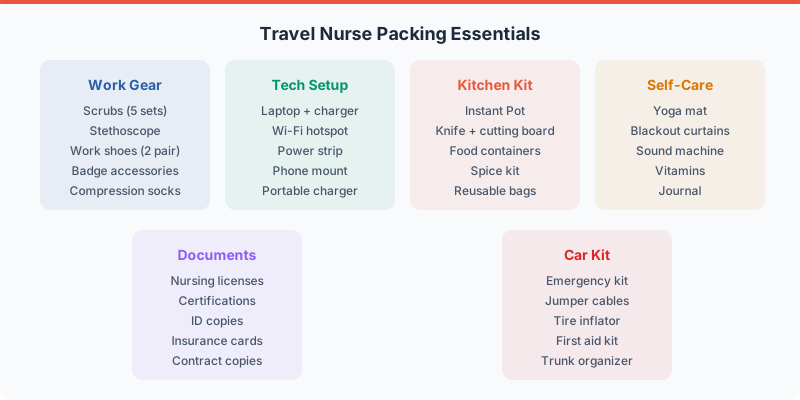
For more on building your complete clinical kit, see our stethoscope guide, scrub reviews, and ultimate packing list.
Related Internal Links
- Best Stethoscopes for Travel Nurses
- Best Scrubs for Travel Nurses
- Travel Nurse Packing List
- Travel Nurse Tech Setup
Affiliate Placement Notes
- Badge reel affiliate links (heavy-duty, carabiner-style options)
- Reference card set affiliate links (EKG, lab values, specialty cards)
- Badge light and penlight affiliate links
- Dry-erase badge backer affiliate link
- Credential and specialty tag affiliate links
