
RV Travel Nursing: Living on the Road Full-Time

Disclosure: Some links in this post are affiliate links. If you click through and make a purchase, we may earn a small commission at no extra cost to you. Learn more about how we make money.
Introduction
Imagine never searching for housing again. No scrolling through Furnished Finder listings at midnight, no negotiating with landlords, no move-in inspections. RV travel nurses bring their home to every assignment. The bed is always theirs, the kitchen is stocked the way they like it, and they never have to wonder whether the Wi-Fi will work.
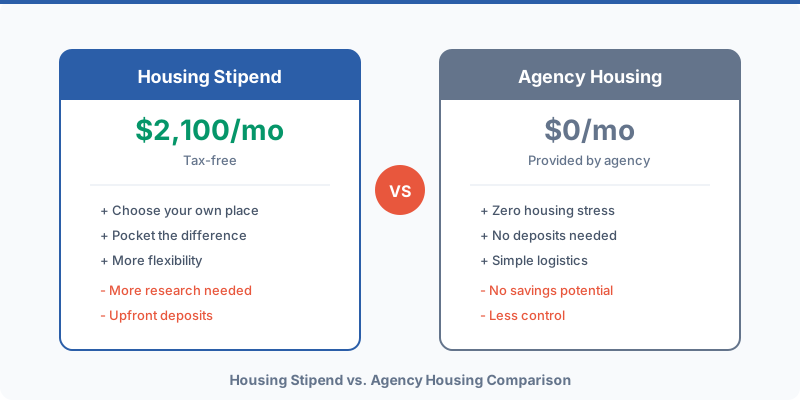
RV travel nursing has grown steadily over the past several years, and the reasons are practical as much as romantic. Nurses who own an RV can pocket a significant portion of their housing stipend, avoid the stress of repeated housing searches, and build a living space that genuinely feels like home.
But the lifestyle is not for everyone. It requires a significant upfront investment, comfort with maintenance and repairs, and willingness to deal with campground logistics that apartment dwellers never think about. This guide breaks down the financial case, the practical logistics, and the honest downsides so you can decide whether RV travel nursing makes sense for you.
The Financial Case for RV Travel Nursing
Upfront Costs
The biggest barrier to RV travel nursing is the initial purchase. Here is what you can expect across the major categories:
- Class A motorhomes (bus-style): $60,000 to $300,000+. Spacious and comfortable, but expensive and difficult to drive in urban areas.
- Class C motorhomes (cab-over design): $40,000 to $150,000. The most popular choice among travel nurses. Manageable to drive, enough living space for comfort.
- Travel trailers: $15,000 to $50,000. Affordable, but you need a capable tow vehicle, which adds $30,000 to $60,000 if you do not already own one.
- Fifth wheels: $25,000 to $80,000. The most living space per dollar, ideal for couples or nurses with pets. Requires a heavy-duty truck.
- Class B vans (camper vans): $50,000 to $150,000. Compact, easy to park, but limited living space. Best for minimalists.
Buying used can cut these prices by 30 to 50 percent. A well-maintained Class C motorhome from 2018 to 2022 in the $30,000 to $60,000 range is the sweet spot for most travel nurses entering the lifestyle.
Beyond the RV itself, budget $2,000 to $5,000 for initial setup: leveling blocks, sewer hoses, water filtration, solar panels if desired, and connectivity equipment.
Monthly Costs vs. Traditional Housing
Here is where the math gets interesting. A side-by-side comparison for a typical 13-week assignment:
| Expense | RV Living | Apartment Rental |
|---|---|---|
| Housing/Campground | $500-$1,200/mo | $1,200-$2,500/mo |
| Utilities | Included or $50-$100/mo | $100-$200/mo |
| Internet | $50-$150/mo (mobile) | Usually included |
| Insurance | $100-$200/mo | Renter’s $15-$30/mo |
| Fuel (moving) | $200-$600 per move | Gas/flight to new city |
| Maintenance | $100-$300/mo average | None |
Monthly campground fees range from $400 for a basic site in a rural area to $1,500 for a full-hookup spot near a major city. The national average sits around $700 to $900 for monthly rates with full hookups.
How the Housing Stipend Works With RV Living
You still receive the full housing stipend when you live in an RV, just as you would if you rented an apartment. The stipend is based on GSA per diem rates for your assignment location, regardless of your actual housing type.
This is where the savings come from. If your housing stipend is $2,400 per month and your campground costs $800, you pocket the $1,600 difference tax-free (assuming you maintain a valid tax home). Over a year of assignments, that can add up to $15,000 to $20,000 in additional savings compared to renting apartments.
One important note: maintaining a tax home is essential for keeping your stipends tax-free, and it works the same whether you live in an RV or an apartment. Check our tax home guide for the specifics.
Choosing the Right RV
The right RV depends on your budget, whether you travel solo or with a partner, whether you have pets, and how much space you need to feel comfortable after a 12-hour shift.
For solo nurses on a budget, a Class C motorhome or a travel trailer paired with an existing truck is the most practical entry point. You get a real bed, a functional kitchen, a bathroom, and enough space to decompress without feeling cramped.
For couples, a fifth wheel offers the most livable space. The elevated bedroom, separate living area, and full-size kitchen make it feel more like a small apartment than a vehicle.
For nurses with pets, consider the outdoor space at campgrounds as a major benefit. Dogs get more room to roam than they would in a studio apartment, and many campgrounds have off-leash areas. See our pet-friendly housing guide for more on traveling with animals.
For nurses who fly occasionally, a Class B van is the only RV you can realistically park at an airport long-term lot, but most RV nurses commit to driving between assignments.
One strong recommendation from experienced RV nurses: rent before you buy. RV rental platforms let you try the lifestyle for a single assignment before committing $30,000 or more. A 13-week rental will cost $3,000 to $6,000, but it is the cheapest way to find out whether you love or hate RV living.
Finding Campgrounds and RV Parks Near Hospitals
This is the logistical challenge that makes or breaks the RV travel nurse experience. Not every hospital has a campground nearby, and some areas have very limited options.
Start your search on Campendium, which has user reviews and photos for campgrounds nationwide. RV LIFE offers trip planning tools with route optimization. Harvest Hosts provides unique overnight spots at wineries, farms, and breweries, though these are better for transit than long-term stays.
When evaluating a campground for a 13-week stay, prioritize:
- Full hookups (water, electric, sewer). Partial hookup sites require more maintenance and are less comfortable long term.
- Proximity to the hospital. Aim for a commute under 30 minutes. Factor in campground access roads and highway traffic during shift-change hours.
- Monthly rate availability. Always call and ask for a monthly rate. Most campgrounds offer 20 to 40 percent discounts for monthly stays compared to the nightly rate.
- Cell signal strength. Check coverage maps for your carrier before booking. Poor signal means poor internet, which means difficulty charting from home.
Some hospitals actually allow RV parking in their lots or have arrangements with nearby campgrounds. It never hurts to ask your recruiter or the facility’s HR department.
For short-term stays while you scout a longer-term site, Walmart and Cracker Barrel locations often allow overnight parking. These are not long-term solutions, but they can bridge a gap.
Day-to-Day Logistics
Connectivity
Reliable internet is non-negotiable for travel nurses. You need it for charting, completing CEUs, and staying connected. In an RV, you cannot rely on campground Wi-Fi, which is typically slow and unreliable.
The standard setup is a mobile hotspot on an unlimited data plan from T-Mobile, Verizon, or AT&T, paired with a cell signal booster like a weBoost. This combination works well in areas with decent cell coverage.
For rural campgrounds with weak cell signal, Starlink is a game-changer. The portable version works anywhere with a clear view of the sky, and the speeds are fast enough for video calls and charting. The hardware costs around $300 to $600 and the monthly service runs about $120 to $150, but the reliability is unmatched.
Laundry, Mail, and Essentials
Most campgrounds with full hookups have on-site laundry facilities. For those that do not, a portable washing machine that connects to your RV sink handles basic loads. A drying rack or clothesline covers the rest.
Mail is a solved problem. Services like Escapees RV Club or Traveling Mailbox give you a permanent address that forwards mail to wherever you are parked. This also helps with tax home documentation.
Grocery delivery services like Instacart and Walmart delivery work at most campground addresses. Confirm the address is recognized by the delivery app before relying on it.
Commuting From a Campground
Most RV travel nurses have a secondary vehicle for daily commuting. If you drive a motorhome, you tow a small car. If you tow a trailer, the truck doubles as your daily driver.
Keep your commute under 30 minutes whenever possible. After a 12-hour shift, a long drive back to the campground adds fatigue and risk. Factor in fuel costs when comparing campground prices. A cheaper site 45 minutes away may not actually save you money once you account for daily gas.
Challenges and Downsides of RV Travel Nursing
Honesty matters here. RV travel nursing has real downsides that social media posts rarely show.
Campground availability near urban hospitals is limited. If your assignment is in downtown Chicago or Manhattan, finding a campground within a reasonable commute is difficult or impossible. RV living works best for suburban and rural assignments.
Winter weather requires serious preparation. RV plumbing can freeze in temperatures below 20 degrees Fahrenheit. Skirting, heat tape on pipes, and a quality space heater are necessary for cold-weather assignments. Some nurses avoid northern assignments in winter entirely.
Things break at the worst times. A water heater fails the night before your first shift. A tire blows on the highway between assignments. Slides stop extending. Budget 1 to 2 percent of your RV’s value annually for maintenance and repairs, and keep a $2,000 emergency repair fund accessible at all times.
Loneliness and isolation are real. Campgrounds can feel remote, especially in the evening after a long shift. You are less likely to run into other travel nurses or have walkable restaurants and social spots nearby. This is manageable if you are introverted or travel with a partner, but it can be tough for social people.
Space constraints wear on some people. An RV is small. If you need room to spread out, host guests, or work from a dedicated home office, the limited square footage will feel confining over time.
Tips From Experienced RV Travel Nurses
Join the community. Facebook groups like “RV Travel Nurses” and “Healthcare Travelers Living in RVs” have thousands of active members sharing campground recommendations, maintenance tips, and assignment-specific advice. The collective knowledge in these groups is invaluable.
Start with a rental. This advice cannot be overstated. Rent an RV for one 13-week assignment before buying. You will learn whether the lifestyle suits you, what features matter most, and what size RV you actually need.
Invest in your sleep. Replace the factory RV mattress immediately. The stock mattresses in most RVs are thin and uncomfortable. A quality mattress or thick mattress topper is the single best upgrade you can make. You work 12-hour shifts. Sleep quality is not optional.
Keep a maintenance log. Track every repair, oil change, tire rotation, and system check. This protects your investment, helps with resale value, and ensures you catch problems before they become emergencies.
Have a backup housing plan. When your RV needs major repairs, you need somewhere to stay. Know the extended-stay hotels near your assignment as a backup. Some repairs take days or weeks, and you cannot miss shifts.
Key Takeaways
- RV travel nursing can save $500 to $1,500 per month compared to renting, but the upfront investment is significant. Budget $15,000 to $80,000 for an RV depending on the type and condition.
- You still receive the full housing stipend. The gap between your stipend and your campground fees is yours to keep (tax-free with a valid tax home).
- Finding campgrounds near hospitals requires advance planning. Start searching as soon as you accept a contract. Use Campendium and RV LIFE to research options.
- Reliable internet is non-negotiable. A mobile hotspot with a signal booster handles most situations, and Starlink covers the rest.
- Rent an RV for one assignment before buying. It is the cheapest way to test the lifestyle without a major financial commitment.
- Use our cost-of-living tools to compare campground costs against apartment rentals at your next assignment location.
Related Internal Links
- Travel Nurse Housing Guide
- Pet-Friendly Travel Nurse Housing
- Cheapest Cities for Travel Nursing
- Travel Nurse Budget Template
- Travel Nurse Tax Home Guide
- Travel Nurse Extended Stay Hotels
Affiliate Placement Notes
- Cell signal booster affiliate link in connectivity section
- Starlink affiliate link in connectivity section
- RV mattress affiliate link in tips section
- RV rental platform affiliate link in choosing section
- Campendium/RV LIFE affiliate links in campground section
