
Pet-Friendly Travel Nurse Housing: How to Travel With Your Pet

Disclosure: Some links in this post are affiliate links. If you click through and make a purchase, we may earn a small commission at no extra cost to you. Learn more about how we make money.
Introduction: Yes, You Can Travel Nurse With Pets
Thousands of travel nurses bring their pets on every assignment, and for good reason. The lifestyle can be isolating. Long shifts, unfamiliar cities, and the constant cycle of starting over take a real toll. Having a dog greet you at the door after a brutal 12-hour shift or a cat curled up next to you on your day off makes temporary housing feel a lot more like home.
That said, traveling with pets adds a layer of complexity to an already complicated housing search. You need to find landlords who allow animals, navigate breed restrictions, budget for pet deposits, and arrange care during your shifts. None of these challenges are insurmountable, but they require planning.
This guide covers everything you need to know about finding pet-friendly travel nurse housing, from the best platforms to search on, to creating a pet resume that wins over skeptical landlords, to managing veterinary care on the road.
Finding Pet-Friendly Housing
Furnished Finder
Furnished Finder is the go-to platform for travel nurse housing, and it has a dedicated pet-friendly filter that makes searching straightforward. When you create your profile, be upfront about your pet. Include the breed, weight, and a photo. Landlords on this platform are used to working with travel nurses, so many already understand the situation.
When you message a landlord, lead with the fact that you are a responsible pet owner. Mention your pet’s temperament, training, and any references from previous landlords. Offering to provide a pet resume (more on that below) immediately sets you apart from other applicants.
Airbnb
Airbnb has a pet-friendly filter, but results are inconsistent. Some hosts allow pets in the listing description but then have restrictions you only discover after messaging them. Always confirm with the host before booking, and ask specifically about weight limits, breed restrictions, and any additional fees.
For longer stays, negotiate directly with the host. Many will waive or reduce pet fees for a 13-week booking since the guaranteed income outweighs the risk.
Extended-Stay Hotels
Several extended-stay chains are reliably pet-friendly. Extended Stay America allows pets up to 25 pounds with a non-refundable fee. Home2 Suites by Hilton welcomes pets with no weight restriction at most locations. La Quinta by Wyndham is another solid option with no pet fees at many properties.
Always call the specific location to confirm the pet policy before booking. Corporate policies vary by franchise, and what the website says does not always match reality. Ask about weight limits, breed restrictions, the number of pets allowed, and any fees or deposits.
Private Rentals
If you find housing through Facebook groups, Craigslist, or word of mouth, you have more room to negotiate. Many private landlords who list “no pets” have never been asked by a responsible tenant with a plan. Offering a higher security deposit, providing a pet resume, and showing proof of renter’s insurance that covers pet damage can change a landlord’s mind.
Understanding Pet Policies
Before you sign anything, understand the difference between pet-related fees. A pet deposit is a one-time payment that is usually refundable if there is no damage. A pet fee is a one-time non-refundable charge. Pet rent is an additional monthly charge on top of your regular rent, typically $25 to $75 per month.
Breed restrictions are common and primarily affect dog owners. Pit bulls, Rottweilers, Dobermans, German Shepherds, and wolf hybrids are the most frequently restricted breeds. Some landlords and hotel chains also enforce weight limits, usually 25, 50, or 75 pounds.
Read every pet policy carefully before signing. Ask what happens if your pet causes damage beyond the deposit amount. Ask whether the policy covers all common areas or just your unit. Get every agreement in writing, even if the landlord seems casual about it.
Creating a Pet Resume
A pet resume sounds silly until you realize how effective it is. Landlords who are on the fence about allowing your pet are often won over by a well-organized document that demonstrates you take responsibility seriously.
Your pet resume should include:
- A clear photo of your pet looking clean and well-groomed
- Basic information: name, breed, age, weight, and whether spayed or neutered
- Vaccination records: up-to-date rabies, distemper, and bordetella
- Training history: obedience classes, behavioral certifications, or a note about house-training
- References: contact information for one or two previous landlords who can vouch for your pet
- Your commitment: a brief statement about how you manage your pet during long shifts, including any professional pet care services you use
Present this when you first contact a landlord, not as an afterthought. It shows initiative and professionalism that most pet owners never demonstrate.
Traveling With Dogs
Dogs are the most common travel companion for nurses, and they are also the most logistically demanding. For road trips between assignments, invest in a crash-tested crate or harness. Plan stops every two to three hours for bathroom breaks and stretching. Never leave your dog in a parked car, even briefly.
Once you arrive at your assignment, your first priorities are finding nearby walking routes, locating a dog park, and identifying a backup plan for care during your shifts. Apps like AllTrails can help you find dog-friendly trails, and Google Maps is usually sufficient for finding nearby parks.
For daily exercise in a small apartment, focus on mental stimulation as much as physical activity. Puzzle toys, training sessions, and frozen treat dispensers keep dogs engaged when space is limited. A tired dog is a well-behaved dog, and a well-behaved dog is a dog that keeps you in good standing with your landlord.
Essential gear for dog travel includes a collapsible water bowl, a portable crate, a leash set, waste bags, and a copy of vaccination records. Keep everything in a dedicated dog bag that stays packed between assignments.
Traveling With Cats
Cats are easier to transport and house than dogs in many ways, but they have their own challenges. Most cats dislike car travel, so invest in a sturdy carrier and practice short trips before a long drive. Feliway spray or calming treats can reduce anxiety during transit.
At your new rental, set up a small “home base” area with the litter box, food, water, and a familiar blanket. Cats adjust to new environments better when they have a contained space to explore first before having access to the full apartment.
For litter box solutions in small spaces, consider a top-entry litter box that contains mess and odor better than open designs. Place it in the bathroom or a closet with the door propped open. A portable scratching post protects the rental furniture and gives your cat a familiar object in every new space.
Pet Care During Your Shifts
This is the make-or-break issue for travel nurses with pets. You work 12-hour shifts, sometimes nights, and your pet needs attention during that time. Plan your care strategy before your first shift, not after.
For dogs, hire a dog walker through Rover or Wag for a midday visit during your shift. Many travel nurses build a relationship with one reliable walker at each assignment location. Ask other nurses at your facility for local recommendations.
A pet camera lets you check in on your animal during breaks. Models with two-way audio allow you to talk to your pet, which can comfort both of you. Automated feeders and water fountains ensure your pet has access to food and fresh water even during extended shifts.
For cats, the situation is simpler. Most cats are fine alone for 12 hours as long as they have food, water, a clean litter box, and something to watch (a window perch works wonders). An automated feeder set to dispense meals on schedule keeps their routine consistent.
Veterinary Care on the Road
Before you start each assignment, identify two things: the nearest general veterinary clinic and the nearest emergency animal hospital. Do not wait until you need one to start searching.
Keep a folder (physical or digital) with your pet’s complete medical records, including vaccination history, any ongoing medications, and your regular vet’s contact information. Most veterinary clinics will see a new patient with complete records without requiring an extensive onboarding process.
Pet insurance is worth serious consideration for travel nurses. A sudden emergency vet bill of $3,000 to $5,000 can wipe out an entire contract’s savings. Policies typically run $30 to $60 per month for dogs and $15 to $30 for cats. Look for plans with nationwide coverage and no network restrictions, since you will be in a different area every 13 weeks.
Budget Considerations
Traveling with a pet costs more than traveling solo. Budget for these recurring expenses:
- Pet deposits: $200 to $500 per assignment, sometimes refundable
- Pet rent: $25 to $75 per month at many rentals
- Dog walking or pet sitting: $15 to $25 per walk, potentially daily
- Food and supplies: $50 to $150 per month depending on the pet
- Veterinary care: routine visits plus emergency fund
- Pet insurance: $15 to $60 per month
For a 13-week contract, expect to spend an additional $500 to $2,000 on pet-related expenses beyond your normal housing costs. This sounds significant, and it is. But most travel nurses who travel with pets will tell you the companionship and emotional support are worth every dollar, especially during tough assignments or in cities where you do not know anyone.
Legal Considerations
If your pet is a legitimate emotional support animal (ESA) with documentation from a licensed mental health provider, you have additional housing protections under the Fair Housing Act. Landlords cannot charge pet deposits or pet rent for ESAs, and breed and weight restrictions generally do not apply.
However, misrepresenting a regular pet as an ESA is increasingly scrutinized and can have legal consequences. Online “ESA letter mills” that provide documentation without a genuine therapeutic relationship are being targeted by state regulations. If you genuinely benefit from an ESA, work with a real mental health provider to obtain proper documentation.
Service animals trained to perform specific tasks related to a disability are protected under the ADA and have even broader protections. Landlords cannot deny housing, charge extra fees, or impose breed restrictions on service animals.
FAQ
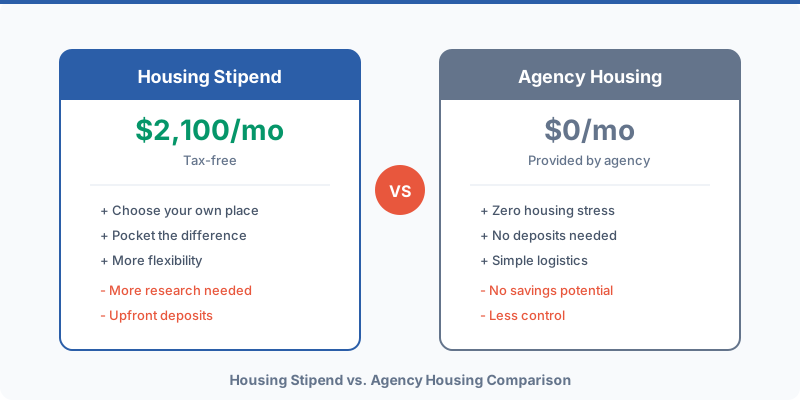
Can I bring my pet to agency-provided housing? It depends on the agency and the specific housing arrangement. Most agency-provided housing does not allow pets, which is one reason many nurses with pets prefer to take the housing stipend and find their own pet-friendly accommodations. Check our guide on housing stipends vs. agency housing for more detail.
What if my pet causes damage to the rental? You are financially responsible for any damage beyond normal wear and tear. This is why pet deposits exist. Document the condition of the rental thoroughly at move-in with photos and video so you are not charged for pre-existing damage.
What breeds are most commonly restricted? Pit bulls and pit bull mixes are the most frequently restricted, followed by Rottweilers, Dobermans, German Shepherds, Akitas, Chow Chows, and wolf hybrids. Restrictions vary by landlord, property management company, and insurance carrier.
Can I bring two pets? Many pet-friendly rentals allow two pets, but expect higher deposits and fees. Be transparent about the number of animals when you first contact the landlord. Trying to sneak in a second pet after move-in is a fast way to lose your housing.
Key Takeaways
- Pet-friendly housing is available on every major platform. Use the pet-friendly filter on Furnished Finder and always confirm the policy directly with the landlord.
- A pet resume with a photo, vaccination records, and landlord references can turn a “no” into a “yes.”
- Budget an extra $500 to $2,000 per contract for pet deposits, pet rent, and care costs.
- Arrange pet care during your shifts before your first day. Use services like Rover to find reliable walkers and sitters.
- Keep veterinary records accessible and identify emergency vet clinics at every assignment location.
- For help organizing your entire housing search, check our travel nurse housing guide and housing checklist.
Related Internal Links
- Travel Nurse Housing Guide
- Furnished Finder Review
- How to Find Travel Nurse Housing
- Travel Nurse Extended Stay Hotels
- Travel Nurse Packing List
Affiliate Placement Notes
- Furnished Finder affiliate link in the search section and key takeaways
- Pet insurance affiliate link in the veterinary care section
- Pet supply affiliate links (travel crate, collapsible bowls, pet camera) throughout
- Rover / pet sitter affiliate link in the pet care during shifts section
