
Best Travel Rewards Cards for Nurses (2026 Comparison)

Disclosure: Some links in this post are affiliate links. If you click through and make a purchase, we may earn a small commission at no extra cost to you. Learn more about how we make money.
Introduction: Turn Your Travel Nurse Spending Into Free Vacations
The right travel rewards credit card can turn your everyday spending into two to four free vacations per year. That is not an exaggeration — it is straightforward math. Between sign-up bonuses, category spending on gas and groceries, and hotel stays that generate loyalty points, travel nurses have a natural advantage when it comes to earning rewards. You already spend more than the average person on the categories that earn the most points.
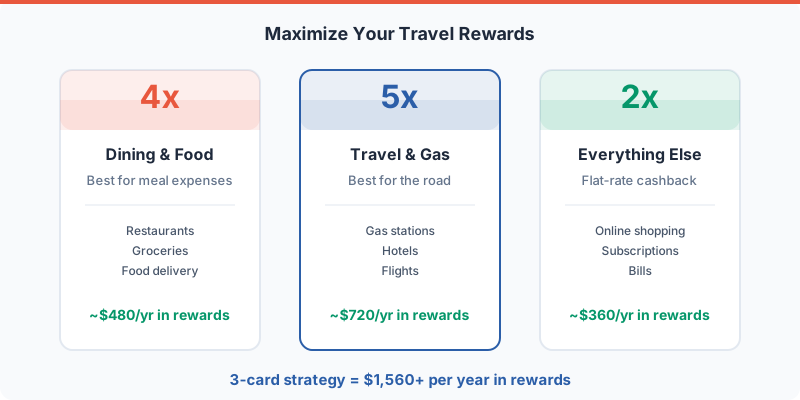
Travel rewards cards differ from basic cash back cards in one critical way: their points are worth more when redeemed for travel. While a cash back card might give you a flat 1.5% to 2% return, a travel rewards card earning 2x to 5x points can deliver 3% to 10% back in travel value when you redeem through airline and hotel transfer partners. That multiplier effect is what makes these cards so powerful for nurses who want to stretch their income further.
This guide covers the main types of travel rewards cards, our top picks in each category, and the earning and redemption strategies that maximize your return. We will not name specific card products, but we will describe exactly what features and earning rates to look for so you can match a card to your spending patterns.
Quick Comparison: Top Travel Rewards Cards for Nurses
Here is how the leading travel rewards cards stack up for the travel nursing lifestyle.
| Card Name | Annual Fee | Welcome Bonus | Travel Earning Rate | Transfer Partners | Best For |
|---|---|---|---|---|---|
| Chase Sapphire Preferred | $95 | 60,000 pts ($750+ value) | 5x travel, 3x dining | 14 airline + hotel partners | Best mid-tier flexible points card |
| Chase Sapphire Reserve | $550 | 60,000 pts ($900+ value) | 10x hotels/car, 5x flights, 3x dining | 14 airline + hotel partners | Premium perks + lounge access |
| Amex Gold | $250 | 60,000 pts ($600+ value) | 3x flights, 4x dining/groceries | 21 airline + hotel partners | Heavy dining and grocery spenders |
| Capital One Venture X | $395 | 75,000 miles ($750+ value) | 10x hotels/car, 5x flights, 2x all else | 18 airline + hotel partners | High value with $300 travel credit |
| Capital One Venture | $95 | 75,000 miles ($750 value) | 2x on all purchases | 18 airline + hotel partners | Simple flat-rate earning |
| Citi Strata Premier | $95 | 75,000 pts ($750 value) | 3x travel, dining, groceries, gas | 16 airline + hotel partners | Broad 3x earning across categories |
Bonuses and earning rates are subject to change. Verify current offers before applying.
Types of Travel Rewards Cards
Flexible Points Cards
Flexible points cards are the gold standard for travel rewards. They earn points in a proprietary currency (not airline miles or hotel points) that can be transferred to a variety of airline and hotel partners. The major flexible points currencies come from issuers that each maintain 10 to 20 transfer partners, including most major domestic and international airlines and hotel chains.
The key advantage is optionality. Instead of being locked into one airline or one hotel chain, you can shop around for the best redemption value at the time you want to travel. A domestic economy flight might be best booked through one airline partner, while an international business class seat might offer better value through a different partner. Flexible points let you optimize every redemption.
Best for: Nurses who want maximum flexibility and are willing to learn the basics of transfer partner redemptions. This is the most versatile approach to travel rewards.
Airline-Specific Cards
Airline cards earn miles in a specific airline’s loyalty program. They are most valuable when you are loyal to one carrier and fly that airline frequently. The perks often include free checked bags (saving $60 to $70 per round trip for two bags), priority boarding, discounted or free lounge access, and companion fares.
Free checked bags are particularly relevant for travel nurses who fly between assignments. If you check bags on four to six round trips per year, a single airline card saves $240 to $420 annually on bag fees alone — enough to justify the annual fee before you even consider the miles earned.
Best for: Nurses who consistently fly one airline, especially those who check bags regularly. Less ideal for nurses who book whatever airline is cheapest.
Hotel-Specific Cards
Hotel cards earn points within a hotel chain’s loyalty program and typically grant automatic elite status. For travel nurses who stay at extended-stay hotels, these cards are exceptionally valuable because the elite status perks (free breakfast, room upgrades, late checkout) deliver daily savings over a 13-week assignment. We cover hotel cards in depth in our dedicated hotel credit card guide.
Best for: Nurses who consistently stay with one hotel chain for their assignments. The value proposition is strongest when you are spending thousands on hotel stays each year.
Our Top Travel Rewards Card Picks
Best Flexible Travel Card
The ideal flexible travel card earns 2x to 3x points on travel and dining, has 12 to 15 airline and hotel transfer partners, charges a moderate annual fee of $95 to $250, and comes with a sign-up bonus of 60,000 to 80,000 points after meeting a minimum spend of $3,000 to $4,000 in the first three months.
Additional features to look for: no foreign transaction fees, trip delay and cancellation insurance, rental car collision damage waiver, and purchase protection. Some mid-tier travel cards also offer a modest annual travel credit ($50 to $100) that effectively reduces the net annual fee.
This card type is our top overall pick because it balances earning rate, flexibility, and cost. The sign-up bonus alone is typically worth $750 to $1,200 in travel value when transferred to partners, and the ongoing earning rate means your everyday spending continuously builds toward your next trip.
Best Premium Travel Card
Premium travel cards carry higher annual fees ($395 to $695) but pack in enough credits and perks to offset the cost for active travelers. Look for a card with annual travel credits ($200 to $300 in airline, hotel, or general travel credits), airport lounge access (covering a network of 1,000+ lounges worldwide), 3x to 5x earning on travel and dining, a sign-up bonus of 80,000 to 150,000 points, and elevated transfer values.
The math works like this: if the card charges a $550 annual fee but provides $200 in airline credits, $200 in hotel credits, and $100 in miscellaneous travel credits, your effective annual fee is $50. Add in lounge access (worth $30 or more per visit) and you come out ahead after just a couple of airport visits.
Best for: Travel nurses who spend more than $30,000 per year across all categories, fly at least four to six times per year, and want lounge access and premium travel protections. If you are not a frequent flyer or high spender, the mid-tier card is a better fit.
Best Mid-Tier Travel Card
Mid-tier travel cards occupy the sweet spot between no-fee starter cards and premium options. Look for an annual fee of $89 to $150, a sign-up bonus of 50,000 to 75,000 points, 2x earning on all travel and dining, and a handful of useful perks like travel insurance, no foreign transaction fees, and a small annual travel credit.
These cards do not offer lounge access or the generous credit stacking of premium cards, but they deliver solid earning rates and useful protections at a reasonable cost. The annual fee is easy to justify through the sign-up bonus alone, and ongoing earning on travel and dining spending keeps the value flowing.
Best for: Nurses who want strong rewards without the commitment of a premium annual fee. This is often the best starting point for travel nurses who are new to the rewards game and want to build up to a premium card over time.
Best No-Fee Travel Card
No-annual-fee travel cards sacrifice some earning rate and perks but eliminate the annual cost concern entirely. Look for a card earning 1.5x to 2x on all purchases (or 3x on specific categories like dining and travel), a sign-up bonus of 20,000 to 40,000 points, and basic travel protections. Some no-fee cards earn flexible points that can be transferred to airline and hotel partners, while others offer flat-rate redemptions through a travel portal at a fixed value per point.
The earning rates are lower than fee-bearing cards, but with no annual cost, every point you earn is pure profit. Over time, these cards can still generate enough points for one to two free flights per year from everyday spending alone.
Best for: Nurses who are just starting with travel rewards, prefer simplicity, or want a no-risk way to explore the points ecosystem. This card is also an excellent complement to a category-specific card like a gas rewards card or hotel card.
Earning Strategies for Travel Nurses
Travel nurses have structural advantages that make earning rewards faster and easier than it is for most people. Here is how to take full advantage.
Time sign-up bonuses with assignment transitions. The beginning of a new assignment is a natural high-spending period. Moving expenses, housing deposits, furnishing a temporary apartment, stocking a new kitchen, and buying supplies can easily total $3,000 to $5,000 in the first few weeks. Apply for a new travel card just before an assignment transition, and you can meet the minimum spend requirement for the sign-up bonus without changing your spending habits at all.
Optimize category spending. Use the right card for each spending category. A travel rewards card for dining and travel bookings, a gas card at the pump, and your highest-earning card for groceries. This targeted approach can double or triple your total points earned compared to using a single card for everything.
Use online shopping portals. Most major card issuers operate shopping portals that offer bonus points (2x to 15x) when you click through to retailers before making a purchase. Anything you buy online — work shoes, scrubs, household items, electronics — should go through a shopping portal first. It takes 30 seconds and adds thousands of bonus points per year.
Stack with cashback apps. Apps like Rakuten and Ibotta offer cash back on purchases from hundreds of retailers. Using a shopping portal plus a cashback app plus your rewards credit card creates a triple stack on a single purchase. This is one of the easiest ways to accelerate your path to 100K points.
Estimate your annual earning potential. A travel nurse spending $4,000 on gas (at 3x to 5x), $5,000 on groceries (at 3x to 6x), $3,000 on dining (at 3x), and $15,000 on other spending (at 1.5x to 2x) can earn 70,000 to 100,000 points per year from everyday spending alone — before sign-up bonuses.
Redemption Strategies for Maximum Value
Earning points is only half the equation. How you redeem them determines whether you get 1 cent or 2.5 cents per point in value.
Transfer to airline partners for the best value. The single most valuable use of flexible points is transferring them to airline partners for premium cabin redemptions. Business class flights that cost $3,000 to $8,000 in cash can often be booked for 60,000 to 100,000 points, yielding 3 to 8 cents per point. Even economy flights booked through airline partners often deliver 1.5 to 2 cents per point — better than cash back.
Book through card travel portals for convenience. Most travel card issuers have booking portals where you can use points to book flights, hotels, and rental cars. The value is typically 1 to 1.5 cents per point — lower than partner transfers but much simpler. Some premium cards boost portal redemptions to 1.5 cents per point, closing the gap with transfers.
Use pay-yourself-back features strategically. Some cards let you redeem points against recent travel purchases at a fixed rate (1 to 1.25 cents per point). This can be useful when partner transfer options are limited or when you have already booked travel on cash and want to offset the cost.
Know when to redeem for cash versus transfer. If a partner airline has a sweet spot redemption (like 13,000 miles for a domestic one-way that would cost $350), transfer your points. If you are booking a $100 budget flight, the transfer may not yield better value than a portal redemption or cash back. Always compare the cents-per-point value before deciding.
Travel Protections Worth Knowing About
Travel rewards cards include protections that have real, tangible value for travel nurses.
Trip delay insurance reimburses you for meals, hotels, and essentials when a flight is delayed beyond a certain threshold (usually 6 to 12 hours). For travel nurses flying to new assignments on tight timelines, this protection provides peace of mind.
Lost luggage reimbursement covers the cost of replacing clothing and essentials if your checked bags are lost. When you are relocating your life every 13 weeks, this matters.
Rental car collision damage waiver can save you $20 to $30 per day by letting you decline the rental company’s insurance. If you rent cars during transitions or for vacation travel, this adds up quickly.
No foreign transaction fees save 3% on every purchase made abroad. Travel nurses who take international vacations (funded by their rewards points, of course) avoid the surcharge that most basic cards impose.
Travel emergency assistance connects you with 24/7 support for medical emergencies, legal referrals, and emergency evacuation when traveling. As a healthcare professional, you know the value of having a safety net.
FAQ
Are travel rewards cards worth the annual fee?
For most travel nurses, yes. The sign-up bonus on a mid-tier travel card (worth $600 to $1,000 in travel) more than covers the annual fee for the first year. In subsequent years, the ongoing earning from your natural spending patterns typically generates enough value to justify the fee several times over. A travel nurse earning 70,000 to 100,000 points per year from everyday spending holds roughly $1,000 to $1,500 in travel value. Against a $95 to $250 annual fee, the return is strong. The only scenario where a fee card does not make sense is if you do not redeem your points — points sitting unused are worth nothing. If you will actively book trips with your rewards, the fee pays for itself.
Which is better — airline miles or flexible points?
Flexible points are better for most travel nurses because they preserve your options. Airline miles lock you into one carrier’s flights, and availability can be limited on popular routes. Flexible points can be transferred to the airline that has the best availability and value for your specific trip. The exception is if you live near a hub airport and consistently fly one airline — in that case, earning miles directly in that airline’s program (and enjoying perks like free checked bags) may deliver more practical value than flexible points. For most nurses, though, flexibility wins.
Can I use travel rewards for Airbnb or VRBO?
It depends on the card and redemption method. Most card travel portals do not include Airbnb or VRBO listings. However, you can often redeem points as statement credits against Airbnb charges, or use pay-yourself-back features if the card categorizes Airbnb as “travel.” Some flexible points currencies also partner with vacation rental platforms. If Airbnb is your primary housing choice on personal trips, check whether your card allows redemptions against those charges before assuming your points will cover it. For assignment housing comparisons, see our guide on extended-stay options.
How do I redeem points for the best value?
Start by calculating the cents-per-point value of each redemption option. Divide the cash price of the booking by the number of points required. If a $400 flight costs 20,000 points through a transfer partner, that is 2.0 cents per point — a good redemption. If the same flight costs 40,000 points through a travel portal, that is only 1.0 cent per point. Always compare at least two or three options before committing your points. The best values tend to be premium cabin international flights booked through airline partners, where you can achieve 3 to 8 cents per point. For hotels, transferring to loyalty programs typically yields 0.5 to 1.0 cents per point, while booking through a travel portal may yield a similar or better rate.
Should I have multiple travel cards?
Having two to three cards is common among experienced rewards enthusiasts and can significantly increase your earning potential. A typical two-card setup pairs a flexible points card (for dining, travel, and general spending) with a category-specific card (for gas or hotels). A three-card setup might add a no-fee card for categories not covered by the other two. The key is to avoid more cards than you can manage responsibly. Each card should have a clear purpose in your wallet, and you should never carry a balance on any of them — interest charges will wipe out your rewards and then some. For a detailed multi-card strategy, see our guide on earning 100K+ points per year.
Key Takeaways
Flexible points cards offer the most versatility for travel nurses, letting you direct rewards wherever they are most valuable at the time of redemption. Sign-up bonuses do the heavy lifting — a single well-timed application can generate enough points for a round-trip flight. Ongoing category spending (gas, groceries, dining) keeps the points flowing between bonuses.
Match your card to your actual spending patterns and travel style. If you fly one airline, get that airline’s card. If you stay at one hotel chain, get that chain’s card. If you want maximum flexibility, get a transferable points card. And if you are just starting out, a no-fee travel card is a risk-free entry point that still earns meaningful rewards.
Ready to start turning your everyday spending into free travel? Pick the card type that fits your situation and apply before your next assignment transition to maximize the sign-up bonus.
Related Internal Links
- Best Credit Cards for Travel Nurses
- Best Hotel Credit Cards for Travel Nurses
- Best Gas Credit Cards for Travel Nurses
- How to Earn 100K+ Points as a Travel Nurse
- Travel Nurse Budget Guide
Affiliate Placement Notes
- Credit card referral/affiliate links for each recommended card (4 card slots above)
- Travel booking affiliate links where redemption portals are discussed
- Airline loyalty program sign-up links in airline card section
