
Best Stethoscopes for Travel Nurses (2026 Guide)

Disclosure: Some links in this post are affiliate links. If you click through and make a purchase, we may earn a small commission at no extra cost to you. Learn more about how we make money.
Your Stethoscope Travels Everywhere You Do
Of all the gear a travel nurse owns, the stethoscope is the most personal. It is the one clinical tool that follows you from assignment to assignment, unit to unit, and state to state. It sits around your neck or in your scrub pocket for every shift, and you depend on it for assessments that directly affect patient care.
For travel nurses, the stethoscope decision carries extra weight. You need an instrument that delivers reliable acoustics across different patient populations, survives the wear of constant travel, and works well from your first shift at a new facility when you are still proving yourself to a new team. A stethoscope that produces clear, consistent sound gives you confidence during those first critical assessments.
This guide covers what to look for, breaks down the best options across price ranges and specialties, and includes practical advice for protecting your investment on the road.
What to Look for in a Travel Nurse Stethoscope
Acoustic quality is the non-negotiable starting point. You need to hear heart murmurs, lung sounds, and bowel tones clearly, even in noisy emergency departments and busy med-surg units. A stethoscope with a tunable diaphragm that lets you switch between high and low frequencies by adjusting pressure is a significant clinical advantage.
Weight and portability matter more for travel nurses than for staff nurses with a locker on the unit. You carry your stethoscope on your body for twelve hours and pack it in your bag between assignments. Heavier models offer better acoustics but create more neck fatigue over a full shift. Finding your personal balance between sound quality and weight is key.
Durability of tubing is a travel-specific concern. Stethoscope tubing degrades when exposed to skin oils, extreme temperatures in parked cars, and the general wear of being packed and unpacked repeatedly. Look for tubing that resists hardening and cracking over time. Non-latex tubing tends to last longer than traditional latex.
Ear tip comfort is often overlooked until you are six hours into a shift with ear tips that pinch. Soft-sealing ear tips that conform to your ear canal block ambient noise and feel comfortable for extended wear. Most quality stethoscopes come with multiple ear tip sizes.
Specialty-specific needs should guide your decision. A med-surg or general floor nurse needs a versatile dual-sided stethoscope. An ICU or cardiac nurse benefits from a higher-end model with superior low-frequency detection. A pediatric nurse needs a stethoscope with a pediatric-sized chestpiece or a convertible model.
Warranty and replacement parts round out the evaluation. A good warranty protects a significant investment, and the ability to replace ear tips, diaphragms, and tubing extends the useful life of your stethoscope well beyond its initial purchase.
Best All-Around Stethoscope
For the majority of travel nurses, the ideal all-around stethoscope is a mid-to-upper-range acoustic model with a dual-sided chestpiece, tunable diaphragm technology, and non-latex tubing. Expect to spend between eighty and one hundred twenty dollars for a stethoscope that will serve you reliably for years.
The best all-around model should offer a tunable diaphragm on both sides of the chestpiece, allowing you to hear high and low frequencies by simply adjusting the pressure you apply. This eliminates the need to flip the chestpiece during assessments. The tubing should be a single-lumen design that resists staining and degradation, and the overall weight should sit around six ounces, balancing acoustics with comfort.
This category of stethoscope works across med-surg, telemetry, emergency departments, and most other general nursing specialties. It is the safest choice for travel nurses who float between units or take assignments in varied specialties.
Best Premium Stethoscope
If you work in a specialty where acoustic precision is critical, such as intensive care, cardiac care, or the emergency department, stepping up to a premium stethoscope is a worthwhile investment. These models typically run one hundred fifty to two hundred fifty dollars and deliver noticeably better acoustics, particularly for low-frequency sounds like S3 and S4 heart sounds and subtle murmurs.
Look for a premium model with dual-lumen tubing, which eliminates the sound interference that single-lumen designs can produce. The chestpiece should be heavier and more finely machined for better skin contact and sound transmission. A stainless steel chestpiece and stem provide the best acoustics but add weight, so expect these models to weigh around seven to eight ounces.
The trade-off is weight and price. If you regularly assess patients where subtle cardiac or pulmonary findings change your clinical decision-making, the investment pays for itself. If you work primarily in specialties where a standard stethoscope provides adequate assessment capability, the premium model is a nice-to-have rather than a need-to-have.
Best Budget Stethoscope
A quality budget stethoscope in the thirty to sixty dollar range serves well as a first stethoscope for new travel nurses, a backup stethoscope you keep in your car or bag, or a primary instrument for specialties that rely less heavily on auscultation.
The best budget models deliver surprisingly good acoustics for the price, with dual-sided chestpieces and decent tuning capability. Where they fall short compared to mid-range and premium options is in tubing longevity, ear tip comfort, and the fine acoustic detail needed for subtle findings.
If budget is a concern, start here and upgrade later. A good budget stethoscope is vastly better than a worn-out premium stethoscope with hardened tubing and degraded seals.
Best Lightweight Stethoscope
For nurses who experience neck fatigue from wearing a stethoscope for twelve-hour shifts, an ultra-lightweight model under five ounces offers genuine relief. These stethoscopes use aluminum or lightweight alloy chestpieces and thinner tubing to reduce weight without completely sacrificing acoustics.
The trade-off is real: lighter stethoscopes generally produce less acoustic detail than their heavier counterparts. For specialties where you are using your stethoscope for basic assessments rather than detecting subtle cardiac findings, this is an acceptable trade. For ICU or cardiac nurses, the lighter weight may not justify the acoustic compromise.
Lightweight stethoscopes also pack more easily and take up less space in your clinical bag, which is a minor but genuine advantage for travel nurses who optimize every inch of packing space.
Electronic Stethoscopes: Are They Worth It?
Electronic stethoscopes have entered the mainstream, with models that amplify sound digitally, reduce ambient noise, and even allow you to record and transmit heart and lung sounds via Bluetooth. Prices range from two hundred to four hundred dollars for clinical-grade models.
The case for an electronic stethoscope is strongest in noisy environments. If you work in emergency departments, busy ICUs, or transport settings where ambient noise makes acoustic auscultation difficult, the active noise cancellation and sound amplification of a digital model can reveal findings you would miss with an acoustic instrument.
Some electronic models also offer recording capability, which is useful for telemedicine consultations or for comparing sounds over time. Bluetooth connectivity lets you stream auscultation sounds to a smartphone or tablet.
The case against: electronic stethoscopes require batteries or charging, they are more expensive to replace if lost or damaged, and they add a point of failure that acoustic stethoscopes do not have. Many experienced nurses also prefer the direct, unprocessed sound of a quality acoustic stethoscope.
For most travel nurses, an electronic stethoscope is a specialty tool rather than a primary instrument. If you want to explore digital auscultation, consider carrying one alongside your primary acoustic stethoscope rather than replacing it entirely.
Protecting Your Stethoscope on the Road
Travel nurses face stethoscope hazards that staff nurses do not. Here is how to protect your investment.
Use a carrying case. A hardshell or padded stethoscope case prevents damage during packing and transport. It also keeps the tubing from being crushed or kinked in your bag, which can create permanent bends that degrade acoustics over time.
Never leave your stethoscope in a hot or cold car. Extreme temperatures accelerate tubing degradation. In summer, a parked car can reach temperatures that soften and warp tubing. In winter, cold makes tubing stiff and brittle. Carry your stethoscope with you or store it in a temperature-controlled environment.
Clean between facilities. Wipe your stethoscope with an alcohol-based disinfectant before and after every shift, and give it a thorough cleaning when transitioning between assignments. This is both an infection control practice and a professional courtesy at your new facility.
Engrave or tag your stethoscope. Stethoscope theft is real, especially in busy units with shared spaces. Engraving your name or initials on the chestpiece and adding an ID tag to the tubing helps recover a misplaced or borrowed stethoscope. Some nurses also use brightly colored tubing or personalized chestpiece covers to make their instrument immediately identifiable.
Keep your receipt and warranty information. If your stethoscope is lost, stolen, or develops a defect, having your proof of purchase and warranty documentation makes replacement or repair straightforward.
Stethoscope Accessories
A few small accessories enhance your stethoscope’s usefulness and longevity.
Replacement ear tips are worth keeping in your clinical bag. Ear tips wear out over time, and a fresh set restores both comfort and acoustic seal. Buy the correct size and type for your specific stethoscope model.
A stethoscope clip or holder attaches to your scrub pocket or waistband, giving you an alternative to draping the stethoscope around your neck. This reduces neck fatigue and keeps the instrument secure during active patient care.
Diaphragm covers protect the diaphragm from scratches and provide a warmer surface for patient contact. They are inexpensive, easy to replace, and appreciated by patients who flinch at a cold chestpiece.
A name tag or ID ring that wraps around the tubing identifies your stethoscope at a glance. Travel nurses, who are new on every unit, benefit from clear identification to avoid mix-ups with coworkers’ instruments.
Frequently Asked Questions
How much should a travel nurse spend on a stethoscope?
Most travel nurses are well served by a mid-range acoustic stethoscope in the eighty to one hundred twenty dollar range. This price point delivers reliable acoustics with a tunable diaphragm, durable non-latex tubing, and quality ear tips. ICU and cardiac nurses may benefit from stepping up to a premium model at one hundred fifty to two hundred fifty dollars for superior low-frequency detection. Budget models at thirty to sixty dollars work well as backup stethoscopes.
How do I prevent my stethoscope from being stolen?
Stethoscope theft is common in busy hospital units with shared spaces. Engrave your name or initials directly on the chestpiece for permanent identification. Add a brightly colored ID tag or tubing wrap so your stethoscope is recognizable at a glance. Never leave your stethoscope unattended in break rooms or at nurses’ stations, and keep it on your body or in your locked bag during shifts.
How often should I replace stethoscope tubing?
Stethoscope tubing typically lasts two to four years with proper care, but travel nurses may need to replace it sooner due to the additional wear of packing, temperature exposure, and frequent use. Signs that tubing needs replacement include hardening, cracking, visible discoloration, or a sticky texture from skin oil absorption. Most major brands sell replacement tubing and parts, which extends the useful life of your stethoscope without buying an entirely new instrument.
Can I use an electronic stethoscope as my primary instrument?
Electronic stethoscopes offer sound amplification and noise cancellation that can be valuable in noisy emergency departments and busy ICUs. However, most travel nurses are better served by a quality acoustic stethoscope as their primary instrument because it requires no batteries, has fewer failure points, and provides the direct unprocessed sound that experienced clinicians prefer. If you want to explore electronic auscultation, carry one alongside your primary acoustic stethoscope rather than replacing it entirely.
Should I bring a backup stethoscope to assignments?
Yes, keeping a budget stethoscope in your luggage as a backup is strongly recommended for travel nurses. If your primary stethoscope is lost, stolen, or damaged mid-assignment, having a backup prevents the crisis of being without a critical clinical tool. A thirty to sixty dollar backup stored in your bag is cheap insurance against an expensive and stressful situation.
Key Takeaways
- A quality mid-range acoustic stethoscope with a tunable diaphragm is the best choice for most travel nurses. It delivers reliable acoustics across specialties and facilities.
- Invest in a carrying case and never leave your stethoscope in a car with extreme temperatures. These two habits alone will extend your stethoscope’s life by years.
- Clean your stethoscope between every facility and between every shift. This is both clinical best practice and professional etiquette.
- Consider your specialty when choosing. ICU and cardiac nurses benefit from premium acoustics. General floor nurses get excellent performance from mid-range models.
- Keep a backup stethoscope in your bag. A budget model stored in your luggage saves you from a crisis if your primary instrument is lost, stolen, or damaged mid-assignment.
- Engrave, tag, or personalize your stethoscope so it is always identifiable on a busy unit.
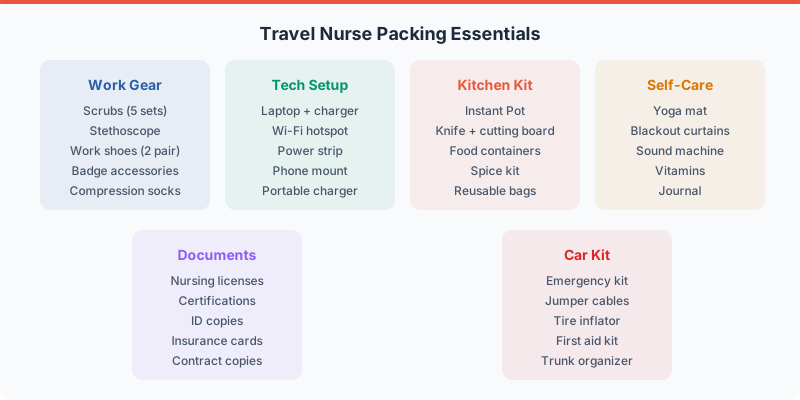
For more on building your clinical kit, see our guides on badge accessories, best scrubs, and the ultimate packing list.
Related Internal Links
- Travel Nurse Badge Accessories
- Best Scrubs for Travel Nurses
- Travel Nurse Packing List
- Travel Nurse Tech Setup
Affiliate Placement Notes
- Individual stethoscope affiliate links for each tier (all-around, premium, budget, lightweight, electronic)
- Stethoscope case affiliate link in protection section
- Accessory affiliate links (ear tips, clips, ID tags)
