
Best Scrubs for Travel Nurses: Comfort Meets Durability (2026)

Disclosure: Some links in this post are affiliate links. If you click through and make a purchase, we may earn a small commission at no extra cost to you. Learn more about how we make money.
Your Scrubs Need to Keep Up With You
Staff nurses can get away with mediocre scrubs. They have a locker at work, a washing machine at home, and a consistent dress code they know by heart. Travel nurses do not have any of those luxuries. Your scrubs need to survive hundreds of washes across multiple assignments, feel comfortable through twelve-hour shifts in facilities you have never worked in before, look professional on day one at every new hospital, and pack without turning into a wrinkled mess in your suitcase.
The wrong scrubs create problems that compound over a thirteen-week assignment: fabric that pills after a few washes, colors that fade unevenly, fits that restrict your movement during critical moments, and material that holds onto smells no matter how you wash it. The right scrubs become one less thing to think about, and on assignment, reducing your mental load matters.
This guide breaks down what to look for, how to build a versatile travel scrub wardrobe, and how to make your investment last.
What Makes Great Travel Nurse Scrubs
Not all scrubs are created equal, and the features that matter most for travel nurses are different from what a staff nurse might prioritize. Here is what to evaluate.
Fabric durability after repeated washes. Travel nurse scrubs get washed constantly, often in unfamiliar laundry machines with whatever detergent is available. Look for four-way stretch fabric blends that maintain their shape and color through fifty-plus washes. Polyester-rayon-spandex blends tend to hold up better than pure cotton, which shrinks and fades.
Moisture-wicking properties. Twelve-hour shifts generate sweat, especially when you are running codes, turning patients, or working in facilities that run warm. Moisture-wicking fabric pulls sweat away from your body and helps it evaporate, keeping you cooler and reducing odor buildup.
Stretch and range of motion. You need full range of motion for patient care. Four-way stretch fabric moves with you during bending, lifting, and reaching. If a scrub top restricts your shoulders when you raise your arms overhead, it is the wrong scrub.
Pocket configuration. Functional pocket placement matters more than pocket count. You want pockets you can access without fumbling: a chest pocket for your penlight, side pockets deep enough for your phone, and cargo pockets on pants for scissors, hemostats, or reference cards. Pockets that gape open or sit at awkward angles are worse than no pockets at all.
Wrinkle resistance. This is a travel nurse-specific priority. Your scrubs spend time folded in suitcases, packing cubes, and car trunks. Wrinkle-resistant fabric means you can unpack and go straight to orientation without looking like you slept in your uniform.
Quick-dry capability. When you are washing scrubs in an apartment laundry room and need them for your next shift, quick-dry fabric is a genuine advantage. Some performance fabrics dry in half the time of cotton.
Choosing Between Premium and Budget Scrubs
The scrub market has split into two clear tiers, and both have a place in a travel nurse’s wardrobe.
Premium Scrubs
Premium scrubs typically run forty to sixty dollars per piece and feature proprietary fabric blends, antimicrobial treatments, and fashion-forward fits. The selling points are real: the fabric feels noticeably better against your skin, the construction holds up longer, and the fit is more flattering. For travel nurses, the durability argument is strong. A premium top that lasts through two years of assignments costs less per wear than a budget top that needs replacing every six months.
The ideal premium scrub for travel nurses has a technical fabric blend with antimicrobial properties, reinforced stitching at stress points, a tailored fit that looks sharp without restricting movement, and deep functional pockets. Look for brands that offer consistent sizing across styles so you can order online without trying on, which matters when you are ordering from a new assignment location.
Budget-Friendly Scrubs
Budget scrubs in the fifteen to thirty dollar range are not throwaway items. Several legacy workwear brands make scrubs that have been reliable for decades. The fabric is simpler, the fit is more relaxed, and the style options are fewer, but the durability of well-made budget scrubs is respectable.
Budget scrubs make sense as backup sets, as assignment-specific purchases when a facility requires an unusual color, and for nurses who prefer to replace scrubs frequently rather than maintain a smaller premium wardrobe. Look for reinforced seams, colorfast fabric, and inclusive size ranges.
Mid-Range Sweet Spot
The mid-range, roughly twenty-five to forty dollars per piece, offers the best value for many travel nurses. You get performance fabric, decent pocket configurations, and solid durability without the premium price tag. Several brands in this range offer features like moisture-wicking and four-way stretch that used to be exclusive to the premium tier.
Best Scrubs for Different Body Types
Fit is personal, and what works for one nurse may not work for another. Here is how to approach finding your fit.
Petite fits are offered by most major brands now, with adjusted inseams and proportional torso lengths. If you are under five foot four, petite-specific cuts will look and feel dramatically better than hemming a standard length.
Tall fits with extended inseams and longer torso measurements are available from several brands. If standard-length pants hit above your ankle, seek out tall-specific lines rather than sizing up, which will throw off the waist and hip fit.
Plus-size options have expanded significantly. The best inclusive brands offer the same fabric, style, and pocket configurations across their entire size range rather than creating a separate, limited plus-size line. Look for brands that go up to 3XL or beyond with consistent quality.
Athletic fits with tapered legs and slimmer torsos are available from premium and mid-range brands. These work well for nurses who find relaxed fits too baggy without wanting compression-level tightness.
If you are between sizes or trying a new brand, order two sizes and return the one that does not work. Most online scrub retailers offer free returns, and getting the right fit is worth the minor hassle.
How Many Sets Do You Really Need?
The answer depends on your shift schedule and laundry situation, but five to seven sets is the sweet spot for most travel nurses.
If you work three twelve-hour shifts per week, you need a minimum of three sets per work week plus backups for laundry days and unexpected double shifts. Five sets gives you comfortable coverage. Seven sets means you can go a full week without doing laundry, which is ideal when laundry access is limited.
For nurses working four tens or five eights, add one or two sets to account for the additional shift days.
Build your wardrobe in neutral colors that satisfy the most common facility dress codes: navy, black, ceil blue, and gray. These four colors will get you through the vast majority of assignments. If a facility requires a specific color you do not own, buy one or two sets in that color as assignment-specific purchases and donate them when you leave.
Navigating Facility Color Requirements
Facility dress codes are one of the most annoying variables in travel nursing. Some hospitals allow any solid color. Others mandate department-specific colors: navy for med-surg, ceil blue for ICU, gray for OR, and so on. A few provide facility-owned scrubs that you pick up and return each shift.
The strategy is straightforward. Before your start date, confirm the dress code with your recruiter or the facility’s nursing education department. Ask specifically whether there is a required color for your unit. If the facility provides scrubs, you may not need to bring more than a backup set.
Building your wardrobe around the four neutral colors mentioned above covers roughly ninety percent of facility requirements. When a facility throws a curveball and requires a color like hunter green or burgundy, treat that as a temporary purchase rather than a permanent wardrobe addition.
Scrub Care Tips for Longevity
How you wash your scrubs matters as much as what you buy. These practices will extend the life of your investment.
Wash in cold water. Hot water breaks down technical fabrics faster and causes more color fading. Cold water cleans just as effectively for the type of soil on scrubs.
Skip the fabric softener. Fabric softener coats fibers and reduces moisture-wicking capability. It also builds up over time, trapping odors in the fabric. Use a small amount of white vinegar in the rinse cycle instead if you want softness.
Treat stains immediately. The most common nursing stains are blood, betadine, and ink. Hydrogen peroxide handles blood well when applied quickly. Rubbing alcohol works on betadine and ink. The longer a stain sets, the harder it is to remove.
Dry on low heat or hang dry. High heat damages elastic fibers, causes shrinkage, and accelerates pilling. Low heat or hang drying preserves the stretch, fit, and appearance of your scrubs.
Pack scrubs to minimize wrinkles. Rolling scrubs rather than folding them reduces wrinkle lines. Packing them in compression packing cubes keeps them organized and further reduces wrinkling. If wrinkles happen, a few minutes in a dryer with a damp cloth will smooth them out faster than ironing.
Know when to replace. When scrubs start pilling noticeably, losing their color in splotches, or feeling stretched out in the waist and knees, it is time. Worn scrubs look unprofessional, which matters more for travelers who are making first impressions at every assignment.
Frequently Asked Questions
How many scrub colors should I own?
Three to four neutral colors cover the vast majority of assignments. Navy and black are the most universally accepted. Ceil blue and gray round out a versatile wardrobe. Only buy specialty colors when a specific assignment requires them.
Can I write off scrubs on my taxes?
Scrubs may be deductible as a work expense if they are required by your employer and not suitable for everyday wear. Keep receipts and consult a tax professional who understands travel nurse deductions for current guidance.
What if my facility provides scrubs?
Some facilities, particularly operating rooms and labor and delivery units, provide facility-owned scrubs. In that case, bring one or two personal sets as backup for orientation days or in case the provided scrubs are uncomfortable. Confirm the policy before your start date.
How do I pack scrubs without wrinkles?
Roll them instead of folding, use packing cubes, and pack them in the center of your bag surrounded by softer items. Wrinkle-resistant fabric blends will also help significantly. Compression packing cubes are especially effective because they hold scrubs flat and tight, reducing the creases that come from loose shifting during transit.
Are premium scrubs worth the price for travel nurses?
For your primary wardrobe, yes. The durability and comfort of premium scrubs over hundreds of washes and thousands of shift hours make the per-wear cost lower than budget scrubs that need replacing every few months. Use budget scrubs for backup sets and assignment-specific colors.
Key Takeaways
- Invest in five to seven sets of quality scrubs in neutral colors for maximum versatility across assignments.
- Prioritize four-way stretch, moisture-wicking fabric, wrinkle resistance, and functional pocket configurations.
- Premium scrubs cost more upfront but save money long-term through superior durability and comfort.
- Check your facility dress code before buying assignment-specific colors, and treat unusual color requirements as temporary purchases.
- Wash cold, skip fabric softener, and hang dry when possible to extend the life of every pair.
- Build a capsule scrub wardrobe that works across facilities rather than buying new sets for every assignment.
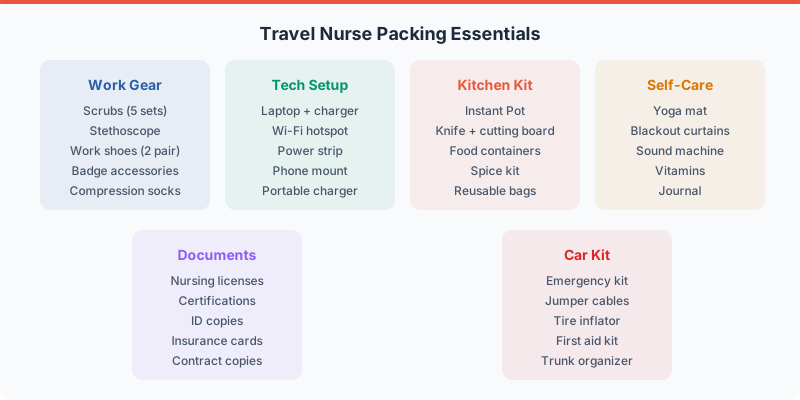
For the complete breakdown of everything to pack for your next assignment, check out our ultimate travel nurse packing list.
Related Internal Links
- Travel Nurse Packing List
- Best Nursing Shoes for 12-Hour Shifts
- Best Stethoscopes for Travel Nurses
- What to Bring to a Furnished Rental
Affiliate Placement Notes
- Individual scrub brand affiliate links for each reviewed tier
- Scrub subscription service affiliate links if applicable
- Laundry product affiliate links in the care tips section
