
Best Malpractice Insurance for Travel Nurses (2026)
Disclosure: Some links in this post are affiliate links. If you click through and make a purchase, we may earn a small commission at no extra cost to you. Learn more about how we make money.
Introduction
Your staffing agency likely carries malpractice coverage, but here is what most travel nurses do not realize: that policy protects the agency first, not you. If a patient files a lawsuit, the agency’s insurer will defend the agency’s interests. Your interests may come second, and in some cases, they may conflict with the agency’s entirely.
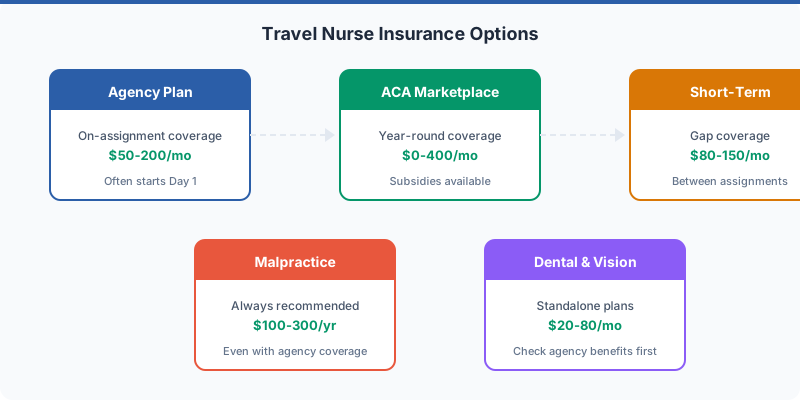
A personal professional liability policy is one of the cheapest and most important investments a travel nurse can make. For roughly the cost of a nice dinner out, you get a full year of protection that covers your license, your livelihood, and your peace of mind. This guide explains why you need your own policy, compares the top providers, and helps you choose the right coverage.
This is educational content, not insurance or financial advice. Consult a licensed insurance professional for guidance specific to your situation.
Why Travel Nurses Need Their Own Malpractice Policy
There are several compelling reasons to carry your own professional liability insurance, even if your agency says you are covered under their policy.
Agency policies protect the agency. When the agency purchases a malpractice policy, the primary insured is the agency itself. You are covered as an employee, but the agency’s legal team and insurer will prioritize the agency’s exposure. If settling a case in the agency’s favor means throwing you under the bus, that is a real possibility.
Tail coverage gaps. Agency malpractice policies are often claims-made policies, which means they only cover claims filed while the policy is active. When your contract ends and you leave the agency, that coverage may not extend to incidents that occurred during your assignment but are reported after you leave. This gap, known as “tail coverage,” can leave you exposed for years.
License defense is critical. Malpractice claims are not just about money. A complaint to your state board of nursing can threaten your license, and losing your license ends your career. Many personal malpractice policies include license defense coverage, paying for an attorney to represent you before the board of nursing. Agency policies may not include this.
Real-world scenarios travel nurses face. As a traveler, you are often the new person in an unfamiliar facility, working with equipment and protocols you are still learning. You may float to units outside your primary specialty. These factors increase your exposure to incidents. Travel nurses also face unique risks around documentation in unfamiliar electronic health record systems and communication gaps with staff who do not know you well.
Types of Malpractice Coverage
Understanding the two main policy types is essential before you start comparing providers.
Occurrence-based policies. These cover any incident that occurs during the policy period, regardless of when the claim is filed. If something happens during your contract in 2026 and a lawsuit is filed in 2029, an occurrence-based policy that was active in 2026 will cover you — even if you no longer have the policy. This is the gold standard for travel nurses because it eliminates tail coverage concerns.
Claims-made policies. These only cover claims that are both reported and that occurred while the policy is active. If you cancel a claims-made policy and a claim is filed later for an incident that happened while you were covered, you are not protected unless you purchased separate tail coverage. Claims-made policies are less expensive initially but can become more costly when you factor in tail coverage.
For travel nurses, occurrence-based is the clear winner. The contract-based nature of travel nursing means you are constantly starting and ending employment relationships. An occurrence-based policy provides continuous protection without worrying about tail coverage or gaps.
Additional coverage features to look for:
- License defense coverage: Pays for legal representation if your nursing license is challenged
- Cyber liability and HIPAA breach protection: Covers costs associated with accidental data breaches or HIPAA violations
- Deposition and subpoena coverage: Pays for lost wages and legal costs if you are called as a witness
- Personal liability coverage: Extends protection beyond professional activities
Top Malpractice Insurance Providers Compared
Four providers dominate the travel nurse malpractice insurance market. Here is how they stack up at a glance.
| Provider | Monthly Cost | Coverage Limit | License Defense | Best For |
|---|---|---|---|---|
| NSO | ~$8/mo ($100/yr) | $1M per occurrence / $6M aggregate | Included | Most recognized name; decades of nurse-specific experience |
| Berxi (Berkshire Hathaway) | ~$7/mo ($89/yr) | $1M per occurrence / $3M aggregate | Included | Lowest price + modern online enrollment |
| CM&F Group | ~$8/mo ($98/yr) | $1M per occurrence / $6M aggregate | Included | Specialty-specific coverage for high-risk units |
| Proliability | ~$8/mo ($100/yr) | $1M per occurrence / $6M aggregate | Included | Bundling options with disability and life insurance |
Premiums vary by state, specialty, and coverage options. Get a personalized quote for accurate pricing.
NSO (Nurses Service Organization). NSO is the most recognized name in nursing malpractice insurance. They have been covering nurses for decades and have a strong reputation in the industry. Coverage starts at approximately $100 per year for RNs, with $1 million per occurrence and $6 million aggregate limits. NSO offers occurrence-based policies, license defense coverage, and personal liability protection. Their application process is straightforward, and coverage can begin immediately. The main drawback is that their online experience feels dated compared to newer competitors.
Berxi (Berkshire Hathaway). Berxi is the newer, tech-forward option backed by Berkshire Hathaway’s financial strength. Premiums start around $89 per year for RNs, making them one of the most affordable options. They offer occurrence-based policies with $1 million per occurrence and $3 million aggregate limits (higher limits available). Berxi’s online quote and enrollment process is fast and modern — you can get coverage in minutes. They also include license defense and cyber liability coverage.
CM&F Group. CM&F has been providing malpractice insurance to healthcare professionals since 1947. Their RN premiums start around $98 per year with $1 million per occurrence and $6 million aggregate. They offer both occurrence-based and claims-made options. CM&F stands out for their specialty-specific coverage options, which can be valuable if you work in high-risk areas like labor and delivery or emergency medicine.
Proliability. Proliability partners with multiple insurance carriers to offer customizable coverage. RN premiums start around $100 per year with standard $1 million/$6 million limits. They offer occurrence-based policies with license defense included. Proliability also offers bundling options if you need additional coverage types like disability or life insurance.
How Much Coverage Do You Need?
The standard coverage level for nurses is $1 million per occurrence with a $6 million aggregate limit. Here is what those numbers mean and whether you need more.
Per-occurrence limit. This is the maximum the insurer will pay for a single claim. A $1 million per-occurrence limit covers the vast majority of nursing malpractice claims. The average malpractice payout for nurses is well below this threshold.
Aggregate limit. This is the maximum the insurer will pay across all claims during the policy period. A $6 million aggregate means the insurer will pay up to $6 million total for all claims in a year. Unless you face multiple simultaneous claims, this limit is more than sufficient.
When to consider higher limits. Nurses working in high-risk specialties — such as labor and delivery, emergency medicine, critical care, or operating room — may want to consider higher limits. If you work in a state with a history of large malpractice verdicts, higher limits provide additional protection. The cost difference between standard and enhanced limits is usually modest, often $20 to $50 more per year.
State-specific requirements. Some states require nurses to carry minimum levels of malpractice insurance, particularly nurse practitioners and advanced practice nurses. Even if your state does not require it, facility contracts may specify minimum coverage levels. Check your contract requirements before selecting a policy.
How to Purchase and Manage Your Policy
Getting malpractice insurance is straightforward and can usually be completed in under 15 minutes.
Application process. All four major providers offer online applications. You will need your nursing license number, state of licensure, specialty, and basic personal information. Most applications are approved instantly, and your coverage can begin the same day. No medical exams or extensive underwriting is required.
Keeping coverage active between assignments. This is where many travel nurses make a mistake. Your malpractice policy should remain active at all times — even during gaps between assignments. An occurrence-based policy covers incidents that happen while the policy is active. If you let it lapse during a break and then reactivate it, any incidents that occurred during the gap are not covered. At $8 to $17 per month, keeping your policy active year-round is an easy decision.
Reporting requirements. If an incident occurs, report it to your insurer promptly, even if no formal claim has been filed yet. Early reporting allows the insurer to begin an investigation and prepare a defense while details are fresh. Do not wait for a lawsuit to be filed before contacting your insurer.
Tax deductibility. Malpractice insurance premiums are a legitimate business expense for travel nurses and may be tax-deductible. If you itemize deductions or deduct unreimbursed employee expenses, your premium can reduce your taxable income. Consult our travel nurse tax deductions guide for more details, and work with a tax professional familiar with travel nursing.
Malpractice Coverage for Traveling RTs and Surgical Techs
The case for carrying your own professional liability policy is just as strong for respiratory therapists and surgical technologists as it is for nurses. The same agency-first dynamic applies: your staffing agency’s insurance protects the agency, not you individually. And the same tail coverage gaps exist when your contract ends.
Respiratory Therapist Coverage
All four major providers listed above — NSO, Berxi, CM&F Group, and Proliability — offer professional liability policies specifically for respiratory therapists. Premiums for RTs are comparable to nursing premiums, typically ranging from $80 to $150 per year for occurrence-based coverage with $1 million per occurrence and $3 million to $6 million aggregate limits.
RT-specific risk considerations. Traveling RTs face unique liability exposure around ventilator management, airway management (intubation assistance, tracheostomy care), arterial blood gas collection, and medication administration via nebulizer or metered dose inhaler. In critical care settings, errors in ventilator settings or failure to recognize ventilator alarms can result in serious patient harm. Additionally, RTs who provide conscious sedation support or assist with bronchoscopies face procedural liability that warrants personal coverage.
License defense is critical for RTs. Just as with nursing, a complaint to your state respiratory care board can threaten your license. Many RT malpractice policies include license defense coverage that pays for legal representation before the licensing board. Verify that this is included in any policy you purchase.
Surgical Technologist Coverage
Professional liability insurance for surgical techs is available through several of the same providers, though not all carriers offer CST-specific policies. NSO and CM&F Group both provide coverage for surgical technologists. Premiums typically range from $75 to $130 per year.
Surgical tech-specific risk considerations. Surgical techs face liability exposure around instrument and sponge counts, maintaining the sterile field, specimen handling, and proper instrument identification. Retained surgical instruments and incorrect sponge counts are among the most common OR-related malpractice claims, and the scrub tech is often named in these cases alongside the surgeon and circulating nurse. A personal policy ensures you have independent legal representation if a count discrepancy or sterile field breach leads to a claim.
Scope of practice claims. Because surgical tech scope of practice varies significantly by state, traveling surgical techs face additional risk if asked to perform tasks that fall outside their legal scope at a new facility. A malpractice policy that includes license defense and legal consultation helps protect you in these gray-area situations.
The Bottom Line for Allied Health Professionals
At $75 to $150 per year, a personal professional liability policy is the cheapest protection any traveling RT or surgical tech can buy. The same advice applies across all disciplines: choose an occurrence-based policy, keep it active year-round (even between assignments), and report any incidents to your insurer promptly.
Frequently Asked Questions
Do I really need my own malpractice insurance if my agency already covers me?
Yes. Your agency’s malpractice policy is designed to protect the agency first, not you individually. If a patient files a lawsuit, the agency’s insurer will prioritize the agency’s interests, which may conflict with yours. A personal professional liability policy ensures you have your own legal representation that works exclusively in your interest. At roughly $8 to $17 per month, it is one of the cheapest and most important investments a travel nurse can make.
What is the difference between occurrence-based and claims-made malpractice insurance?
An occurrence-based policy covers any incident that happens during the policy period, regardless of when the claim is filed. A claims-made policy only covers claims that are both reported and occurred while the policy is active. For travel nurses, occurrence-based is the clear winner because the contract-based nature of your work means you are constantly starting and ending employment relationships. With an occurrence-based policy, you never need to worry about purchasing separate tail coverage to protect yourself after leaving an agency.
How much does malpractice insurance cost for travel nurses?
Premiums for registered nurses typically range from $89 to $200 per year depending on the provider, your state, specialty, and coverage level. That works out to roughly $7 to $17 per month. Standard coverage is $1 million per occurrence with a $3 million to $6 million aggregate limit. Nurses working in high-risk specialties like labor and delivery or emergency medicine may pay slightly more, and higher coverage limits usually add only $20 to $50 per year.
Should I keep my malpractice policy active during gaps between assignments?
Absolutely. Your malpractice policy should remain active at all times, even during gaps between assignments. An occurrence-based policy covers incidents that happen while the policy is active, so any period without coverage creates an unprotected window. If you let the policy lapse and then reactivate it, incidents that occurred during the gap are not covered. The monthly cost is minimal, and continuous coverage ensures you are always protected.
Do respiratory therapists and surgical techs need their own malpractice insurance?
Yes. The same agency-first dynamic that affects travel nurses applies equally to traveling RTs and surgical techs. All four major malpractice insurance providers, NSO, Berxi, CM&F Group, and Proliability, offer professional liability policies for respiratory therapists, and NSO and CM&F Group cover surgical technologists. Premiums for allied health professionals typically range from $75 to $150 per year. RTs and surgical techs face unique liability exposure related to their specific duties, making personal coverage just as important as it is for nurses.
Frequently Asked Questions
Is my agency’s malpractice insurance enough to protect me?
Your agency’s malpractice policy is designed to protect the agency first, not you individually. If a patient files a lawsuit, the agency’s insurer will prioritize the agency’s interests, and in some cases those interests may directly conflict with yours. Additionally, agency policies are often claims-made, meaning coverage may not extend to incidents that occurred during your assignment but are reported after your contract ends. A personal occurrence-based policy ensures you have independent legal representation and continuous coverage regardless of your employment status.
What is the difference between occurrence-based and claims-made malpractice insurance?
Occurrence-based policies cover any incident that happens during the policy period, regardless of when the claim is filed. If something occurs during your 2026 contract and a lawsuit is filed in 2029, your occurrence-based policy from 2026 covers you even if you no longer carry that policy. Claims-made policies only cover claims that are both filed and occurred while the policy is active. For travel nurses who constantly start and end employment relationships, occurrence-based policies are the clear winner because they eliminate tail coverage concerns and provide long-term protection.
How much does malpractice insurance cost for travel nurses?
Personal malpractice insurance for registered nurses typically costs $89 to $200 per year, depending on your state, specialty, and coverage level. That works out to roughly $7 to $17 per month. Providers like Berxi start as low as $89 per year, while NSO, CM&F Group, and Proliability range around $98 to $100 per year for standard coverage. Higher-risk specialties or higher coverage limits may cost slightly more, but even enhanced coverage is remarkably affordable relative to the protection it provides.
Do respiratory therapists and surgical techs need their own malpractice insurance?
Yes, the case for personal malpractice insurance is just as strong for traveling respiratory therapists and surgical technologists. The same agency-first coverage dynamic applies, and the same tail coverage gaps exist when contracts end. RTs face unique liability around ventilator management, airway procedures, and medication administration, while surgical techs face exposure related to instrument counts, sterile field maintenance, and specimen handling. Premiums for RTs typically range from $80 to $150 per year, and surgical tech coverage runs $75 to $130 per year.
Should I keep my malpractice insurance active during gaps between assignments?
Absolutely. Your malpractice policy should remain active at all times, even during breaks between assignments. An occurrence-based policy covers incidents that happen while the policy is active, so any lapse creates an unprotected window. If you let your policy lapse during a break and an incident from a prior assignment is reported during that gap, the details of your coverage could become complicated. At $8 to $17 per month, keeping your policy active year-round is one of the cheapest and most important investments a travel nurse can make.
Key Takeaways
- Always carry your own policy. Agency coverage protects the agency first. Your personal policy protects you.
- Occurrence-based policies are best for travel nurses. They eliminate tail coverage concerns and provide protection long after a contract ends.
- Premiums typically run $89 to $200 per year. That is less than $17 per month for comprehensive protection of your license and livelihood.
- NSO and Berxi are the most popular choices among travelers. Both offer occurrence-based coverage with license defense included.
- Keep your policy active even during gaps between assignments. Do not let a lapse create an unprotected window. Review our gap coverage strategies for managing all your insurance during breaks.
- Report incidents promptly. Early reporting leads to better outcomes.
Related Resources
- Travel Nurse Health Insurance: Complete Guide
- Travel Nurse Agency Benefits Comparison Guide
- Disability Insurance for Travel Nurses
- How to Cover Insurance Gaps Between Assignments
- How to Become a Travel Nurse
- Travel Nurse Tax Deductions
Affiliate Placement Notes
- Individual provider affiliate links next to each provider description
- Comparison table with “Get Quote” buttons for each provider
- Sidebar widget for quick malpractice insurance quote
- Bottom CTA for “Compare malpractice insurance in 60 seconds”
