
Best Luggage for Travel Nurses (2026 Reviews)

Disclosure: Some links in this post are affiliate links. If you click through and make a purchase, we may earn a small commission at no extra cost to you. Learn more about how we make money.
Your Luggage Takes a Beating So Your Gear Does Not
Travel nurses relocate every thirteen weeks. That means your luggage gets loaded, driven, unloaded, stored, and repeated four or more times per year, every year, for as long as you travel. Standard vacation luggage is not built for this. It is built for one or two trips a year to a resort. Travel nurse luggage needs to survive the equivalent of a decade of normal use in a single year.
The difference between good luggage and bad luggage becomes obvious around assignment three. Cheap zippers fail. Flimsy wheels crack. Fabric tears at stress points. Handles loosen. And then you are hauling a broken bag into a new apartment at eleven o’clock at night after a fourteen-hour drive, which is exactly the wrong time to discover your luggage has given up.
This guide covers what to look for in luggage that lasts, breaks down the best options for different travel styles, and helps you build a luggage system that makes every move faster and less stressful.
What to Look for in Travel Nurse Luggage
Durability above everything. Your luggage needs to withstand repeated packing, unpacking, loading, and stacking. For hard-shell cases, look for polycarbonate construction that flexes without cracking. For soft-sided bags, look for ballistic nylon or high-denier polyester with reinforced corners and stress points.
Weight matters. Every pound your luggage weighs is a pound less of gear you can carry, especially if you fly. Lightweight construction that does not sacrifice durability is the goal. Compare empty weights across similar-sized bags before deciding.
Wheel quality separates good luggage from bad luggage. Spinner wheels that rotate 360 degrees make maneuvering through airports and parking lots dramatically easier. Look for wheels with sealed bearings and rubber treads. If wheels are the first thing to break, which they often are, check whether the brand offers wheel replacement.
Zippers fail more than any other luggage component. Look for YKK or equivalent heavy-duty zippers with large pull tabs. Double zippers that meet in the middle are stronger than single-zip designs and allow you to use a small lock.
Expandable compartments add flexibility for assignments where you need to pack more than usual. A suitcase that expands by two to four inches gives you overflow capacity without requiring a second bag.
Warranty coverage is worth reading carefully. Several luggage brands offer lifetime warranties that cover manufacturing defects, wheel replacement, and zipper repair. For travel nurses who put extreme mileage on their bags, a strong warranty is a meaningful financial safety net.
Best Hard-Shell Suitcases
Hard-shell suitcases protect fragile items and resist water and stains. They are the better choice for nurses who fly between assignments, because they withstand baggage handling better than soft-sided alternatives.
The ideal hard-shell suitcase for travel nurses is a checked-size bag in the twenty-seven to thirty inch range made from polycarbonate or polycarbonate-ABS blend. It should have four dual-spinner wheels, a built-in TSA-approved combination lock, and an expandable zipper that adds two to four inches of capacity.
Look for an interior with compression straps on one side and a zippered divider on the other. This layout keeps items organized and prevents shifting during transport. A hard-shell in this category typically weighs between nine and twelve pounds empty.
The downside of hard-shell luggage is rigidity. It does not flex to fit into tight car trunks the way soft-sided bags do, and exterior pockets are rare, so quick-access items need to go in a separate bag.
Best Soft-Sided Luggage
Soft-sided luggage is the preferred choice for travel nurses who drive. It compresses to fit into car trunks alongside other bags, offers exterior pockets for quick access to essentials, and weighs less than hard-shell equivalents.
The best soft-sided suitcase for travel nursing uses high-denier ballistic nylon or polyester, has at least two exterior pockets, and features inline skate wheels that handle parking lot pavement and apartment building hallways. Look for reinforced corners and a water-resistant bottom panel, because your bag will sit on wet pavement, dirty apartment floors, and rainy curbs.
Soft-sided bags in the twenty-six to thirty inch range give you ample capacity. Expandable models in this category add three to five inches of packing space when you need it.
The downside is less protection for fragile items and less resistance to water and stains. If you fly frequently or pack breakable items, pair a soft-sided main bag with a hard-shell carry-on for your valuables.
Best Duffel Bags for Road Trips
Duffel bags are the workhorses of travel nurse road trips. They flex to fill odd spaces in your car, hold a surprising amount of gear, and weigh almost nothing empty.
A wheeled duffel in the seventy to one hundred liter range is ideal for bulky, soft items like bedding, towels, off-duty clothing, and shoes. Look for a duffel with a telescoping handle, inline wheels, backpack-style shoulder straps for stair navigation, and a wide-mouth opening that makes packing and unpacking fast.
For smaller loads, a standard duffel in the forty to sixty liter range works as a secondary bag or a standalone option for nurses who pack light. Reinforced strap attachment points and a padded shoulder strap make the difference between a comfortable carry and a painful one.
The best travel nurse duffel bags use water-resistant fabric, have a reinforced bottom panel, and include at least one interior pocket for separating clean and dirty items or keeping essentials accessible.
Best Packing Cubes and Organizers
Packing cubes are the single most recommended organizational tool in the travel nurse community, and for good reason. They transform chaotic suitcase packing into a modular system where every category of item has its own container.
A set of four to six packing cubes in graduated sizes covers most needs. Use large cubes for clothing, medium cubes for scrubs and workout gear, and small cubes for underwear, socks, and accessories. Color-coded cubes speed up both packing and unpacking, because you can grab the right cube without opening every one.
Compression packing cubes with a second zipper that squeezes out excess air are worth the small price premium. They reduce volume by thirty to fifty percent, which makes a measurable difference when you are fitting a thirteen-week wardrobe into a single suitcase.
Beyond packing cubes, consider a shoe bag to keep dirty soles away from clean clothing, a laundry bag for worn items, and a flat document organizer for licenses, certifications, and contracts.
Best Garment Bags for Scrubs
A lightweight garment bag keeps your scrubs wrinkle-free during transport, which matters when you need to look sharp on orientation day at a new facility.
A tri-fold garment bag that fits inside a suitcase or hangs from a car hook is the most practical option for travel nurses. Look for one with interior mesh pockets for accessories and a hook that lets you hang it directly in your apartment closet on arrival.
Alternatively, a rolling garment bag that doubles as a carry-on works well for nurses who fly. These bags have a hanger bracket at the top and a compartment for folded items at the bottom, giving you a two-in-one solution.
For a budget alternative, simply rolling scrubs instead of folding them and packing them in compression cubes reduces wrinkles nearly as well as a dedicated garment bag.
Budget vs. Premium: Is Expensive Luggage Worth It?
The cost-per-assignment math favors investing in quality luggage. Here is how to think about it.
A premium suitcase in the two hundred to four hundred dollar range that lasts five years of travel nursing costs you roughly ten to twenty dollars per assignment. A budget suitcase at fifty to eighty dollars that needs replacing every twelve to eighteen months costs a similar amount per assignment but adds the hassle and stress of luggage failure at the worst possible time.
Where premium luggage earns its price is in the details: smoother wheels, more reliable zippers, better weight distribution, and warranty coverage that pays for repairs rather than replacements. The first time you are wheeling a packed bag through an airport at five in the morning, the difference between smooth-rolling premium wheels and wobbly budget wheels is visceral.
That said, you do not need to buy premium everything. A smart strategy is to invest in one premium checked bag and one quality carry-on, then fill in with budget duffels, packing cubes, and garment bags that are easy to replace if they wear out.
How to Pack for a 13-Week Assignment
Efficient packing is a learnable skill that improves with every assignment. Here is the system that experienced travel nurses use.
Rolling beats folding for most items. Rolled clothing creates fewer wrinkles, fills space more efficiently, and allows you to see every item without unstacking a pile.
Layer your suitcase strategically. Heavy items go on the bottom, near the wheels. Fragile items go in the center, cushioned by clothing. Shoes go in bags along the edges. Packing cubes fill the remaining space.
Keep essentials accessible. Your first-night bag with toiletries, pajamas, phone charger, and bedding should be the last thing packed and the first thing you grab on arrival. Do not bury it under everything else.
Ship bulky items. Kitchen gear, extra bedding, and heavy books are cheaper to ship via ground than to check as excess luggage or cram into your car. Ship them to your new housing address a week before your start date.
Buy consumables on arrival. Cleaning supplies, paper products, and pantry staples are better purchased at your destination than packed. This is the “buy on arrival, donate on departure” strategy that keeps your packing load manageable.
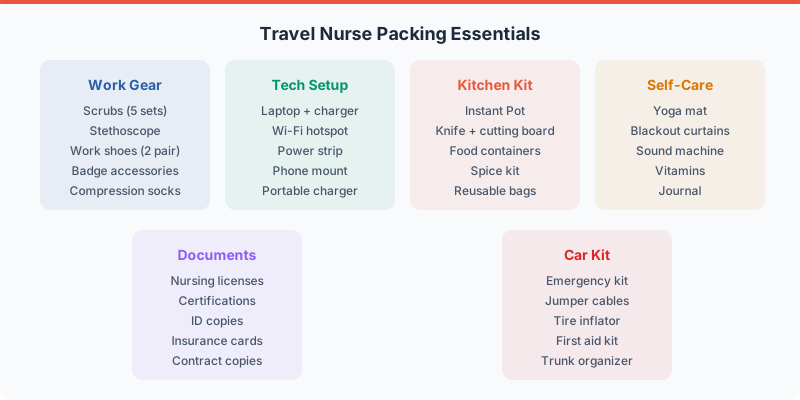
For a complete packing breakdown, see our ultimate travel nurse packing list.
Frequently Asked Questions
What size luggage is best for travel nurses?
A checked-size suitcase in the twenty-seven to thirty inch range is the sweet spot for most travel nurses. This size holds a thirteen-week wardrobe when combined with packing cubes and efficient rolling techniques. If you fly between assignments, pair it with a carry-on for valuables and first-night essentials. If you drive, a larger duffel in the seventy to one hundred liter range adds overflow capacity for bulky items.
How many bags should a travel nurse bring?
Most experienced travel nurses use a system of two to three bags: one primary suitcase for clothing and scrubs, one duffel or secondary bag for bulky items like bedding and kitchen gear, and a carry-on or personal bag for documents, electronics, and first-shift essentials. This system fits in one car load or meets airline baggage limits for nurses who fly. Adding a set of packing cubes keeps everything organized within those bags.
Is expensive luggage worth it for travel nurses?
Yes, premium luggage typically pays for itself through longevity. A two hundred to four hundred dollar suitcase that lasts five years of travel nursing costs roughly ten to twenty dollars per assignment. Budget luggage at fifty to eighty dollars that needs replacing every twelve to eighteen months costs a similar amount per assignment but adds the risk of failure at the worst possible time. Invest in your primary bag and use budget options for secondary bags that are easier to replace.
How do I protect my luggage during frequent moves?
Use luggage with reinforced corners, sealed-bearing wheels, and heavy-duty YKK zippers, as these are the components most likely to fail under heavy use. Store your bags in a dry location between uses and avoid overpacking, which stresses zippers and seams. Check wheels and zippers before every move and replace luggage proactively when you notice wobbling wheels or sticky zippers rather than waiting for a complete failure.
Should I use hard-shell or soft-sided luggage?
Choose based on how you travel. Hard-shell polycarbonate suitcases are better for flying because they withstand baggage handling and protect fragile items. Soft-sided bags are better for driving because they compress to fit into car trunks, offer exterior pockets for quick access, and weigh less. Many travel nurses use a hard-shell carry-on for valuables paired with soft-sided checked bags for clothing and general gear.
Key Takeaways
- Invest in durable luggage with quality wheels, heavy-duty zippers, and strong warranty coverage. Your bags take more abuse in one year of travel nursing than most luggage sees in a decade.
- Match your luggage to your travel style. Hard-shell for flying, soft-sided and duffels for driving, and packing cubes for everyone.
- Packing cubes are non-negotiable. They transform chaotic packing into an organized, modular system that saves time on both ends of every move.
- Use the cost-per-assignment calculation to justify premium purchases. A bag that lasts five years costs less per assignment than a budget bag replaced annually.
- Replace luggage before it fails. A zipper that is getting sticky or a wheel that wobbles is about to leave you stranded at the worst possible moment.
Related Internal Links
- Travel Nurse Packing List
- Travel Nurse Car Essentials
- Best Scrubs for Travel Nurses
- Compact Kitchen Gear for Travel Nurses
Affiliate Placement Notes
- Hard-shell suitcase affiliate links
- Soft-sided luggage affiliate links
- Duffel bag affiliate links
- Packing cube set affiliate links
- Garment bag affiliate links
