
Best Hotel Credit Cards for Travel Nurses (2026)

Disclosure: Some links in this post are affiliate links. If you click through and make a purchase, we may earn a small commission at no extra cost to you. Learn more about how we make money.
Introduction: Why Hotel Cards Are Powerful for Travel Nurses
Travel nurses who stay at extended-stay hotels sit on one of the most lucrative rewards opportunities in the credit card world. A 13-week stay at an extended-stay property can generate tens of thousands of loyalty points from the hotel stay itself, and when you layer a co-branded hotel credit card on top, the points compound dramatically. We are talking about enough points from a single work assignment to fund multiple free vacation nights.
Hotel credit cards offer three core benefits that matter for travel nurses: accelerated point earning on hotel stays, automatic elite status that makes your extended stay more comfortable, and free night certificates that effectively pay back the annual fee. When your job already puts you in hotels regularly, these cards deliver outsized value compared to what the average cardholder gets.
This guide covers the best types of hotel credit cards for travel nurses, how to stack hotel loyalty points with credit card rewards, and strategies for converting your work stays into free vacations. Whether you prefer large chain extended-stay properties or rotate between brands, there is a card strategy that works for your situation.
Quick Comparison: Best Hotel Credit Cards for Travel Nurses
Here is a side-by-side look at the top hotel credit cards to help you pick the right one for your preferred chain.
| Card | Annual Fee | Free Night Award | Points Per $ (Hotel) | Hotel Chain |
|---|---|---|---|---|
| Marriott Bonvoy Boundless | $95 | 1 free night (up to 35K pts) | 6x at Marriott properties | Marriott (Residence Inn, TownePlace) |
| Marriott Bonvoy Brilliant | $650 | 1 free night (up to 85K pts) | 6x at Marriott properties | Marriott (Platinum Elite status) |
| Hilton Honors Surpass | $150 | 1 free night (weekend) | 12x at Hilton properties | Hilton (Homewood, Home2 Suites) |
| Hilton Honors Aspire | $550 | 1 free night (any weekend) | 14x at Hilton properties | Hilton (Diamond Elite status) |
| IHG One Rewards Premier | $99 | 1 free night (up to 40K pts) | 10x at IHG properties | IHG (Staybridge, Candlewood) |
| IHG One Rewards Traveler | $0 | None | 5x at IHG properties | IHG (no-fee entry option) |
Annual fees, free night values, and earning rates are subject to change. Verify current offers before applying.
How Travel Nurses Can Earn Massive Hotel Points
The point-earning potential for travel nurses staying in hotels is staggering when you understand how the math works. Hotel loyalty programs award base points on every dollar you spend on your room. Extended-stay properties within major chains typically qualify for these programs, meaning your 13-week hotel bill generates loyalty points automatically.
A typical extended-stay rate might run $80 to $150 per night, depending on the market. Over 91 nights (13 weeks), that is $7,280 to $13,650 in hotel spending. At a base earning rate of 10 points per dollar (common in major hotel programs), you would earn 72,800 to 136,500 base points from a single assignment. With elite status bonuses of 25% to 75% on top, those numbers climb to 91,000 to 238,000 points per assignment.
Now add a co-branded hotel credit card. These cards typically earn 5x to 17x bonus points at their brand’s properties. Using the card to pay for your stay means you earn credit card points on top of loyalty points. The credit card points stack with — not replace — your loyalty earnings. You also earn points on your everyday non-hotel spending at a rate of 1x to 3x, adding another 10,000 to 30,000 points per year from groceries, gas, and other expenses.
Over the course of two to three assignments per year, a travel nurse can realistically earn 200,000 to 500,000 hotel points. That is enough for five to fifteen free vacation nights at mid-range properties, or two to five nights at luxury resorts. Your work travel literally funds your personal travel.
Top Hotel Credit Card Picks
Best Card for Marriott-Brand Extended Stays
Look for a Marriott co-branded card that offers 6x points at Marriott properties, a free night certificate worth up to 35,000 to 50,000 points annually, and automatic Gold or Platinum Elite status. The annual fee typically ranges from $95 to $250, but the free night certificate alone usually covers it.
Marriott’s extended-stay brands include Residence Inn, TownePlace Suites, and Element — all of which participate in the Marriott Bonvoy loyalty program. These properties are widespread across the country and frequently used by travel nurses. Residence Inn in particular offers suite-style rooms with full kitchens, making them ideal for 13-week stays.
With Platinum Elite status (available through some premium Marriott cards), you receive complimentary room upgrades, late checkout, lounge access at full-service properties, a 50% point bonus on stays, and welcome gifts. Late checkout is especially valuable for shift workers who need flexible schedules.
Best for: Travel nurses who prefer Marriott extended-stay properties and want to maximize points within the Marriott ecosystem. If Residence Inn or TownePlace Suites are your go-to housing options, this card type is your strongest play.
Best Card for Hilton-Brand Extended Stays
Hilton co-branded cards are known for generous point earning rates — look for a card offering 12x to 14x points at Hilton properties, a free night certificate, and automatic Gold or Diamond Elite status. Annual fees range from $0 to $150 depending on the tier, and even mid-tier Hilton cards offer excellent value for frequent guests.
Hilton’s extended-stay brands include Homewood Suites and Home2 Suites, both of which earn Hilton Honors points. Hilton’s points are worth slightly less per point than some competitors (roughly 0.5 to 0.6 cents each), but the higher earning rates compensate, and availability for award nights is generally excellent.
Diamond Elite status — available automatically with some premium Hilton cards — includes complimentary room upgrades, executive lounge access, free breakfast, and an 80% point bonus on stays. Free breakfast alone can save a travel nurse $10 to $20 per day, translating to $900 to $1,800 saved over a 13-week assignment.
Best for: Travel nurses who prefer Hilton extended-stay properties. The combination of high earning rates, generous elite status, and widespread property availability makes Hilton cards a strong choice.
Best Card for IHG-Brand Extended Stays
IHG co-branded cards typically offer 10x to 15x points at IHG properties, a free night certificate (sometimes at any IHG property), and automatic Platinum Elite or higher status. Annual fees are usually $49 to $99, making these some of the most affordable hotel cards available.
IHG’s extended-stay brands include Staybridge Suites and Candlewood Suites. These properties tend to be among the most budget-friendly extended-stay options from major chains, making them popular with travel nurses who want to keep housing costs low. Staybridge Suites includes free breakfast and evening socials at many locations.
IHG points are worth roughly 0.5 cents each, but the low annual fee and strong earning rates make the math work, especially when your housing stipend is already covering the room cost. An IHG card with a free night certificate that you can use at nearly any property provides excellent return on the modest annual fee.
Best for: Budget-conscious travel nurses who stay at IHG extended-stay properties. The low annual fee and solid earning rates deliver great value without requiring premium spending.
Best General Hotel Card
If you do not consistently stay with one hotel chain — maybe you rotate between brands based on which property is closest to your assignment hospital — a general travel card with strong hotel earning can be a better fit than a brand-specific card. Look for a flexible points card that earns 2x to 5x on all travel (including hotels) and lets you transfer points to multiple hotel partners.
These cards sacrifice the ultra-high earning rates of brand-specific cards (you will earn 2x to 5x instead of 10x to 17x) but gain flexibility. You can transfer points to whichever hotel program offers the best redemption value for your vacation plans. They also earn competitive rates on non-hotel categories like dining, flights, and groceries.
Best for: Travel nurses who stay at different hotel chains depending on assignment location. Also a strong choice if you want your hotel spending to contribute to a broader travel rewards strategy that includes flights and other travel.
Elite Status Benefits for Travel Nurses
Elite status might sound like a luxury perk, but for travel nurses spending 13 weeks in a hotel, the practical benefits are significant.
Free room upgrades can mean the difference between a standard room and a suite with a full kitchen, separate living area, and more workspace. When you are living in a hotel for three months, extra space matters enormously for your mental health and quality of life.
Late checkout is arguably the most valuable perk for shift workers. If you are working night shifts or 12-hour days, having the flexibility to sleep in on checkout day without watching the clock is a genuine quality-of-life improvement. Most elite programs guarantee 2 PM or 4 PM checkout.
Free breakfast saves real money and time. At $10 to $20 per day, complimentary breakfast over a 13-week stay represents $900 to $1,800 in food costs you no longer need to budget for. That alone can offset a card’s annual fee many times over.
Lounge access at full-service properties provides a quiet workspace, free drinks and snacks, and sometimes hot appetizers in the evening. This is less relevant at extended-stay properties (which typically do not have lounges) but valuable when traveling for vacation or during transitions between assignments.
Points bonuses on stays are the hidden compounding engine. Elite members earn 25% to 100% bonus points on top of their base earning rate. Over a 13-week stay, that bonus adds up to tens of thousands of additional points — points you did not have to spend a dollar more to earn.
The fastest way to earn elite status is through a co-branded hotel credit card that grants it automatically. Without a card, you would need 50 to 75 qualifying nights per year to earn mid-tier elite status through stays alone. A 13-week assignment gets you to about 91 nights, which can qualify on its own, but having card-granted status means you earn elite bonuses from your very first night.
Strategy: Earning Free Vacation Nights From Work Stays
Here is where the real magic happens. Let’s walk through a concrete example of how a 13-week extended-stay assignment converts into free vacation nights.
The scenario: You stay at a Marriott Residence Inn for 13 weeks at $100 per night. You have a Marriott co-branded credit card and Gold Elite status.
- Room cost over 91 nights: $9,100
- Base Marriott Bonvoy points earned from stay (10 points per dollar): 91,000
- Gold Elite bonus (25%): 22,750
- Credit card bonus on hotel spending (additional 6x): 54,600
- Total points from this one assignment: approximately 168,350
A free night at a mid-range Marriott property typically costs 20,000 to 35,000 points. Your single work assignment just earned you five to eight free vacation nights. Do two or three assignments per year, and you are looking at 10 to 24 free nights annually.
Best redemption strategies: Off-peak bookings stretch your points further, sometimes by 30% to 40%. International properties in countries with lower costs of living often provide extraordinary point value — a 25,000-point night at a beachfront resort that would cost $200 or more in cash. Look for Category 1 through 4 properties in destinations like Southeast Asia, Mexico, or the Caribbean for the best bang for your points.
For a complete strategy on maximizing your total rewards earning, see our guide on how to earn 100K+ points per year.
Hotel Card vs. General Travel Card for Hotel Spending
The choice between a brand-specific hotel card and a general travel card depends on your stay patterns.
A brand-specific hotel card wins when you consistently stay with one chain, your preferred chain has extended-stay properties in most markets where you take assignments, and you value elite status perks like free breakfast and upgrades. The earning rate premium (10x to 17x versus 2x to 5x) is substantial when you are spending $7,000 to $14,000 per year on hotel rooms.
A general travel card wins when you bounce between hotel chains depending on what is available near your hospital, you want points that can be used for flights as well as hotels, or you prefer not to be locked into a single loyalty ecosystem.
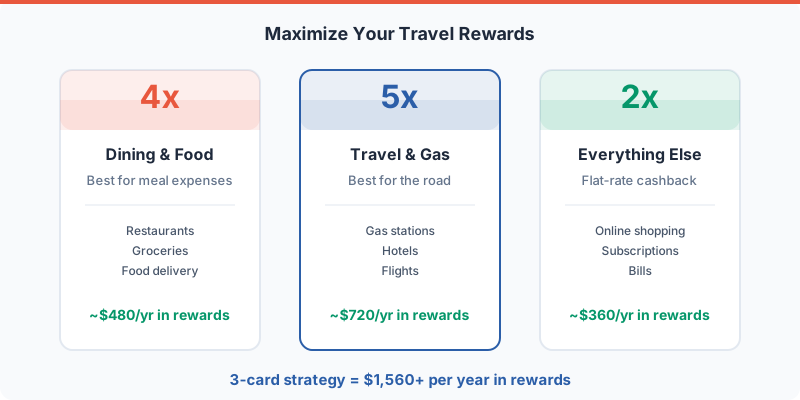
The two-card strategy is the best of both worlds if you are comfortable managing multiple cards. Use a brand-specific hotel card for hotel spending to maximize earning rates and elite status, and use a flexible travel card for everything else (dining, groceries, gas, online shopping). This way, your hotel nights generate maximum points in your preferred program while your everyday spending accumulates flexible points you can transfer wherever they are most valuable. For more on this approach, see our travel rewards card comparison.
FAQ
Do I earn points on extended-stay monthly rates?
Yes, in most cases. Extended-stay properties within major hotel chains (Marriott, Hilton, IHG) participate in their respective loyalty programs, and stays booked at negotiated or standard rates earn points. However, there are some exceptions. Stays booked through third-party sites (like discount travel agencies) sometimes do not earn loyalty points. Always book directly through the hotel chain’s website or app to guarantee point earning. Some extended-stay properties that are independently owned franchises may have different policies, so confirm loyalty program participation before booking a 13-week stay. If your housing stipend covers the cost, you want to make sure every dollar spent is also earning points.
Can I earn elite status from one 13-week stay?
Absolutely. A 13-week stay equals approximately 91 nights, which exceeds the threshold for mid-tier elite status at most major chains. Marriott Bonvoy Platinum Elite requires 50 nights, Hilton Honors Diamond requires 60 nights (or 30 stays), and IHG One Rewards Platinum Elite requires 40 nights. A single 13-week assignment can qualify you for top-tier or near-top-tier status through stays alone. However, having a co-branded credit card that grants automatic elite status means you start earning elite bonuses from night one of your stay, rather than waiting until you hit the qualifying threshold partway through your assignment.
Are hotel card annual fees worth it?
For travel nurses who stay at extended-stay hotels, hotel card annual fees almost always pay for themselves. The free night certificate alone — typically worth $150 to $300 in hotel costs — usually exceeds the annual fee of $95 to $150. Add in the value of elite status perks (free breakfast at $10 to $20 per day adds up fast), accelerated point earning, and the vacation nights you can redeem, and the return on investment is substantial. The only scenario where a hotel card might not be worth the fee is if you rarely stay at hotels, take agency-provided housing instead of stipends, or switch chains so frequently that no single brand card gets enough use.
Which hotel chain has the best extended-stay properties?
Each major chain has strong extended-stay options, and the best choice depends on your priorities. Marriott’s Residence Inn is widely considered the gold standard for extended stays, with full kitchens, grocery delivery partnerships, and a consistent experience across locations. Hilton’s Homewood Suites offers a similar experience with excellent complimentary breakfast. IHG’s Staybridge Suites provides great value at a lower price point. Home2 Suites (Hilton) and TownePlace Suites (Marriott) offer modern, efficiently designed rooms at lower rates. Your best bet is to check which chains have properties near your assignment hospital and compare rates against your housing stipend.
Can I transfer hotel points to airline miles?
Most major hotel programs allow transfers to airline partners, though the conversion rates vary. Marriott Bonvoy transfers to over 40 airline partners at a 3:1 ratio, with a 5,000-mile bonus for every 60,000 points transferred. Hilton Honors transfers to airlines at varying rates, typically around 2:1 to 3:1. IHG also offers airline transfer options. However, hotel points are almost always worth more when redeemed for hotel stays rather than airline miles. The transfer ratios mean you lose significant value in the conversion. You are generally better off earning hotel points for hotels and using a flexible travel card or airline-specific card for flights.
Key Takeaways
Hotel credit cards are one of the most powerful financial tools available to travel nurses who stay at extended-stay properties. The combination of accelerated point earning, automatic elite status, and free night certificates creates a virtuous cycle where your work stays directly fund your vacation stays.
Choose the card that matches your preferred hotel chain, book directly through the loyalty program to ensure point earning, and use elite status perks to make your 13-week assignments more comfortable. Over the course of a year, this strategy can generate hundreds of thousands of points — enough for a week or more of free vacation nights annually.
Start by identifying which hotel chain has the best extended-stay options near your most likely assignment locations, then apply for the corresponding co-branded card before your next assignment begins.
Related Internal Links
- Best Credit Cards for Travel Nurses
- Best Travel Rewards Cards for Nurses
- How to Earn 100K+ Points as a Travel Nurse
- Travel Nurse Budget Guide
- Pay Calculator
Affiliate Placement Notes
- Hotel credit card referral links for each recommended card (Marriott, Hilton, IHG, general)
- Hotel loyalty program sign-up links in the elite status and earning sections
- Hotel booking affiliate links where specific chains are discussed
